

Tens of thousands of skilled workers who arrived in Israel during the massive immigration wave from the former Soviet Union in the 1990s are approaching retirement, threatening to deepen an already severe labor shortage across Israeli industry, according to a new report by the Manufacturers Association of Israel.
The workers became an important part of Israel’s industrial workforce after immigrating three decades ago, bringing technical skills and professional experience that helped support the country’s economic growth. As many now reach retirement age, manufacturers warn they are leaving behind gaps in professions for which qualified replacements are increasingly difficult to find.
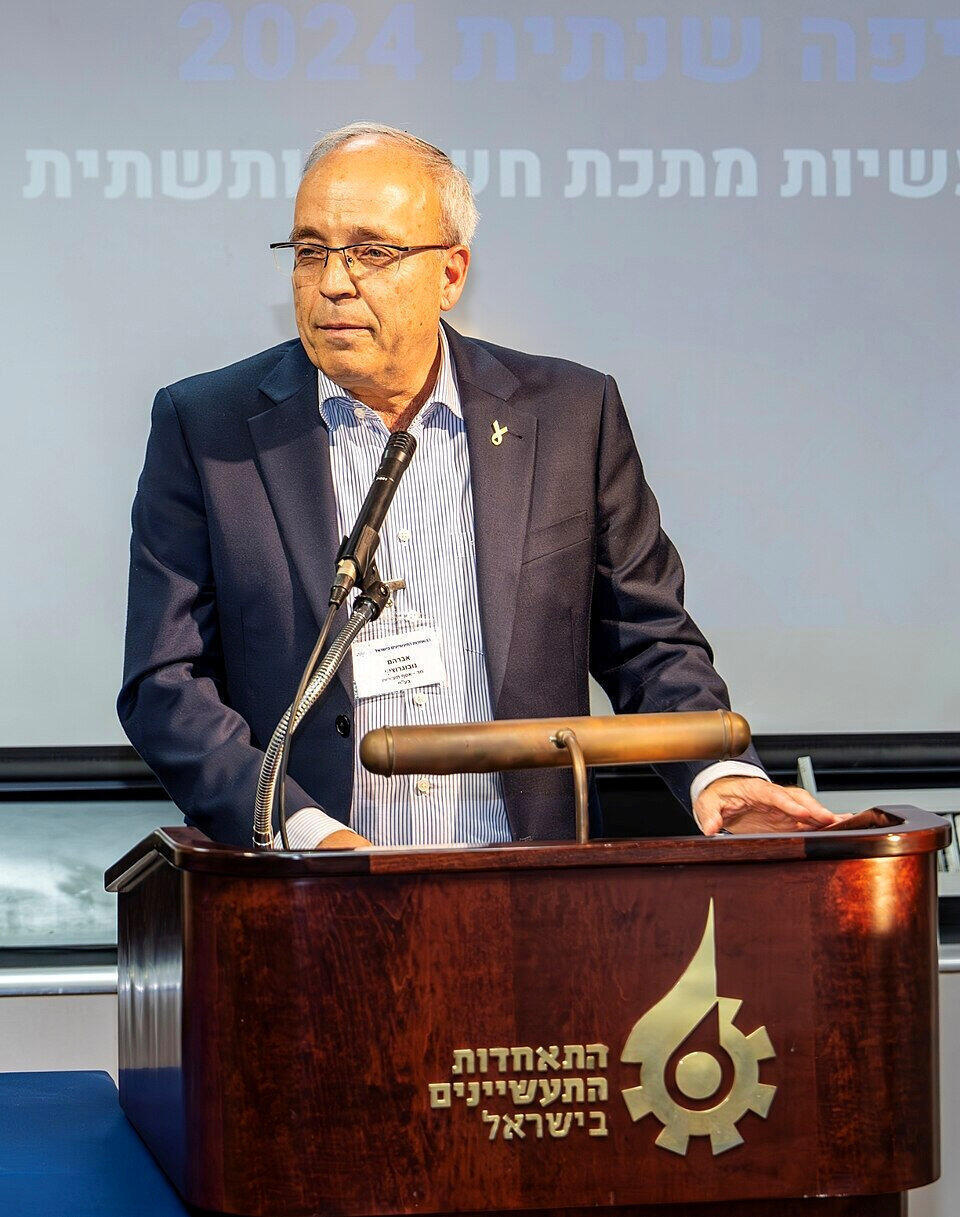
Abraham 'Novo' Novogrodsky
(Photo: Wikipedia)
Abraham “Novo” Novogrodsky, president of the Manufacturers Association, told ynet that the next government would have to address the problem urgently. “Successive Israeli governments have gradually neglected technological education and vocational training, and today we are all paying the price with a painful shortage of workers in these fields,” he said.
The association’s figures show that immigrants from the former Soviet Union are disproportionately represented among older industrial workers. Across Israel’s overall workforce, employees from the former Soviet Union aged 55 and older account for about 3.9% of workers. In industry, their share is 9.8%, about 2.5 times higher.
The disparity is similarly pronounced among workers aged 60 and above. They account for roughly 2.5% of the workforce economy-wide, compared with 5.8% in industry, 2.3 times the national rate. In total, about 41,600 industrial employees aged 55 and above are immigrants from the former Soviet Union, including some 24,700 who are at least 60.
Manufacturers say the problem goes beyond the number of employees leaving the workforce. Many of those approaching retirement have accumulated decades of specialized knowledge and experience that cannot easily be replaced.
When a veteran employee retires without a trained successor or an orderly transfer of knowledge, a factory loses not only a worker but also institutional expertise built up over years. The association therefore describes the looming retirement wave as both a labor shortage and a productivity problem.
A broad plan to close the gap
The Manufacturers Association is calling for a broad government program to address the shortage. In the short term, it wants Israel to increase quotas for foreign workers to help bridge the gap while longer-term measures take effect. The association argues that existing official labor data do not adequately account for the large number of experienced workers who are expected to leave the workforce in the coming years.
At the same time, it is urging the government to direct more resources toward targeted vocational training for Israelis.
Longer-term proposals include bringing more underrepresented groups into industrial employment and offering tax incentives to encourage older workers to remain in their jobs, measures aimed at slowing the loss of expertise accumulated since the large immigration wave from the former Soviet Union in the 1990s and early 2000s.
“Our national duty now is to come to our senses immediately, change direction and invest massively in education, artificial intelligence and the professional future of Israel’s young people in order to secure the future of industry and the economy,” Novogrodsky said.