

Finance Ministry officials have warned that the financial burden of establishing a "Humanitarian City" in the Gaza Strip will fall on Israeli citizens, potentially leading to higher taxes and cuts to education, health and welfare services.
Officials told Ynetnews that the proposed compound, estimated to cost 15 billion shekels (about $4 billion) in initial construction and another 10 billion shekels ($2.7 billion) annually to maintain, cannot be absorbed into the national budget without significant repercussions.
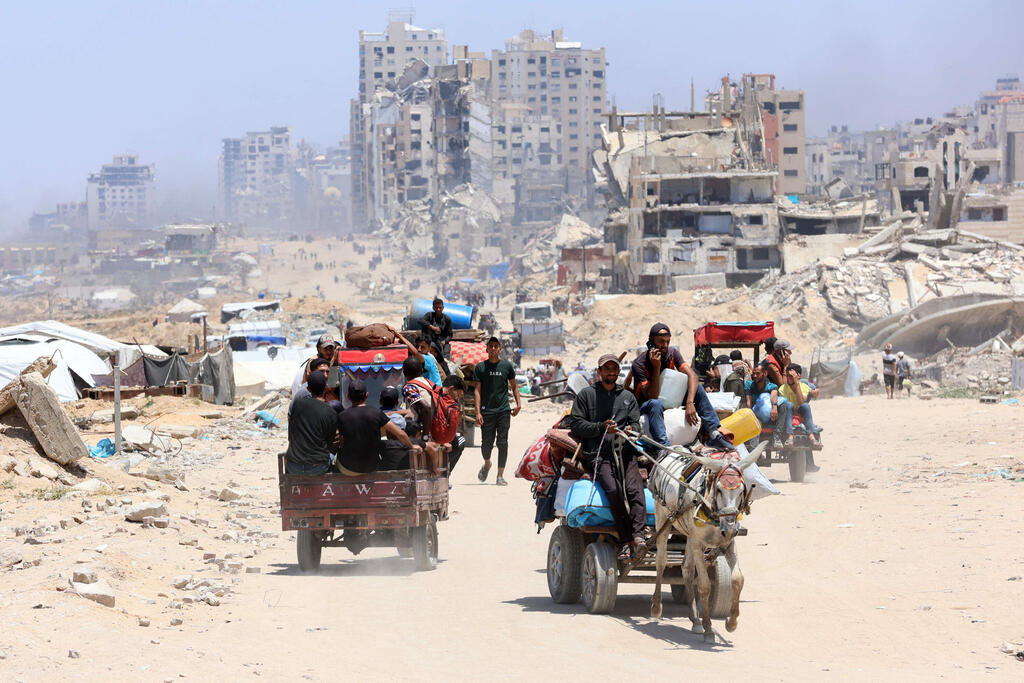
(Photo: AFP)
According to estimates by the Defense and Finance ministries, the project’s upfront costs could reach 10 billion shekels ($2.7 billion), with annual expenses rising by an additional 5 billion shekels ($1.35 billion) as the population grows and needs expand.
A government official likened the project to building a new Israeli city—without permanent housing. The Humanitarian City would require full infrastructure, including roads, sewage and water systems, street lighting, a hospital and schools.
The plan, which remains controversial, has been discussed only in two limited cabinet meetings and among officials in the security establishment and the Finance Ministry. Defense Minister Israel Katz, who previously served as finance minister, supports the initiative alongside current Finance Minister Bezalel Smotrich. However, ministry professionals oppose it on economic grounds.
“Before such a dramatic decision is made, there must be a defined funding source for what amounts to a large city meant to serve hundreds of thousands of people,” one official told Ynetnews.
The Finance Ministry expects that 25 billion shekels ($6.7 billion) will need to be allocated to the Defense Ministry by the end of July to launch the project and cover the costs of tens of thousands of reservists expected to be called up monthly.
Get the Ynetnews app on your smartphone: Google Play: https://bit.ly/4eJ37pE | Apple App Store: https://bit.ly/3ZL7iNv
A senior ministry official noted that an additional 20 billion shekels ($5.4 billion) in tax revenue collected this year could help offset some of the costs, potentially limiting the national deficit to just over 5%. Still, the International Monetary Fund, credit rating agencies and both domestic and international economists estimate the deficit will reach at least 6%.
If the government proceeds with the plan, officials say the 15 billion shekels ($4 billion) required to establish the Humanitarian City will necessitate increased taxes and sweeping budget cuts—further straining social services that have yet to fully recover from cuts during war and even from the COVID-19 pandemic.