


A Los Angeles court sentenced Joe (Joseph) Sanberg, a Jewish American fintech entrepreneur who co-founded the digital bank Aspiration, to 14 years in prison for defrauding investors and lenders of $248 million.
Sanberg, 46, who for years presented himself as a “social justice knight” and philanthropist who also donated to Jewish and Israeli causes, pleaded guilty last year to two counts of wire fraud. He managed to deceive dozens of people, including a series of celebrities.
Gallery
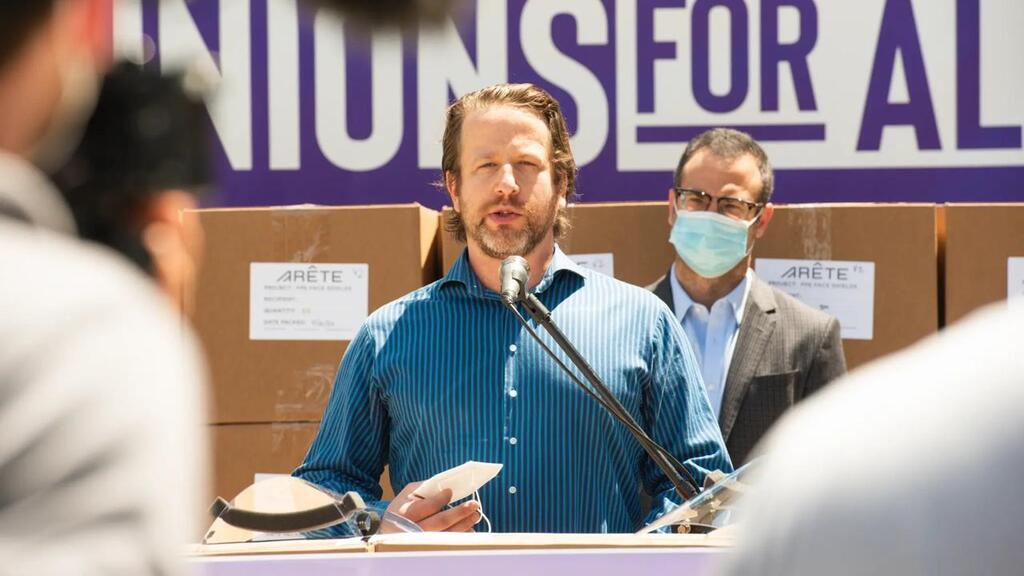
Joseph Sanberg for years has portrayed himself as a philanthropist and social activist
(Photo: Emergency Supply Donor Group)
Among those he defrauded were Leonardo DiCaprio, Robert Downey Jr., Drake, Cindy Crawford and Orlando Bloom, along with Los Angeles Clippers owner Steve Ballmer. Ballmer lost $60 million of his personal investment and posted on X: “I was defrauded and I feel stupid.”
During the hearing in a downtown Los Angeles courtroom, Sanberg burst into tears and said in a broken voice that he was “deeply sorry. I wanted so badly for Aspiration to succeed that in my passion I made terrible decisions.” He addressed victims who came to testify and said that since the day of his arrest, he had begun “a process of atonement. I accept that I lost my moral compass and wrongly stepped over the line, and I'm very sorry."
His attorney asked the court for mercy and urged it to avoid prison time, arguing that Sanberg is “a good person who did a bad thing,” and emphasizing his philanthropic work through Golden State Opportunity, a nonprofit he founded that helped low-income families in California.
But Judge Stephen Wilson rejected those claims outright. Wilson ruled that the circumstances of the case were among the worst he had ever seen, and that “this case has touched almost every badge of fraud.” The judge said Sanberg became “greedy, brazen, callous,” and became entangled in a web of lies he had woven over years.
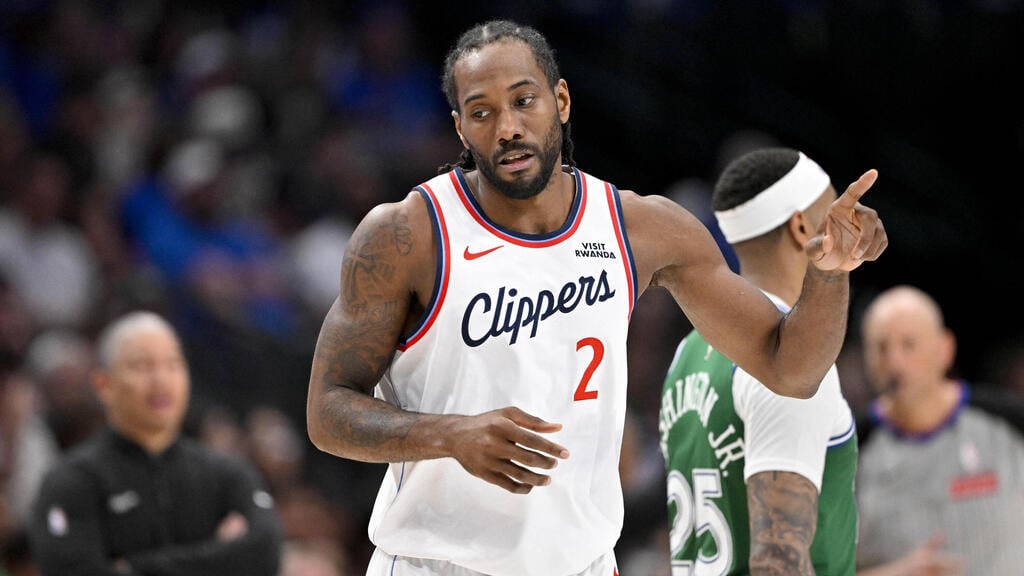
Signed a $28 million marketing contract with LA Clippers star Kawhi Leonard
(Photo: Jerome Miron-Imagn Images)
According to the judge, Sanberg “portrays himself as a do-gooder who was in business to help the world, but he did personally gain from his fraud.” Prosecutors showed how Sanberg used loan money that was supposedly intended for the company to cover personal debts and buy shares in other companies. Prosecutors also said Sanberg created fictitious customers and used a forged audit committee document to show the company had $250 million in available capital, when in fact it had less than $1 million.
The affair reached the NBA
The case also extends to the NBA. Aspiration signed a $300 million sponsorship deal with the Los Angeles Clippers in 2021, and the following year signed a $28 million marketing contract with team star Kawhi Leonard. The league opened an investigation into suspicions that the agreement with Leonard, which did not require him to perform any actual work, was intended to circumvent the NBA salary cap.
League representatives informed the court in a letter that Sanberg had substantially cooperated with investigators and helped them understand the sequence of events after meeting with them for two in-person interviews and providing documents. Ballmer’s attorneys asked the judge to treat information provided by Sanberg with skepticism, noting that his credibility was in doubt in light of his fraud conviction.
Prosecutors sought a heavy sentence of nearly 40 years in prison and presented testimony from small investors who lost all their savings. One victim said his business lost 50% of its net worth, another lost $90,000 that represented his entire pension fund, and another couple testified that they lost $685,000.

Joe Sanberg: It is considered a heavy and significant sentence for white-collar crimes
(Photo: EITC)
Although Sanberg explicitly stressed that he had not been in contact with any of the victims because of the terms of his plea deal, one victim returned to the witness stand and revealed that Sanberg had just lied to the court. The victim said he had received a direct text message from Sanberg, in which the convicted man tried to influence the victim impact statement he gave at the hearing.
Wilson’s decision to sentence Sanberg to 14 years in prison was a certain reduction from the prosecution’s request, but it is considered a heavy and significant sentence for white-collar crimes. The judge made clear that the sentence reflects the severity of the acts, which he described as being at the highest level of fraud cases he had encountered during his career. Wilson completely rejected the defense’s request to avoid sending Sanberg behind bars, ruling that his actions stemmed from greed, not stupidity, particularly given that he is a Harvard University graduate.
Aspiration, the company founded by Sanberg, was presented as a green digital bank with developed environmental awareness. The company promised customers that their money would not be invested in polluting industries, and offered services such as fossil fuel-free retirement investments, a debit card that provided cash back from ethical companies, and the option to round up purchases to donate to tree planting.
To lure investors and inject capital into the company, Sanberg used the positive image he had created for himself, along with his impressive academic background and charitable donations. He focused on people passionate about environmental sustainability and used his relationships with them to draw in additional investors and extract hundreds of millions of dollars from them.
In practice, Sanberg fraudulently inflated the company’s revenue. He forged documents, secretly paid companies and private individuals to sign up for the company’s tree-planting services, and concealed that fact from investors to create a false impression of profitability.
Aspiration filed for bankruptcy in 2025, following the exposure of the fraud and the opening of the NBA’s official investigation. Prosecutors said the case serves as a warning that “anyone can fall victim to a fraudster.”
Sanberg is required to report to begin serving his sentence in mid-August, and a hearing on compensation for victims has been set for late July.
First published: 10:04, 06.02.26