

The Cincinnati Reds have selected Flexor’s AI Context Engine to help the organization turn unstructured information, including surveys, contracts, internal notes and baseball terminology, into data that can be used more effectively by artificial intelligence systems.
The agreement will see the five-time World Series champions deploy Flexor’s technology on top of Databricks, the data and AI platform already used by the club to process player and game information.
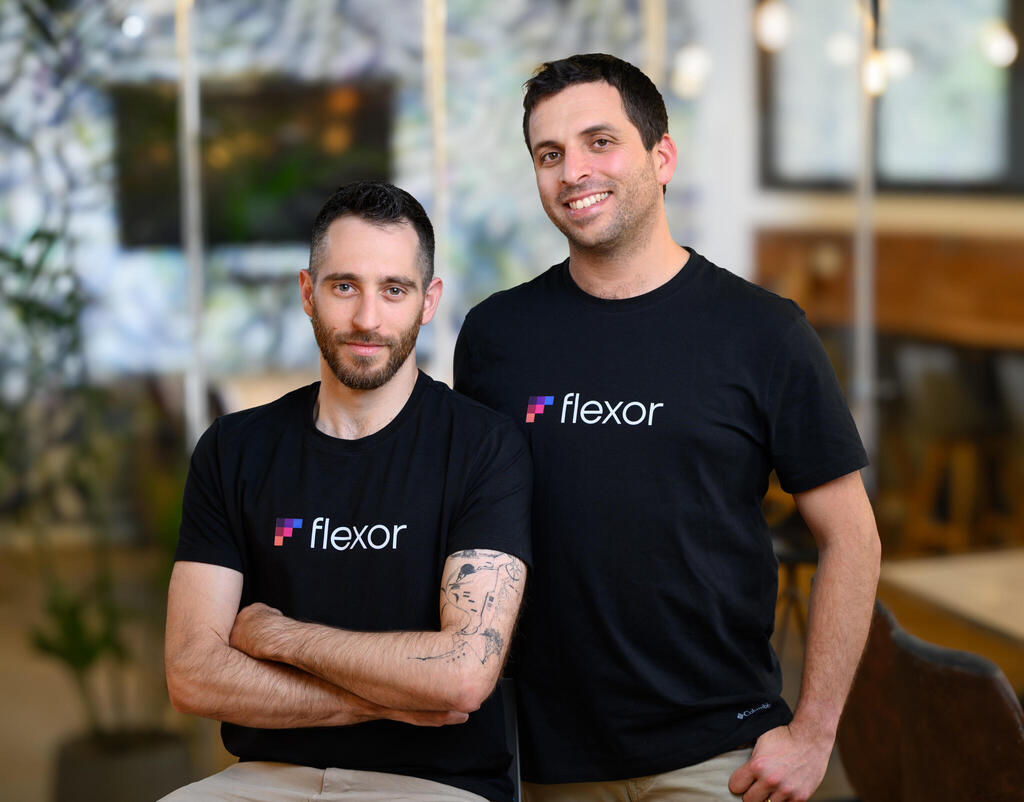
Flexor co-founders, Or Zabludowski, CEO (left) and Regev Ben Simon CTO (right)
The Reds said the system will initially support several business functions, including post-game survey analysis, contract review and sales prospecting. The organization is also developing baseball-related applications that it has not disclosed.
The move reflects a broader effort by professional sports teams to use AI not only for performance analysis, but also across commercial, legal and operational departments.
For the Reds, one of the main challenges was that much of the organization’s internal knowledge was stored in formats that conventional databases and AI tools could not easily interpret. That material included CRM notes, contracts, surveys, internal documents and specialist baseball language.
Flexor’s platform is designed to process that information once, add relevant context and make it available for repeated use across different AI applications.
The system will operate alongside Databricks Lakeflow Jobs, which the Reds use to automate the processing of large volumes of player and game data. According to the companies, workflows that previously required hours of manual work can now be completed in minutes.
One part of the platform, known as the Domain Intelligence Hub, allows organizations to define industry-specific terminology so that AI systems interpret it consistently.
In the Reds’ case, that includes baseball terms such as “slurvy,” a breaking pitch that combines characteristics of a slider and a curveball. Encoding such terminology into a shared knowledge layer is intended to reduce ambiguity when the same data is used by different analysts, departments or AI agents.
“Flexor turns unstructured data into AI-ready context we can deploy for endless use cases,” said Mickey Mentzer, senior director of baseball systems at the Cincinnati Reds.
Mentzer said the club was also working on AI initiatives that had not previously been attempted in the sports industry, though he did not provide details.
Beyond baseball operations, the Reds plan to use AI to analyze fan feedback from post-game surveys, speed up reviews of complex contracts and help sales staff identify and prioritize potential customers.
The club’s adoption of Flexor comes as companies across industries attempt to move beyond limited AI experiments and integrate the technology into routine decision-making.
Or Zabludowski, co-founder and CEO of Flexor, said the central issue was not a lack of information, but the difficulty of making institutional knowledge accessible to AI systems.
“Every industry has its version of this tribal knowledge: rich, expert know-how that lives in unstructured form and never reaches the people and systems that need it most,” he said.
Neil Scott, head of sports go-to-market at Databricks, said the Reds had already demonstrated how faster data processing could support coaches and players, and were now extending the same approach to information stored elsewhere in the organization.
“With Flexor unifying unstructured data on top of Databricks, they’re extending that same speed and rigor to every corner of the organization,” Scott said.
Flexor said the Reds join customers in financial services, telecommunications and technology that are using its platform to place AI systems into production rather than limiting them to pilot programs.