

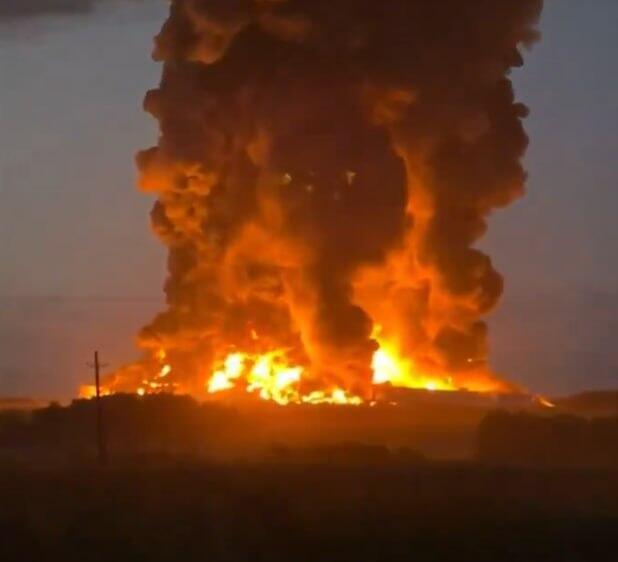
On July 18, Moscow residents woke up to a massive mushroom cloud of black smoke blanketing the city’s skies. They had already grown accustomed to Ukrainian drones striking targets around the Russian capital almost nightly. Just two weeks earlier, drones had caused a huge fire at the city’s largest oil refinery.
But this attack was particularly unusual: For the first time in the war, Ukraine struck a massive logistics complex belonging to a retail company. And not just any retailer, but Wildberries, the e-commerce giant often described as “Russia’s Amazon.”
Footage from a Ukrainian attack on July 18 shows a massive fire at a Wildberries warehouse in the Moscow region
(Video: Reuters)


The facility hit in Elektrostal, in the Moscow region, was the company’s second-largest logistics complex in Russia, covering 230,000 square meters, or about 2.5 million square feet. And it was only the opening blow.
Over the past month, it has happened again and again: Ukrainian drones have struck at least 23 of Wildberries’ 30 logistics complexes across Russia, including facilities in the Moscow region, St. Petersburg, Tula, Volgograd, Perm, Krasnodar and Samara, among other locations.
At least 20 facilities were severely damaged, some completely destroyed. Nine employees were killed in the attacks, dozens were injured and millions of items went up in flames.
The choice of target is no accident. It represents a new form of economic warfare.
Ukrainian officials say the warehouses are being targeted partly because Russian soldiers purchase equipment through them, but also because Kyiv wants to shatter “the illusion of a comfortable, well-fed peacetime life,” as Robert “Magyar” Brovdi, commander of Ukraine’s Unmanned Systems Forces, put it.
Wildberries does, in fact, play a critical role in everyday Russian life, particularly since Russia’s invasion of Ukraine prompted a mass exodus of Western companies, including Amazon, IKEA and Adidas, amid sweeping international sanctions.
Thick smoke rises from a Wildberries logistics complex struck in Russia’s Samara region
A Ukrainian drone explodes in Russia’s Vladimir region in another attack targeting Wildberries
As the ruble plunged, inflation soared and the traditional retail market contracted, Wildberries provided a substitute for many of the goods Western companies stopped supplying. From clothing and cosmetics to electronics, auto parts and personal care products, nearly everything flows through the company.
Wildberries controls about 45% of Russia’s e-commerce market, processes millions of orders a day and offers tens of millions of products. About 79 million customers — roughly half of Russia’s population — visit its platform each month, while annual sales are estimated at $68 billion.
For the average Russian consumer, Wildberries has become part of the infrastructure of ordinary life.
The company is also an important employer in the Russian economy, providing livelihoods for hundreds of thousands of people. It operates 95,000 pickup points across the country, from affluent neighborhoods in St. Petersburg to remote mining towns in Siberia and isolated villages in the Caucasus Mountains.
Each pickup location is generally run by a small local franchisee that employs workers, pays rent and contributes to the local economy. The platform also supports about 100,000 small businesses, including designers and local manufacturers, and for many serves as the only way to sell products nationwide without going through major retail chains.
That is why, when Wildberries’ logistics centers burn one after another, the effects ripple across Russia. The damage is not merely a corporate blow to the company’s balance sheet. It poses a direct threat to household finances, daily routines and the sense of normalcy of millions of Russian families — and that may be what worries the Kremlin most.
An ugly divorce, gunfire at company headquarters and one clear winner
Wildberries was not always so large or important. At its helm is founder and CEO Tatyana Kim, 50. She is now Russia’s richest woman, with a fortune estimated by Forbes at $8 billion. Her beginnings, however, were modest.
Kim was born in Grozny, the capital of the Russian republic of Chechnya, to a family of Korean descent. In the early 2000s, she worked as an English teacher and lived in a one-room Moscow apartment with her then-husband, Vladislav Bakalchuk, an engineer.

Wildberries founder and CEO Tatyana Kim
(Photo: Elena Chernyshova/Bloomberg)
In 2004, while on maternity leave after the birth of her first child — the couple would eventually have seven children — she started a small business ordering clothing from German catalogs and selling it online in Russia. Kim handled the orders herself, answered customers and collected packages.
It was the beginning of President Vladimir Putin’s rule, when Russian e-commerce was still in its infancy and online shopping seemed almost like science fiction to many Russians.
Russia’s economy was expanding rapidly at the time, fueled in part by surging energy prices that poured vast sums into state coffers. A new and growing middle class emerged with disposable income and an appetite for consumer goods. Wildberries entered that vacuum at just the right moment.
The company steadily gained popularity and grew into a sprawling commercial network. Kim built a system linking distant factories with consumers across the world’s largest country, from Kaliningrad on Russia’s western edge near Lithuania to Vladivostok in the Far East, near Japan.
By 2017, Wildberries had become Russia’s largest online retailer. In 2020, it expanded into European Union markets for the first time, and a year later it opened an online store for U.S. consumers.
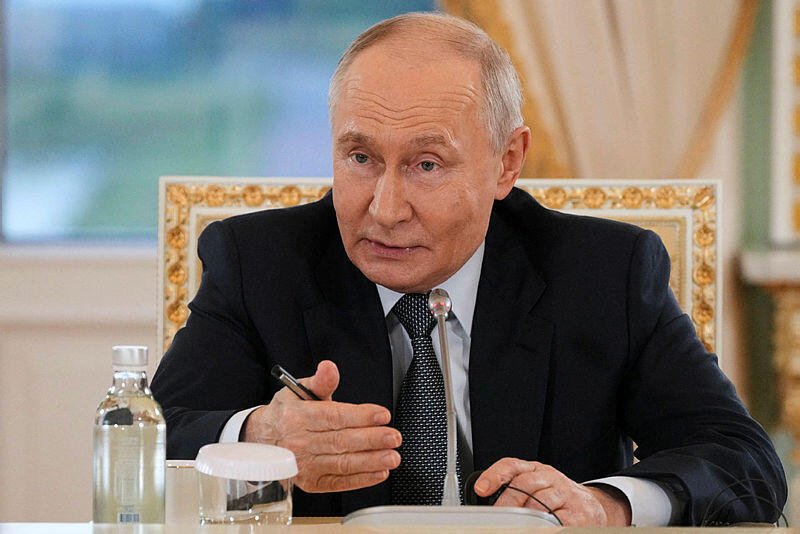
Russian President Vladimir Putin
(Photo: Dmitri Lovetsky/Pool via REUTERS)
Then, in 2022, Russia expanded its invasion of Ukraine, war erupted on a much larger scale and Western markets closed their doors to Russia.
Wildberries lost access to European and U.S. markets, but Russia’s domestic dependence on the company became critical. It emerged as a lifeline for Russian consumer spending.
In 2024, with the war in Ukraine raging, another battle erupted — this time within Wildberries itself.
Kim spearheaded a major strategic merger with Russ, Russia’s largest outdoor advertising company. The deal was intended to transform her empire into a technology and financial conglomerate capable of competing internationally with giants such as Amazon and Alibaba.
Her husband, whose influence over the company diminished as a result of the move, fiercely opposed it. He enlisted powerful allies in an effort to block the deal, including associates of Chechen leader Ramzan Kadyrov and figures connected to the Kremlin.
The bitter dispute spilled onto social media.

Chechen leader Ramzan Kadyrov
(Photo: AP)
In July, Kadyrov wrote on his Telegram channel that Bakalchuk had approached him about “serious problems within the family and the family business.” Kadyrov then posted a video of Bakalchuk discussing the dispute and described Kim’s maneuver as a “hostile takeover” of the company.
Kim responded on her own Telegram channel.
“This is not a hostile takeover. It’s a divorce,” she wrote. “Everything was agreed with Vladislav from the beginning, and he personally attended the presentation of the company’s new structure to senior management.”
The confrontation soon turned violent, with deadly consequences.
The drama peaked in September 2024, two months after the merger was approved, when Bakalchuk arrived with armed men and attempted to enter the company’s headquarters in central Moscow, a short walk from the Kremlin.
Two people were killed and seven injured in an exchange of gunfire.
Kim did not back down. She fought off attempts to wrest control of the business from her, pushed ahead with the merger, stripped her husband of his ownership stake and divorced him.
She had demonstrated that her control of the empire extended beyond corporate paperwork.
But two years later, before she could fully stabilize the company and consolidate control following the merger, a new, dramatic and unexpected threat arrived — one capable of shaking Wildberries to its foundations.
Ukraine’s drones.
First Wildberries, then the banks — and then Russia’s entire economy
Ukraine’s leadership has long been searching for new ways to pressure the Kremlin into ending the war, or at least freezing it along the current front lines. Russia has so far occupied and annexed about one-fifth of Ukraine’s sovereign territory, including the Crimean Peninsula.
Ukraine’s military is outnumbered by Russian forces, making it extremely difficult to mount a major ground offensive to retake occupied territory. And as the war drags on, Kyiv has increasingly concluded that it must reduce its dependence on the United States and other Western countries, prompting it to accelerate development of its own long-range strike capabilities — particularly attack drones, ballistic missiles and cruise missiles.
Once those capabilities became operational, they gave Ukraine a broad range of options for striking strategic targets deep inside Russia, from military bases and defense industry facilities to major refineries producing petroleum products and fuel, a crucial component of the Russian economy.
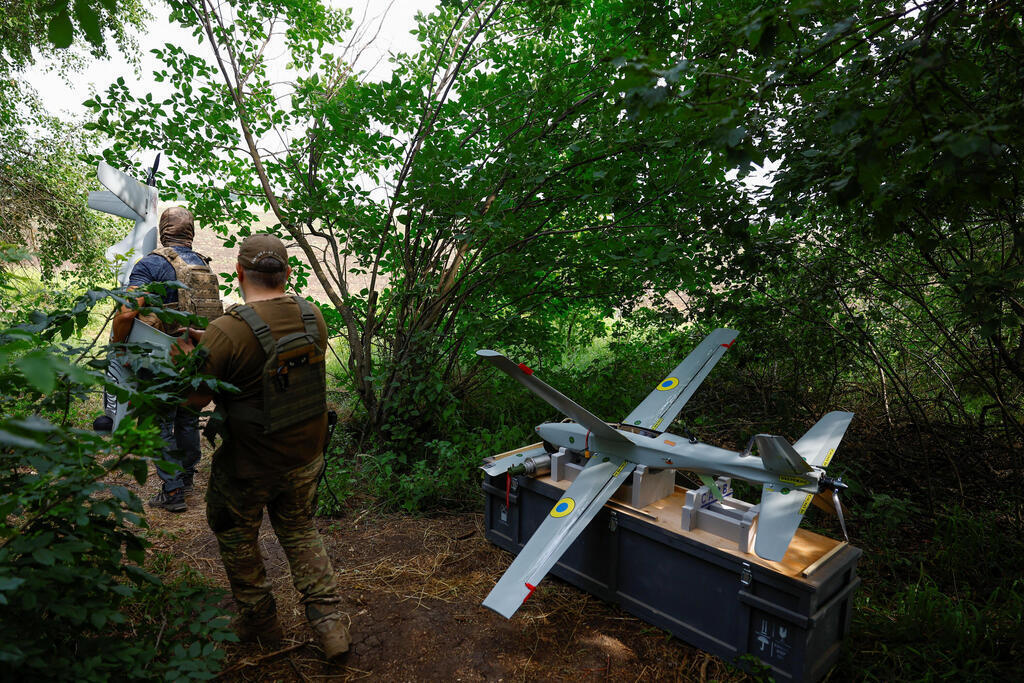
Drone operators in southern Ukraine. Such strikes have cut Russia’s oil and fuel production capacity by 35%
(Photo: Valentyn Ogirenko/Reuters)
The strategy has produced results: Russia’s oil and fuel production capacity, for example, has already been cut by 35%. But even that has not been enough to stop the war.
Over the past two months, Ukraine has therefore shifted course. Instead of concentrating primarily on infrastructure directly connected to the war effort, it has begun targeting Russia’s civilian industrial and logistics network, particularly Wildberries’ enormous distribution centers. The facilities have emerged as relatively accessible targets whose destruction can have an enormous economic and psychological impact.
The damage has been extensive. By Aug. 5, no fewer than 11 of the company’s logistics facilities, covering a combined area of about 1.4 million square meters, or 15 million square feet, had been permanently closed. At least nine others suffered significant damage.
All will require extensive repairs lasting many months — if rebuilding is even possible under current security conditions.
Consumers in Moscow and other major cities have reported unusually long delivery delays stretching into weeks, widespread order cancellations and sharp price increases for basic goods. Hundreds of thousands of small and midsize business owners who stored their entire inventories in Wildberries warehouses have also found themselves with nothing.
Ukraine’s strategy may not stop with Wildberries.
On July 31, Ukrainian drones struck a shipping warehouse in Zelenodolsk in Russia’s Republic of Tatarstan, near a facility operated by Ozon, Wildberries’ biggest competitor. Ozon controls about 32% of Russia’s e-commerce market, making it a plausible next target.
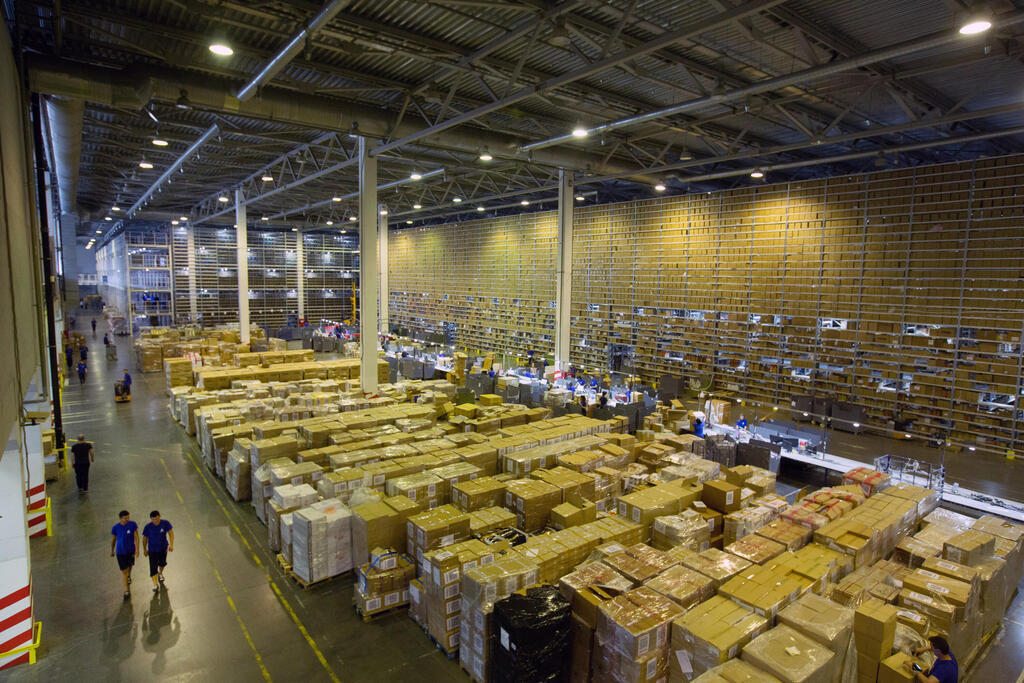
A Wildberries warehouse in Podolsk, in the Moscow region. At least 11 logistics complexes covering about 1.4 million square meters have been permanently closed
(Photo: Andrey Rudakov/Bloomberg)
Even if Kyiv does not say so publicly, the apparent objective is to push Wildberries toward financial collapse. If that happens, it could trigger a powerful chain reaction affecting Russia’s largest banks, which have extended huge loans to the company and could themselves require a government bailout at a time when Russia is already facing severe economic strains.
For the Kremlin, that prospect represents an unfolding nightmare.
Putin’s government has long relied on an unwritten social contract with ordinary Russians: Continue living your lives, go to work and buy what you need online, while the government conducts the war far away, with as little disruption to daily life as possible.
But the sustained attacks are exposing weaknesses in Russia’s air defense systems, which have struggled to stop Ukrainian drones from striking deep inside the country night after night.
That leaves Putin in a bind: If the government cannot protect Russia’s strategic assets and the economy itself is placed at risk, how can it justify continuing the war in Ukraine to the Russian public?
What works for Ukraine should worry Israel
The major unanswered question is whether Wildberries can survive the drone campaign or whether it is approaching collapse.
So far, the company has demonstrated unusual resilience and the ability to recover quickly, characteristics common among major technology companies. But as Ukraine’s campaign continues, the financial hole facing Wildberries is only growing deeper.
Kim’s response to the attacks has been restrained and calculated, displaying the composure that has characterized her leadership. In speeches and messages to the media and employees, she has emphasized the company’s resilience and said backup systems and supply-chain rerouting operations are working around the clock to minimize disruption to customers.
“The attack on Wildberries infrastructure is an attack on civilians,” she said in a video posted online. “Not only Russians, but tens of thousands of people from Kyrgyzstan, Belarus, Kazakhstan, Armenia, Uzbekistan and China do business on our platform. Entrepreneurs from these countries have suffered billions in losses.”
But before adopting that more statesmanlike tone, Kim had already provoked widespread public anger.
Shortly before the wave of Ukrainian strikes against its facilities began, Wildberries updated its terms of service to add “drone attacks,” “shelling” and “explosions” to its list of force majeure events.
The legal significance was considerable. The change allowed Wildberries to disclaim legal responsibility and compensation obligations toward tens of thousands of sellers and suppliers whose goods were destroyed in its warehouses and who had no insurance coverage for such an event.
They reacted angrily, flooding social media with posts and videos criticizing the company.
Kim subsequently moved to soften the blow, announcing assistance measures and partial compensation for tens of thousands of the smallest and most vulnerable sellers. The company also said it paid $500,000 in compensation to the families of people killed or injured at its facilities.
The future of Wildberries could help determine not only Russia’s economic trajectory but also have implications far beyond the country.
If the company collapses and takes parts of the Russian economy down with it, it could establish an international precedent. Until now, major powers have often appeared able to operate with relative freedom on the territory of smaller and militarily weaker countries. But Ukraine’s drone strategy, and its expansion into commercial infrastructure, could change that calculation by giving smaller states a form of technologically enabled asymmetric warfare that helps offset their numerical disadvantages and target the economic vulnerabilities of larger powers.
It is a lesson that should resonate strongly in Israel.
Israel has already seen tactics pioneered or refined during the war in Ukraine appear in conflicts on its own borders, from the growing use of drones to attack infrastructure in the rear to the deployment of fiber-optic drones against Israeli troops in Lebanon.
Israel must account for the possibility that Hezbollah and other adversaries will seek to replicate tactics that have worked for the Ukrainian underdog.
If Israel fails to recognize that it must protect not only the airspace around critical infrastructure but also the commercial and logistical arteries essential to its economy, it could eventually find itself facing the same vulnerabilities now confronting Russia.