


SafeFields Technologies, an Israeli startup developing technology to reduce radiation in vehicles and transformer rooms, is on the verge of a breakthrough into the global market. In May, the company signed a strategic agreement with Swedish-American electronics and automotive safety giant Veoneer, which will manufacture and market its technology to major automakers.
But that is only part of the bigger picture. SafeFields is currently working with one of Europe's leading automakers to jointly develop its technology. The company has already received an initial order to produce prototypes for the European manufacturer, with testing set to begin shortly. The plan is for Veoneer to manufacture SafeFields' system, which will be installed in the European automaker's vehicles starting in 2029.
Gallery
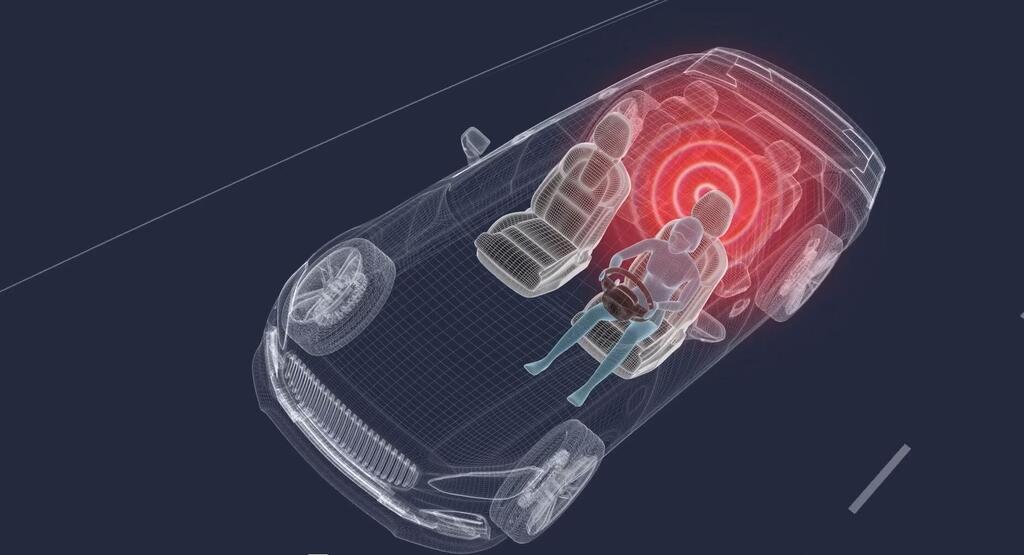
Radiation inside cars: Whether it poses a health risk remains uncertain
(Illustration: SafeFields)
The European company's identity remains confidential, perhaps because European companies are reluctant to disclose ties with Israeli firms. But for SafeFields, this represents a double victory: two potentially massive deals that could eventually generate tens of millions of dollars in revenue, and validation of its very existence. If this European company, one of the pillars of the automotive industry, sees fit to incorporate radiation-reduction technology into its vehicles, there is apparently a real problem that needs solving. And a small Israeli startup from Herzliya is offering one of the world's only solutions.
This is hardly a given. For years, a debate has raged over whether radiation inside electric vehicles, and sometimes even gasoline-powered cars, poses a health risk to passengers. We will not delve into that debate here. There are studies supporting both sides, experts who warn of potential dangers and others who dismiss the concerns. There are also vested interests on both sides. But under the precautionary principle emphasized by professional organizations, if it is possible to travel in a car without radiation, that is certainly preferable to traveling in one that emits radiation, even if we believe the radiation is harmless.

Veoneer-branded Volvo SUV with its hood open, exposing the vehicle's electrical systems
(Photo: Courtesy)
The Knesset's Economic Affairs Committee discussed the issue in January. Lawmakers found themselves caught in the dispute between those warning about radiation and those seeking to reassure the public. The committee concluded the hearing by calling on the Transportation Ministry, in cooperation with the Environmental Protection Ministry and Health Ministry, to examine ways to make radiation levels in cars sold in Israel transparent to consumers.
But several lawmakers did not wait. They introduced a bill requiring disclosure of vehicle radiation levels in advertisements and at dealerships. Under the proposed legislation, the Health Ministry would rate radiation levels in cars sold in Israel, and every advertisement for a new vehicle would be required to display its radiation rating. The bill's sponsors say the disclosure requirement itself would encourage automakers to make greater efforts to reduce radiation.
An active solution
SafeFields was founded in 2021 by Oded Einat and Shaul Shulman. The two met while serving in Unit 81, a technological unit within Israeli military intelligence. Einat served as chief engineer in the field of electromagnetics for 30 years, while Shulman was a senior engineer at Intel.

SafeFields was founders Shaul Shulman and Oded Einat
(Photo: Amit Alfonta)
Einat says the idea for the company emerged in the late 2010s, when he noticed a new phenomenon: Israel Defense Forces officers entitled to company-issued hybrid vehicles, such as the Hyundai Ioniq and Kia Niro, were refusing to accept them because of radiation concerns. He saw both an engineering challenge and a business opportunity. He teamed up with Shulman, and together they began developing a solution.
A few words about radiation in cars. Think the battery is the main source of radiation in an electric vehicle? Think again. It turns out that the main source is the wiring: thick cables connecting the battery, inverter and motor that carry low-frequency alternating current. The longer and thicker the cables, the greater the radiation. And when they run between the front and rear of the vehicle, as in hybrids and plug-in hybrids, the radiation spreads throughout the car. Radiation levels rise sharply during acceleration and braking.
An average gasoline-powered car contains about 1 kilometer (0.6 miles) of electrical wiring. An average electric vehicle has approximately 2 kilometers (1.2 miles).
Automakers are aware of the radiation and are trying to minimize it. The traditional solution is shielding — wrapping cables in radiation-absorbing materials and heavy, expensive metals. This adds weight, reduces driving range and increases electricity consumption.
SafeFields' solution uses "active magnetic field cancellation." Much like noise-canceling headphones, which generate sound waves that counteract unwanted noise, SafeFields' product generates an opposing electromagnetic field that is 180 degrees out of phase with the field inside the vehicle. The result is a 90% to 95% reduction in radiation.
The product includes radiation sensors installed at several points throughout the vehicle and along its main wiring harness. These are connected to an electronic control unit that generates the opposing field, adjusting it within a fraction of a second to match the field produced by the vehicle.
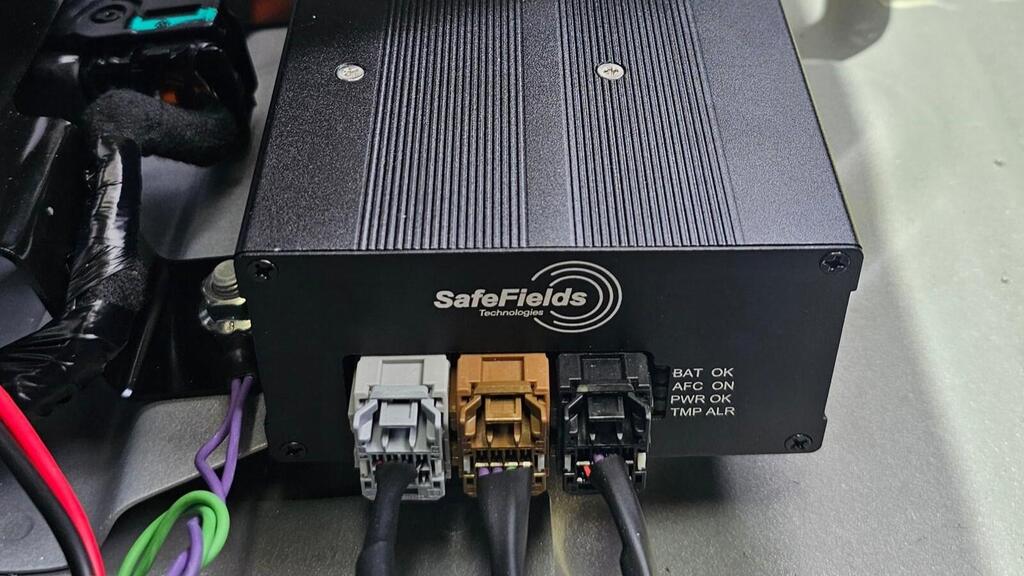
SafeFields Technologies' radiation-reduction device, designed to reduce electromagnetic radiation inside vehicles
(Photo: Courtesy)
“We have almost no competitors worldwide, and we are years ahead of any potential rivals,” Einat said.
SafeFields' technology has reached the global automotive industry at a turning point. Electronic systems have become highly complex, the density of processors and sensors has increased and the wiring connecting these systems is growing thicker, increasing radiation inside vehicles. Automakers looking for added value and a competitive advantage in safety and comfort want to be able to promote vehicles with low radiation levels.
Although the scientific and regulatory debate over the harmful effects of low-frequency radiation is far from settled, the precautionary principle works strongly in SafeFields' favor. It combines public demand for peace of mind with automakers' desire to get ahead of future regulations.
In an optimistic scenario, active radiation-cancellation systems could evolve from optional accessories into standard components in every electric vehicle, just as seat belts, airbags and cabin air filtration systems did in the past.
A dual business strategy
Quite a few Israeli startups have created entirely new product categories and then had to convince customers that they needed their solutions in the first place. SafeFields faces an even greater challenge because numerous players worldwide have worked to convince the public that radiation in cars is not a problem.
Public concern about radiation in vehicles, which was more pronounced in the early days, has subsided in recent years. One explanation is that there was simply no alternative. People can quit smoking because they fear cancer, but they cannot simply stop traveling by car.
SafeFields' solution makes it possible to manufacture cars that do not emit radiation, and the concept is proving highly attractive to automakers.
The company is pursuing a dual business strategy: advancing major deals with automakers and automotive parts suppliers while simultaneously generating immediate revenue through sales to the general public.
The Veoneer deal exemplifies the first strategic track. The global automotive industry is characterized by high barriers to entry and lengthy approval processes. For a startup, attempting to sell directly to automakers is difficult and slow. Partnering with a Tier 1 supplier such as Veoneer provides an effective global distribution channel directly to vehicle manufacturers.
SafeFields explored partnerships with several Tier 1 suppliers before choosing Veoneer, and others may follow. The start of testing with the European automaker illustrates even greater potential.
SafeFields is also in talks with additional automakers, including some in China. Once the first deal, and perhaps a second, is signed with vehicle manufacturers, many more are likely to follow.
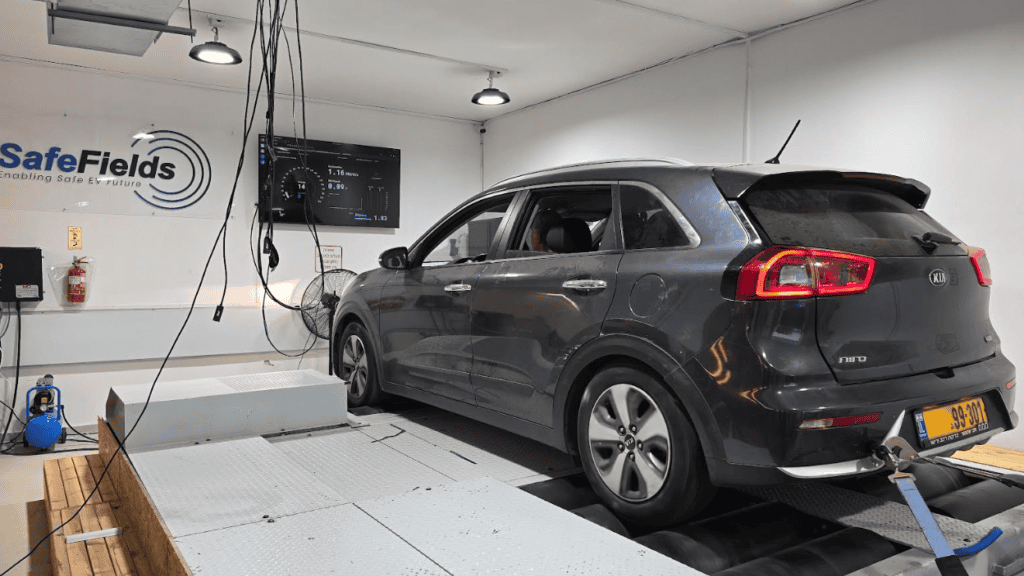
A Kia Niro undergoing testing at SafeFields' facility to measure electromagnetic radiation levels
(Photo: Courtesy)
No automaker wants to be the last one selling cars that emit radiation. On the contrary, the ability to offer a radiation-free passenger cabin could become a marketing advantage, particularly in the premium and family vehicle segments.
According to research by IMARC Group, the automotive electromagnetic interference (EMI) shielding market is estimated at approximately $8.39 billion in 2026 and is expected to grow to $11.54 billion by 2034. The active shielding market is valued at between $2.5 billion and $3.5 billion.
About 40 million electric and hybrid vehicles are currently manufactured worldwide each year. Assuming a manufacturer cost of approximately $50 per active cancellation module, the potential total addressable market (TAM) is estimated at roughly $2 billion annually.
Taking shape
The second business track focuses on the aftermarket and local installations. Rather than wait for the automotive industry's lengthy development cycles, SafeFields began marketing a system for installation in existing vehicles in Israel in 2024.
Some car brands in Israel offer the product as part of the package when purchasing a new vehicle, and it can also be installed in any other car. The price — 2,900 shekels ($950) — may be a barrier for owners of inexpensive vehicles, but in the luxury car segment, it is hardly a consideration.
"Cooperation with the importers is already beginning," Einat says. "It's taking shape. Right now, we're installing the system directly for consumers, and we're also talking with fleet operators about making radiation reduction a requirement in tenders with leasing companies.
"Demand is very high. People want to enjoy hybrid and electric vehicles, but they don't want to expose their children to radiation. In fact, our product is gradually becoming the norm."
The company reports that its monthly revenue is steadily increasing.
"We started at tens of thousands of dollars a month, and now we're already at $100,000 a month and growing," Einat says.
The plan is to expand into leasing fleets and corporate vehicle fleets, while preparing to replicate the model in markets with heightened awareness of radiation risks, particularly Europe and California.
"Once we reach vehicle fleets, because employees simply won't be willing to accept these cars without a solution, I think we'll reach a revenue rate of millions of dollars," he says.
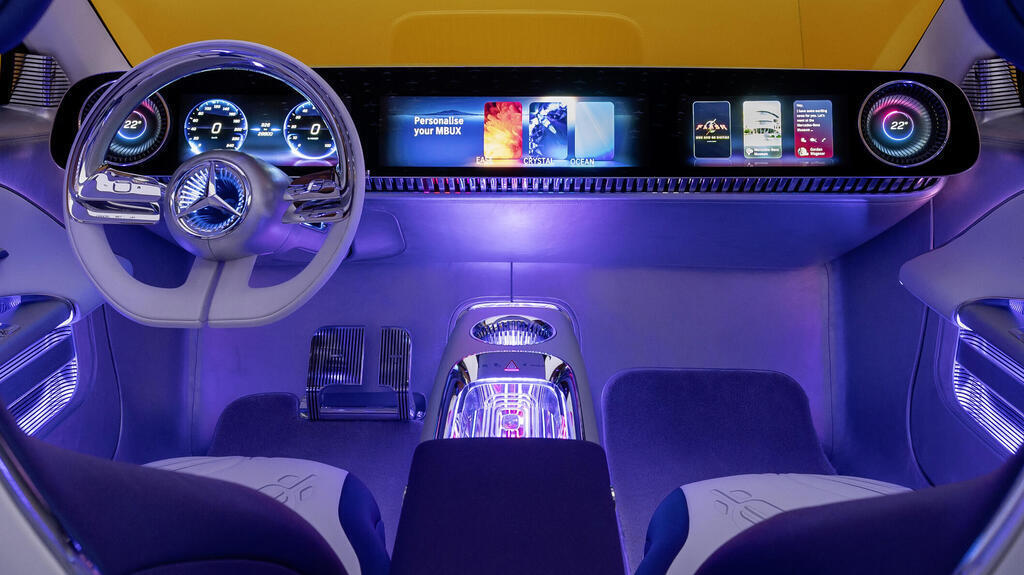
Luxury concept car equipped with extensive electrical systems
(Photo: Mercedes)
Preparing for another funding round
To date, SafeFields has raised a total of $12 million from a group of prominent investors in Israel's automotive, high-tech and energy industries.
Investors include the founders of SolarEdge, who invested privately; Mayer Group, the importer of Volvo, Honda and other brands, which invested through the Next Gear Ventures venture capital fund; Union Group, the importer of Toyota, Lexus, Geely, Zeekr and other brands; automotive electronics installation company Gil-Car; and private investors.
The company is now preparing for another significant funding round aimed at financing the international expansion of its aftermarket operations in Europe and the United States, as well as expanding its engineering teams ahead of mass production with Veoneer.
The technology for neutralizing electromagnetic radiation is suitable for more than just cars. Over the coming year, the company plans to launch an entirely new business division.
Following inquiries from Israel Electric Corp. and infrastructure company Afcon, SafeFields is launching a pilot project to evaluate the technology's suitability for transformer rooms and main electrical panels in residential and office buildings.
Applying the technology in transformer rooms is simpler from an engineering standpoint because there are no strict size or weight constraints, and the radiation frequency is stable.
This article was originally published by Energya, an Israeli news website covering energy and technology.