


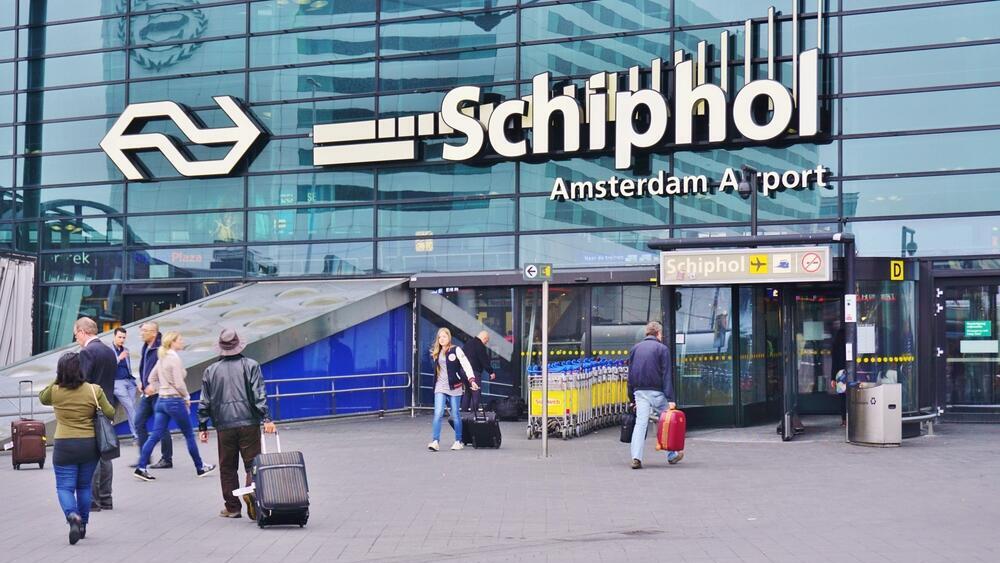
Anyone who has recently landed at Amsterdam’s Schiphol Airport on a flight from Israel may have encountered a question that was not asked there in the past: Are there any products in your luggage from the West Bank, East Jerusalem or the Golan Heights?
It marks a significant shift in relations with a country that for decades was considered one of Israel’s closest friends in Europe.
The current dispute over luggage contents is only the latest sign of a much bigger change. In less than three years, the Netherlands has gone from a country that maintained a relatively pro-Israel line, even while voicing criticism, to one of the most prominent countries in Europe in promoting practical measures against Israeli policy in the territories.
The shift stems from a combination of the war in Gaza, growing criticism in public opinion, the influence of the professional ranks in the Dutch Foreign Ministry and the new political system in The Hague.
So what actually happened?
Last week, on September 22, an order took effect in the Netherlands banning the import, purchase, sale and commercial brokerage of products originating in what the Dutch government defines as “illegal Israeli settlements” in the West Bank, East Jerusalem and the Golan Heights.
The order is currently set to remain in force for three years, and violating it may constitute a criminal offense. The Netherlands decided to act independently after failing to secure agreement within the European Union on a joint move.
Major foreign policy decisions require very broad support among the bloc’s 27 member states, and when that support failed to materialize, The Hague decided to proceed on the national level.
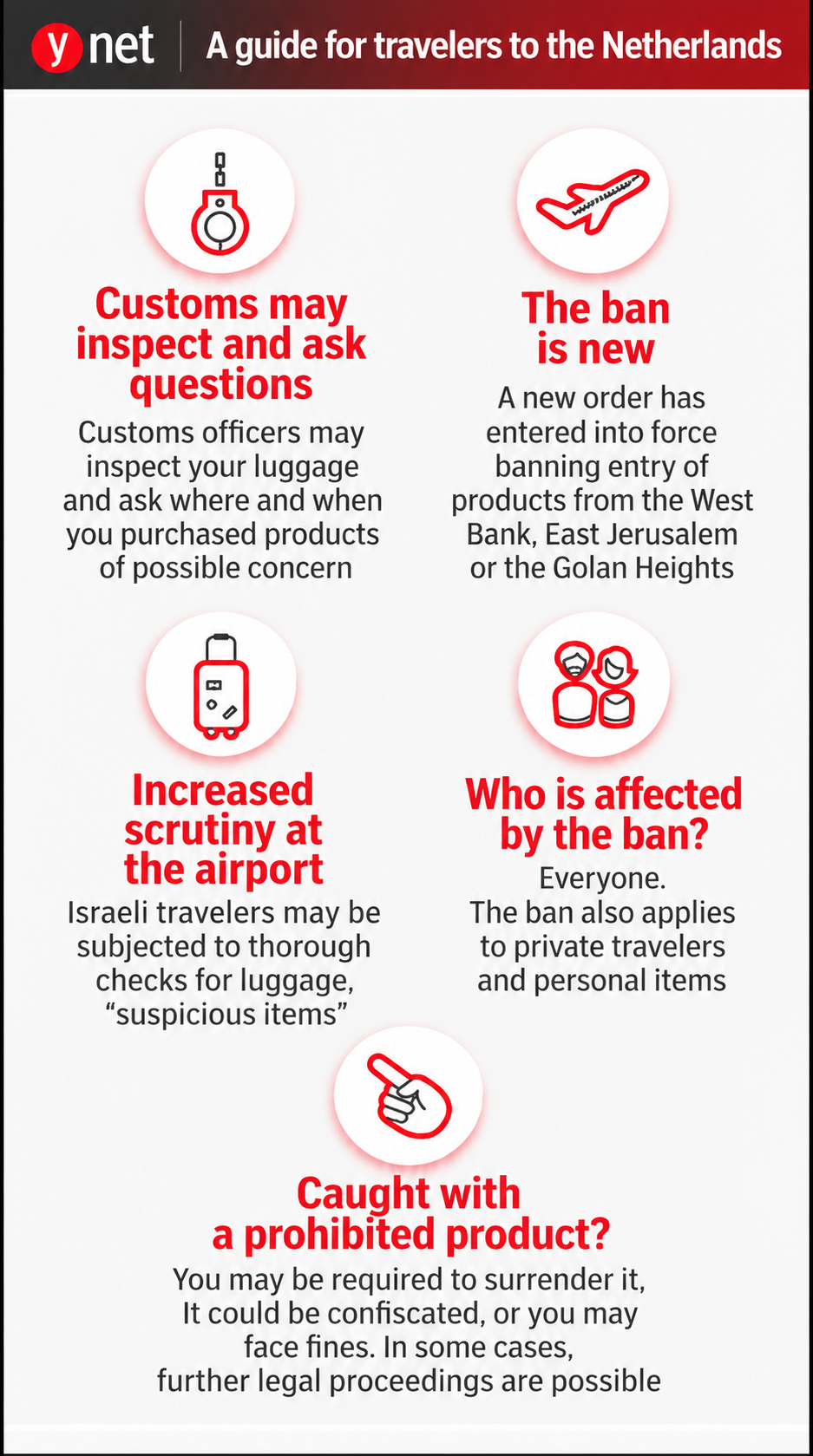
The particularly unusual aspect of the order is that it does not apply only to companies and importers. According to guidelines published by Dutch customs, the ban also applies to products in passengers’ personal luggage, including gifts, souvenirs and items for personal use.
Within days of the order taking effect, passengers arriving at Schiphol from Tel Aviv said that during customs checks they were asked whether they were carrying products originating in the territories.
Israel responded quickly. Foreign Minister Gideon Sa’ar announced that Dutch diplomats serving in connection with the Palestinian Authority in Ramallah — some of whom in practice live in Israel — would be required to return the diplomatic documentation issued to them by Israel. Once that period ends, the immunities and privileges granted to them will expire.
“If the Netherlands wishes to continue representing its interests vis-à-vis the Palestinians, it can do so from Palestinian Authority territory and not from the territory of the State of Israel,” the Foreign Ministry said.
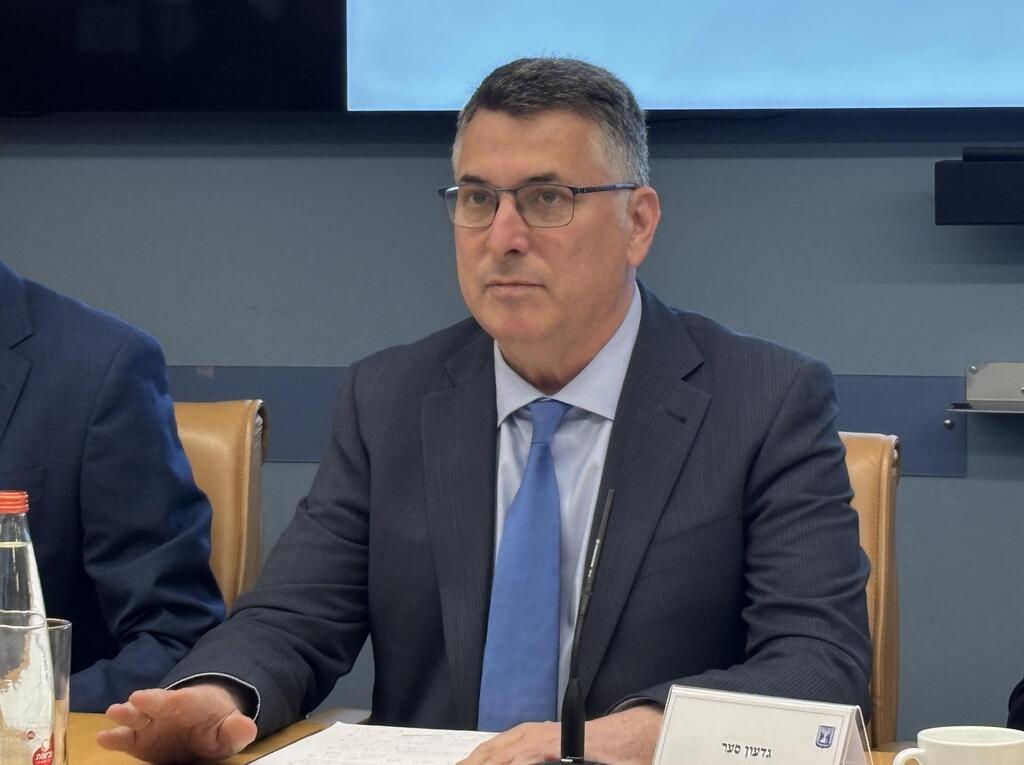
Foreign Minister Gideon Sa’ar announced that Dutch diplomats serving in Ramallah would have to give up their diplomatic documents
(Photo: Gil Yochanan)
Dutch Foreign Minister Tom Berendsen expressed regret over the Israeli decision and called it unnecessary. He said the ban on settlement products was not directed against Israel, but stemmed from what the Netherlands sees as its obligation not to contribute to a situation that violates international law.
The diplomatic dispute did not stop there. Israel’s ambassador to the Netherlands, Zvi Vapni, was informed that he would be summoned for a reprimand at the Dutch Foreign Ministry over Israel’s retaliatory measures, foremost among them the cancellation of diplomatic documentation for members of the Dutch mission in Ramallah.
The Hague also intends to protest an earlier Israeli measure in which Dutch representatives were removed from the international coordination center for Gaza in Kiryat Gat.
I’m flying to the Netherlands. What does this mean?
The Dutch ban also applies to private travelers. It covers products purchased before the order took effect and remains valid even if the traveler enters the Netherlands through another EU country. Online orders and postal shipments are also included.
Products originating in Israel within the pre-1967 lines, however, are not prohibited.
Dutch customs officers are authorized to inspect luggage and ask travelers about the origin of products they find. Anyone carrying, for example, a bottle of wine, dates, cosmetics or food products may be asked to show, through a label, packaging or documentation, where the product was made.

Dates grown by Jews in the West Bank can not be brought into The Netherlands
(Photo: Desert Beats/Central Arava)
If the original packaging is missing or the labeling is unclear, proving the product’s origin may be more difficult. Travelers who are unsure are instructed to use the red customs channel and declare the item.
If customs determines that the product is prohibited, the traveler may surrender it voluntarily. If they refuse, customs may confiscate it. A report will then be drawn up and Dutch prosecutors will decide whether further action is warranted.
Despite the headlines and the diplomatic confrontation, Israeli Foreign Ministry officials also stress that the scale of the checks should be kept in perspective.
At present, there is no evidence that entire groups of passengers from Israel are being taken aside for separate screening or that everyone arriving from Tel Aviv is being checked. The inspections are random, and so far Jerusalem has not received a “flood” of complaints about delays, interrogations or arrests.
In practical terms, a traveler whose suitcase contains, for example, a bottle of wine or a food product originating in a settlement could be required to surrender it or see it confiscated.
But at this stage, there is no indication of broad enforcement against Israeli travelers as a whole.
Even so, Jerusalem views the application of the ban to personal luggage itself as an especially unusual and offensive measure. That is also why Israel chose a relatively harsh response: revoking the diplomatic documentation of Dutch diplomats serving in connection with the Palestinian Authority.
From Israel’s perspective, the message is that not every step taken against the settlements will go unanswered diplomatically.
But the Netherlands was one of Israel’s closest friends
That is true. For decades, the Netherlands was regarded as one of Israel’s most reliable allies in Western Europe.
During the Yom Kippur War, it was among the European countries that assisted Israel and allowed its territory to be used for the American airlift.
After the Soviet Union severed diplomatic relations with Israel following the Six-Day War, the Netherlands represented Israeli interests in Moscow for years.
Until 1980, the Netherlands even maintained its embassy in Jerusalem.
Relations between the two countries also remained close during Mark Rutte’s long tenure as prime minister, which lasted 14 years.
According to Israeli officials familiar with the relationship, however, the change did not begin after October 7.
About 15 years ago, Jerusalem had already identified an increasingly critical trend within the professional ranks of the Dutch Foreign Ministry.
The Hague began warning companies against economic activity in settlements, and Israeli officials watched with concern as that line gradually strengthened.
For years, there was a gap between the political leadership, which maintained relatively close ties with Israel, and the professional bureaucracy, which gave greater weight to international law, human rights and settlements.
Today, according to the Israeli assessment, those two forces have moved closer together.
And what did October 7 change?
In the first months after the massacre, relatively broad support remained in the Netherlands for Israel’s right to fight Hamas.
In November 2023, 68% of respondents in a poll said Israel had the right to defend itself, and about three-quarters placed primary responsibility for the outbreak of the war on Hamas.
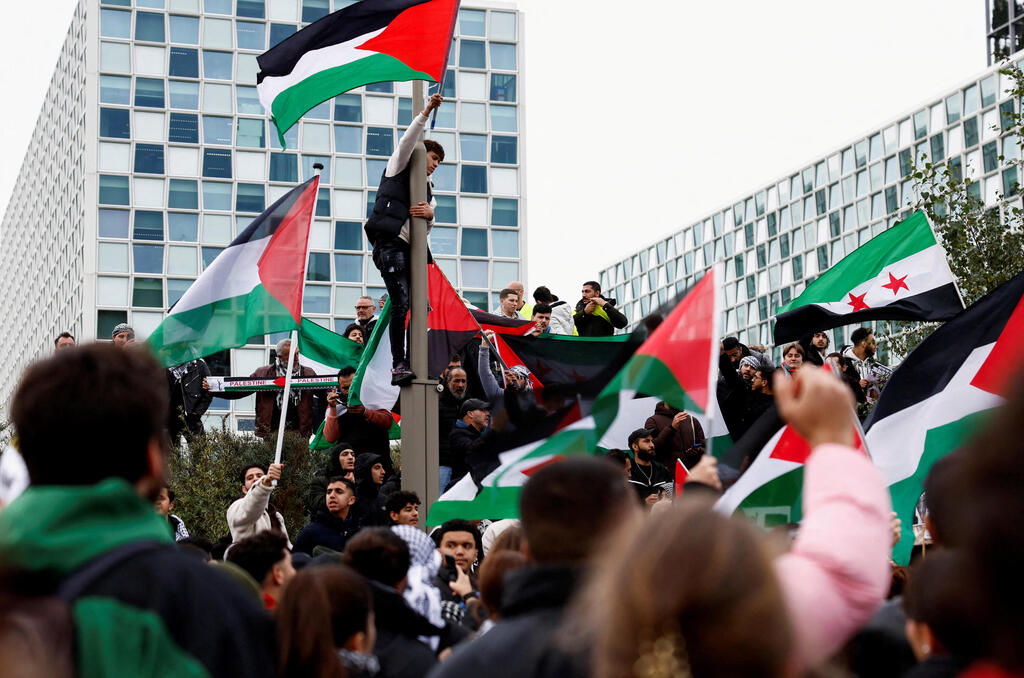
Pro-Palestinian demonstration in The Hague, January 2024
(Photo: Piroschka van de Wouw/File Photo/Reuters)
At the same time, however, 48% said Israel’s military response was disproportionate.
In other words, two views existed side by side from the outset: recognition that Israel had been attacked and that Hamas bore responsibility for the outbreak of the war, alongside growing criticism of the way Israel was conducting it.
As the war continued, the balance shifted increasingly toward criticism.
By April 2025, more than half of respondents in an Ipsos I&O poll wanted the Dutch government to take a more critical approach toward Israel.
Even so, most respondents still placed significant responsibility on Hamas for the renewed escalation.
The war in Gaza therefore changed the decision-making environment in the Netherlands. When that was combined with settlement expansion, advancement of the E1 plan and a rise in settler violence against Palestinians, political pressure to act increased.
An individual incident in the West Bank is now viewed in Europe within a much broader context.
Even when those carrying out violence are a minority among settlers, the question of how the government, the IDF and the police respond — through condemnation, prevention and enforcement — affects how the broader picture is perceived abroad.
And what happened inside the Dutch Foreign Ministry?
During the war, an unusual internal confrontation also developed within the Dutch establishment.
Foreign Ministry employees and former diplomats took part in protests against government policy, arguing that it was not exerting enough pressure on Israel.
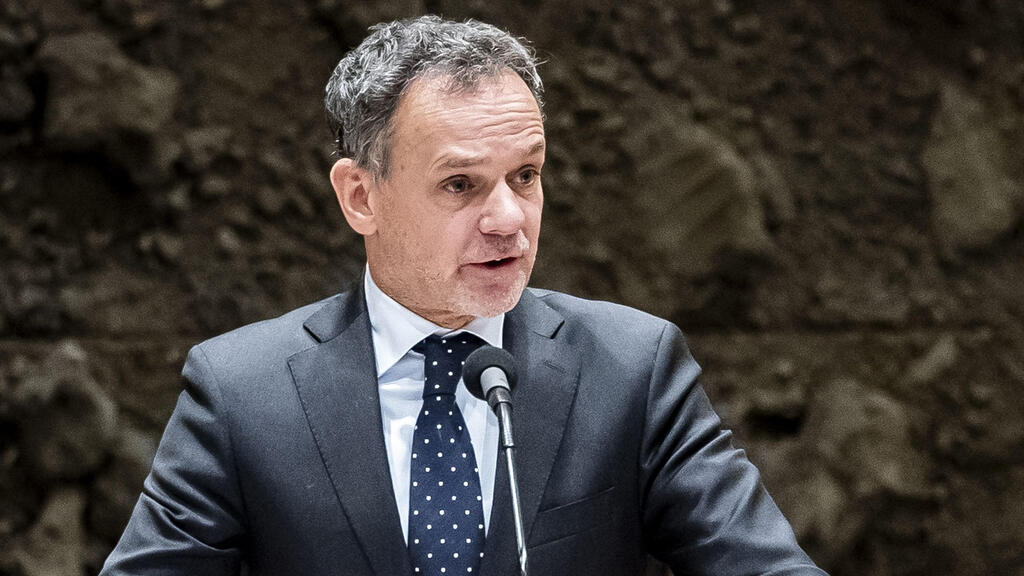
Dutch Foreign Minister Caspar Veldkamp
(Photo: Remko de Waal / ANP / AFP)
The figure who symbolized the transition from discontent to concrete diplomatic measures was former foreign minister Caspar Veldkamp.
Veldkamp, who had previously served as the Netherlands’ ambassador to Israel and knew the country well, pushed the European Union to examine whether Israel was violating the human rights clause in its association agreement with Europe.
He later promoted an entry ban to the Netherlands against ministers Itamar Ben-Gvir and Bezalel Smotrich and sought broader measures against Israel.
What changed under the new government?
In February 2026, the minority government of Prime Minister Rob Jetten, leader of the liberal-progressive D66 party, was sworn in.
The coalition also includes the center-right VVD, Mark Rutte’s former party, and the Christian Democratic CDA, which is home to Foreign Minister Tom Berendsen.
Together, the three parties hold only 66 of the 150 seats in parliament, meaning the government lacks a majority and must seek support from opposition parties in order to pass legislation and decisions.

Rob Jetten, leader of the center-right D66 party, at an election victory event in Leiden, Netherlands
(Photo: Peter Dejong/AP)
It also lacks a majority in the Senate.
The government currently has no permanent external “support party” and is expected to seek shifting majorities depending on the issue.
Foreign Ministry officials say that dependence pushes Jetten to pay particular attention to parties to his left.
According to the assessment in Jerusalem, D66 is also looking ahead to the possibility that a more left-leaning coalition could eventually emerge in The Hague and is therefore careful not to distance itself from progressive parties on issues where they exert pressure — with Israel among the most prominent.
Polling adds another element to the picture.
D66 has lost a significant share of its support since the election, while Progressief Nederland, the party created through a merger of the Greens and the Labor Party, has gained strength and become the largest party in some polls.
Summer polling also showed voters moving from D66 to the new party, including those who believe government policy is not left-wing enough.
Why the Netherlands?
In Israel, officials believe the political structure is only part of the explanation.
The Netherlands has long placed particular emphasis on international law and human rights, and its governments tend to seek an active role on the international stage.
The Hague is also home to both the International Court of Justice and the International Criminal Court, institutions that further reinforce the role of international law in the country’s public and political discourse.
It is therefore more accurate to say that the Netherlands did not suddenly change overnight from a pro-Israel country into an anti-Israel one.
What changed was the government’s willingness to translate criticism of Israeli policy into concrete measures.
Domestic pressure also plays a role
The Netherlands has a large Muslim community and a highly vocal left-wing progressive camp that in recent years has made the war in Gaza and developments in the West Bank central issues in public debate.
Israeli officials stress that this does not mean the Netherlands as a whole has shifted leftward. A very large right-wing bloc also exists in the electorate.

Pro-Israel politician Geert Wilders, whom other right-wing parties have been reluctant to work with
(Photo: Piroschka van de Wouw/File Photo/Reuters)
But the Dutch right is divided, partly over Geert Wilders and the reluctance of other parties to cooperate with him.
The result is a minority government that repeatedly has to seek votes outside the coalition.
Jerusalem sees this as another explanation for why the Netherlands has become one of the most active countries in promoting measures against the settlements.
The Dutch government, for its part, presents those measures not as an attempt to act against Israel as a state, but as a response to settlement expansion, violence in the West Bank and what it defines as its obligations under international law.
Israeli officials also point to the influence of the local media and public opinion.
Former prime minister Dick Schoof even told President Isaac Herzog that public pressure in the Netherlands was narrowing the government’s room for maneuver on Israel.
So are the Dutch really against Israel?
Not exactly.
Even Israeli officials who sharply criticize the Dutch government stress that this is not a case of sweeping hostility among the public.
The country has large pro-Israel Christian communities, friendship organizations and political groups that support close ties with Israel.
On the other side are human rights organizations, parts of academia and the media, left-wing parties and a large Muslim community, all exerting pressure in the opposite direction.
Are other countries next?
Some countries have already announced measures, but the picture is less uniform than it may sometimes appear.
Britain, France and Canada announced this month that they would move forward with national steps to ban trade in settlement products, alongside nine other countries that said they would support European restrictions or were considering similar measures.
In Britain’s case, the move is broad and significant, but it still requires legislation and is expected to take months before taking effect.
Reports in Britain estimated that the process could take six to nine months.
Other countries are more cautious.
Australia, for example, took part in discussions about joining the move but decided not to pursue a sweeping import ban at this stage.
Foreign Minister Penny Wong explained that Canberra was concerned about implementation problems and unintended consequences for Palestinian businesses and the Palestinian economy, although the Australian government is still considering more targeted measures.
There is also still no agreement within the European Union.
In July, foreign ministers discussed three options: import licenses, steep tariffs or a complete ban on trade with settlements.
No clear majority emerged for a joint move.
The Netherlands was among the countries pushing for a ban, while Germany continued to favor a more cautious approach.
The Israeli Foreign Ministry therefore assesses that an immediate “domino effect” is unlikely at this stage.
Israel is using its embassies to monitor moves in different countries and to make clear in advance that unilateral steps will draw a response.
According to the assessment in Jerusalem, the strong Israeli response to the Netherlands and Britain is also causing other countries to think twice before moving ahead.
Still, the situation could change quickly depending on developments in Israel and the West Bank.
A significant expansion of settlements, further movement on the E1 plan or an unusual wave of settler violence could accelerate measures in countries that are still hesitating.
Germany remains the key to any Europe-wide move.
As long as Berlin is unwilling to join a broad measure, it will be more difficult to advance a uniform EU policy.
But Germany cannot prevent the Netherlands, France or other countries from acting independently — and the recent trend shows that more governments are willing to consider doing exactly that.
For now, the Netherlands is the most advanced example of a trend already visible in other countries.
The question is whether developments in Israel and the West Bank will make it a pioneer — or an exception.