

The dollar pared gains on Monday after U.S. President Donald Trump told CBS in an interview he thinks the war against Iran "is very complete," allaying investor worries about a protracted conflict that could disrupt global energy supplies and weigh on economic growth.
The United States is "very far ahead" of Trump's initial four- to five-week estimated time frame on the war, the president said, according to a CBS reporter on X. The U.S.-Israeli war on Iran rattled investors in recent days and has driven a surge in oil prices, pushing investors toward the safety of the greenback.

"The market is trading on hope," said Marc Chandler, chief market strategist at Bannockburn Global Forex LLC.
"If this is the end of the war, then yes, the dollar comes off and stocks rally ... but we don't really know what it means yet," Chandler said of Trump's reported comments.
The euro was last up 0.1% at $1.1630, after earlier touching a more than three-month low of $1.1505. The dollar was 0.1% lower against the Japanese yen after touching a six-week peak earlier in the session.
Sterling also reversed course to trade 0.1% higher against the dollar.
Trump's comments lifted stocks. Oil prices, which had surged on worries about an extended conflict with Iran disrupting energy supply, pared gains sharply. Stocks, bonds and precious metals slid earlier in the session as investors worried about the impact of surging oil prices on global inflation and economic growth. Iran on Monday named Mojtaba Khamenei to succeed his father as supreme leader, signaling that hardliners remain firmly in charge a week into the war.
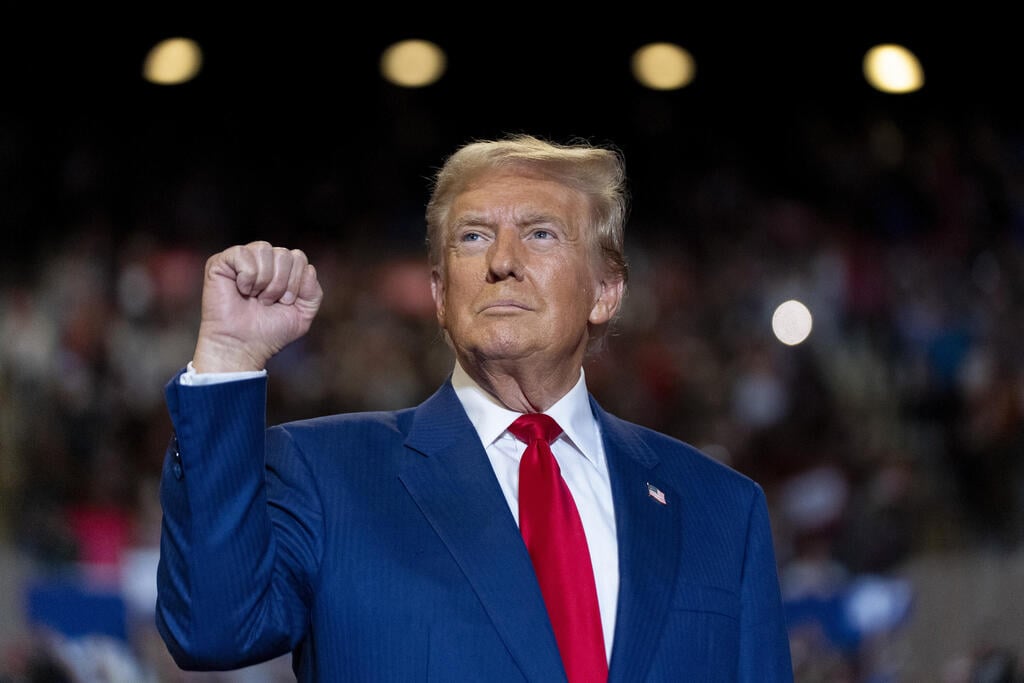
US President Donald Trump
(Photo: Alex Brandon/AP)
Chandler, however, cautioned that the outlook for the war remains murky.
"I think the sense is that the market is hopeful ... but if it just turns out to be false hope we could reverse again tonight (Monday night)," Chandler said.
Brent crude was last at $90.35, after earlier surging more than 25% to $119.50.
For the week ended March 6, options pricing data indicated that investors increased long dollar positions and increased short euro positions, while in the futures market, investors trimmed short dollar positions, Morgan Stanley strategists said in a note on Monday.
Traders said that the dollar's recent strength may not be on strong footing.
"This war is not happening in the midst of a good economic situation for the United States. It's actually happening at a moment when the economic situation is in doubt," said Juan Perez, director of trading at Monex USA. "The moment there is any quick resolution ... it's going to hurt the dollar big time." Surprisingly weak U.S. jobs data on Friday briefly stalled dollar gains and raised expectations for U.S. rate cuts, but that had faded by Monday.
Traders were last betting on around 41 basis points worth of Federal Reserve easing by the end of the year, having priced in more than 55 basis points in late February.
Traders weigh exposure to energy shock
Analysts have said Asia could bear the brunt of the energy price shock, due to the region's heavy reliance on oil and gas from the Middle East, while Britain and the euro zone are also heavily exposed.
The dollar was close to the 158 yen level on Monday.
"The real question is how high and how long prices stay elevated, because that's what will ultimately determine the economic fallout," said Deepali Bhargava, regional head of research for Asia-Pacific at ING.
"A prolonged conflict, coupled with continued currency weakness, would feed more directly into inflation pressures across the region," Bhargava said.
Leading cryptocurrency bitcoin rose 3% to $68,980 but remained close to the multi-year low touched in early February.