

The Israeli cybersecurity company Zafran, founded by Sanaz Yashar, an Iranian-born immigrant to Israel whose personal story inspired the successful TV series "Tehran," has announced a 60 million dollar funding round. The company’s technology, based on AI agents that operate in real time to detect cyber vulnerabilities, is designed to replace parts of traditional security tools and autonomously respond to threats.
Zafran Security did not have to work hard or chase investors to close its current funding round and secure 60 million dollars. In fact, it was the investors who pursued the company.
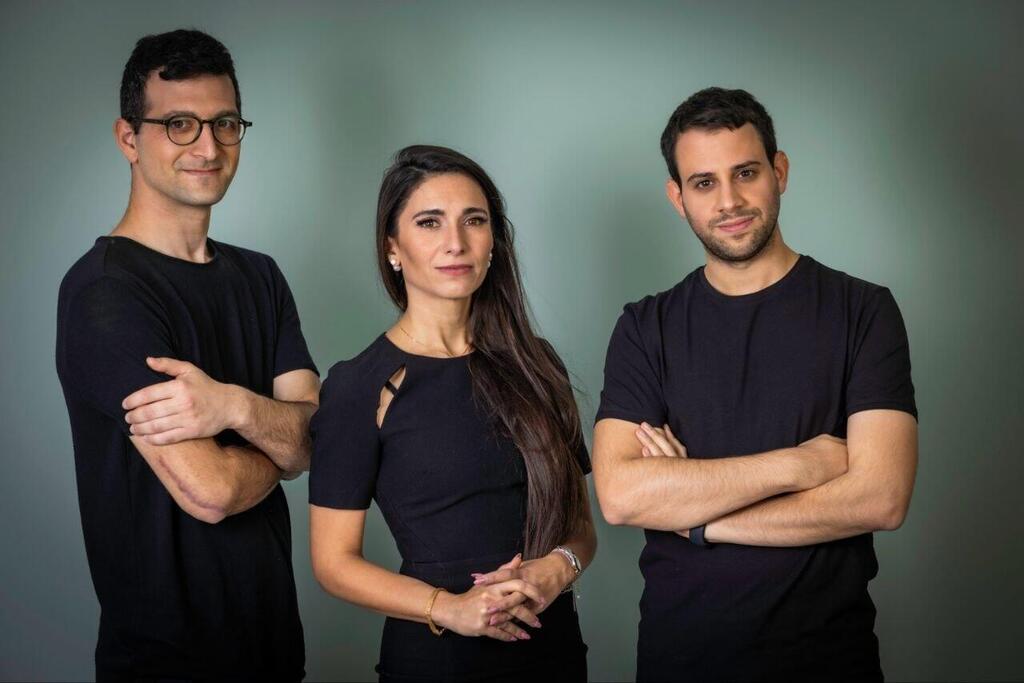
“We weren’t in a fundraising process; the investors came to me with the presentation - I didn’t prepare one,” says Zafran CEO Sanaz Yashar. “They followed us for a year, attended every conference we went to, and even had photos with us. Then they pitched us and showed us where our competitors are and where we stand in terms of sales and market size. It was a gratifying moment.”
This persuasion dynamic is usually the opposite - founders pitching investors, not the reverse. The story reflects what is happening in the escalating world of cyber warfare, which is becoming more intense and forcing global corporations, commercial companies, and industrial organizations to search for solutions capable of protecting them from unprecedented attacks. This, in turn, leads investors to recognize a huge market and the massive revenues expected for cybersecurity companies. Zafran has developed AI-based cyber technologies that offer a new kind of solution and is now reaping the benefits.
The company announced on Tuesday the closing of a 60 million dollar Series C round, bringing its total funding to 130 million dollars. The company stated that its valuation has doubled since the previous round. Estimates suggest the valuation is in the high hundreds of millions of dollars, and that the next round may pass the one-billion-dollar mark - producing Israel’s next cybersecurity unicorn.
These optimistic projections are supported by the company’s rapid growth. Zafran has tripled its sales over the past year, and this pace is expected to continue. The round was led by Menlo Ventures, with participation from Sequoia Capital, Cyberstarts, PSP Partners, Vintage Partners, and Knolwood.
The inspiration for the series 'Tehran'
Sanaz Yashar is a well-known and respected figure in Israel’s cyber domain. She was born and raised in Tehran as a “child prodigy,” reaching the finals of Iran’s national chemistry Olympiad. The Iranian leadership expected her to be integrated into the nuclear program, but her family fled to Israel. Her story later became the inspiration for the TV series “Tehran” on Kan 11.
She served in Unit 8200 and later worked as an analyst and expert on Iranian and Chinese cyber operations at the Israeli company Cybereason and the American companies FireEye and Mandiant.
In 2022, Yashar founded Zafran together with CTO Ben Sari and CPO Shnir Havdala. Today the company employs around 120 people in Israel, the U.S., and Europe, and plans to hire about 100 more employees over the coming year across all company functions.
Zafran develops an AI-driven cyber defense system that identifies an organization’s weak points and autonomously addresses them. The technology utilizes AI agents that detect, investigate, and can even take active remediation steps to fix vulnerabilities and remove threats. This is a new market category called Agentic Exposure Management - managing and neutralizing cyber exposures using AI.
“We created a new category that connects attack-prevention tools with breach-response tools. Some existing products become unnecessary because we do this in a far more advanced way,” Yashar says.
Yashar: “There is a thirst in the market for this new kind of defense product - not tools that block business operations, but tools that enable them. This thirst comes from the fact that the market is undergoing massive changes. The barrier to entry for launching cyberattacks has dropped dramatically. A vulnerability that once took certain units a year to weaponize can now be done with AI in four hours.”
“Just a week ago we had an incident with one of our customers,” Yashar recounts. “I was at the airport in Rome shortly before midnight. I opened my computer and saw very interesting things happening, but my flight was leaving in an hour. I activated our AI agent, and twenty minutes later I had all the investigation findings in one hand and a glass of Chardonnay in the other. That’s when I realized something incredible is happening.”
According to Yashar, more and more cyber attackers are using AI to bypass defenses that previously performed well. An Iranian group attacked New York’s water system using code written by ChatGPT. The attack failed only because of a bug in the code.
“We’ve seen attackers whose entire attack chain is executed using AI, including the ransom stage and their ‘customer service.’ It’s astonishing how low the barrier has fallen. Attackers use AI to scale the number of attacks they run. Two generations from now, people will think we were dinosaurs. They won’t understand what we did in our time.”
'The market is thirsty for defense products'
Yashar says the interest in the company stems from a dramatic shift in attackers’ capabilities, which makes many traditional cybersecurity tools ineffective.
“There is a thirst in the market for new-generation defense products,” she says. “Not tools that shut down the business, but tools that allow it to operate.”
“This thirst comes from massive changes in the market. The barrier to entry for cyberattacks has dropped. A vulnerability that once took certain units a year to develop can now be done with AI in four hours.”
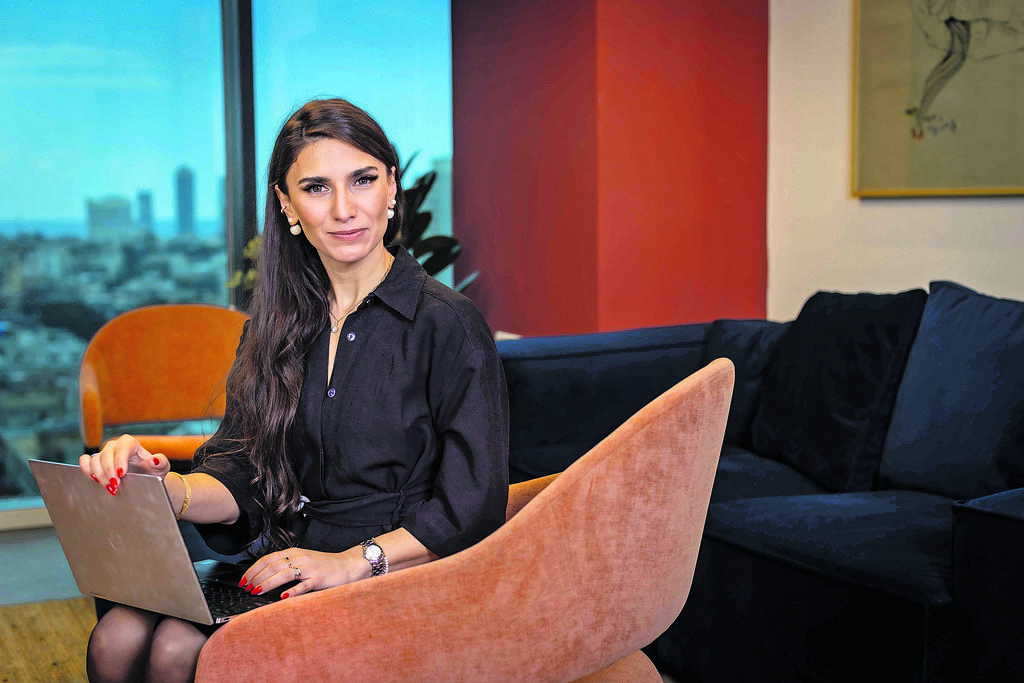
Sanaz Yashar
(Photo: Arik Sultan)
She explains that this is why senior executives in organizations are pushing to adopt more advanced defenses. “We began seeing this mainly in the financial sector, but also among industrial companies. The number of customers has grown, as has deal size per customer,” she says. “Our customers are large U.S. enterprises, and they are more willing to adopt advanced products and AI because they have tried and learned how difficult it is to connect 70 security products and 14 teams. We show them something that works, and the sale becomes much easier.”
All the big companies are rushing to build AI cyber defense. Eventually this will impact you, won’t it?
“The answer lies in Zafran’s DNA,” Yashar says. “I investigated attacks, I was on the ground, and I saw how Microsoft products had no idea what McAfee or Google Cloud products were doing inside the organization. These companies have conflicting economic interests. They don’t even have basic integration or risk understanding. Microsoft protects Microsoft very well. The same is true for CrowdStrike and Google.”
“Zafran is independent. We do not claim to replace existing tools; we aim to understand them better than anyone and turn defense from static to dynamic. We all saw what happened to static defenses on October 7. That doctrine no longer works.”
Next week, the CEO of Palo Alto Networks will arrive in Israel, also looking for AI technologies. It appears that the major cybersecurity companies are under significant pressure.
“Yes, I think they’re under pressure,” Yashar says. “A company built in recent years based on AI can evolve into an AI-agent architecture. Companies built twenty years ago cannot change their core that dramatically. So they acquire other companies, but they don’t always succeed in integrating the technology. Many of these companies will disappear. I won’t name names, but you will see large, publicly traded companies vanish from the market.”
So why not sell Zafran to one of the giants and make a nice exit?
“You know, I didn’t start this company to make an exit. I started it relatively late, after gaining deep insights about the market. We haven’t reached the end-game yet. Maybe when we reach a point where I can say, ‘Okay, we’ve made the revolution.’”
According to a Microsoft report, Israel is the third-most-attacked country in the world. How worried should we be?
“I can tell you that since I moved to New York, I’ve seen far more attacks coming from China. It’s at a level where the customer is fighting them like kung-fu every day. He throws them out the window; they come back through the door. It’s insane, what’s happening with the Chinese in the U.S. We haven’t seen such attacks in Israel. But I do think we are in for some very big surprises from new players we haven’t encountered yet.”
“I think Israel needs to prepare. Khomeini, may his name be erased, wrote: ‘Never underestimate your enemy.’ It was written on the first page of the English textbook we used in school. We must abandon this doctrine of static defensive walls and move to something new - something almost biological rather than physical.”
Rama Sekhar, Senior Partner at Menlo Ventures, said: “Zafran is addressing one of the most difficult challenges in cybersecurity and is giving security teams the ability to adopt a proactive, risk-based approach to exposure management. With the AI tools it has launched, the company is now at a point where it offers a complete end-to-end lifecycle: from asset management and endpoint scanning, through vulnerability management, all the way to automated threat mitigation.”