


Prime Minister Benjamin Netanyahu announced Wednesday that Israel has reached a landmark natural gas agreement with Egypt, the largest gas deal in the country’s history.
Netanyahu said the deal is valued at 112 billion shekels ($34+ billion) and will bring significant revenue to the state. Of that total, he said 58 billion shekels is expected to flow directly into state coffers.
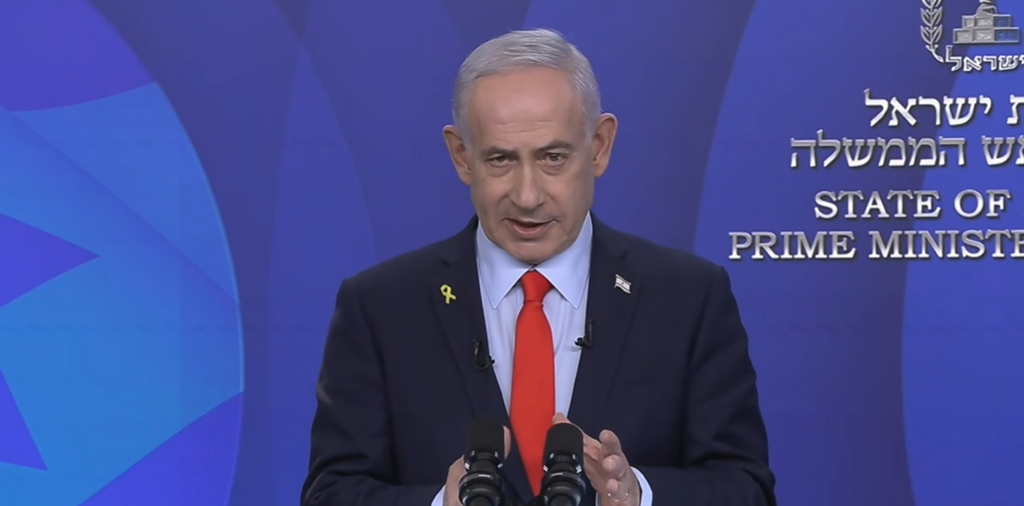
Under the terms of the agreement, Israel will receive 500 million shekels ($155 million) in the first four years, with companies investing heavily in infrastructure development, including expansion of pipeline capacity. Netanyahu said annual revenue to the state is projected to climb to about 6 billion shekels ($1.86 billion) per year in later years.
“This money will strengthen education, health care, industry, defense and the future of coming generations,” Netanyahu said.
The agreement was signed with U.S. energy giant Chevron, he said, adding that he approved the deal only after ensuring Israel’s security and strategic interests. Netanyahu said the pact enhances Israel’s standing as a regional energy power and contributes to broader stability in the Middle East.
He said the deal is also expected to encourage other companies to explore for gas in Israel’s exclusive economic waters.
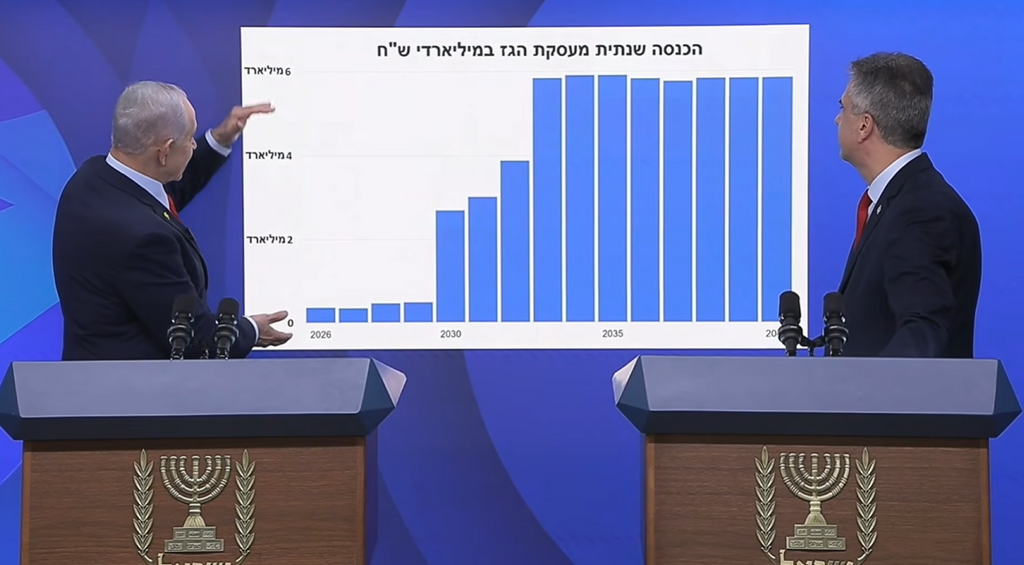
Netanyahu and Energy Minister Eli Cohen present the historic gas deal with Egypt
(Photo: GPO)
Netanyahu acknowledged domestic opposition to gas development and export in earlier years, including extensive media coverage and protests. “There were those among us who vehemently opposed extracting gas from our waters,” he said. “They said we would destroy Israel’s economy. Today it is clear that gas production has brought huge profits to Israel.”
He suggested the economic boost helped propel Israel to high rankings among the world’s economies. “This is one of the reasons our economy was rated third among the best in the world,” he said.
Netanyahu thanked Energy Minister Eli Cohen for his role, saying Cohen “insisted in tough, painstaking negotiations.”
Speaking on the fourth night of Hanukkah, Netanyahu used a holiday metaphor. “Today on the fourth candle we have brought another oil lamp to Israel that will burn not just eight days, but for decades ahead,” he said, adding that “there will be more good surprises.”
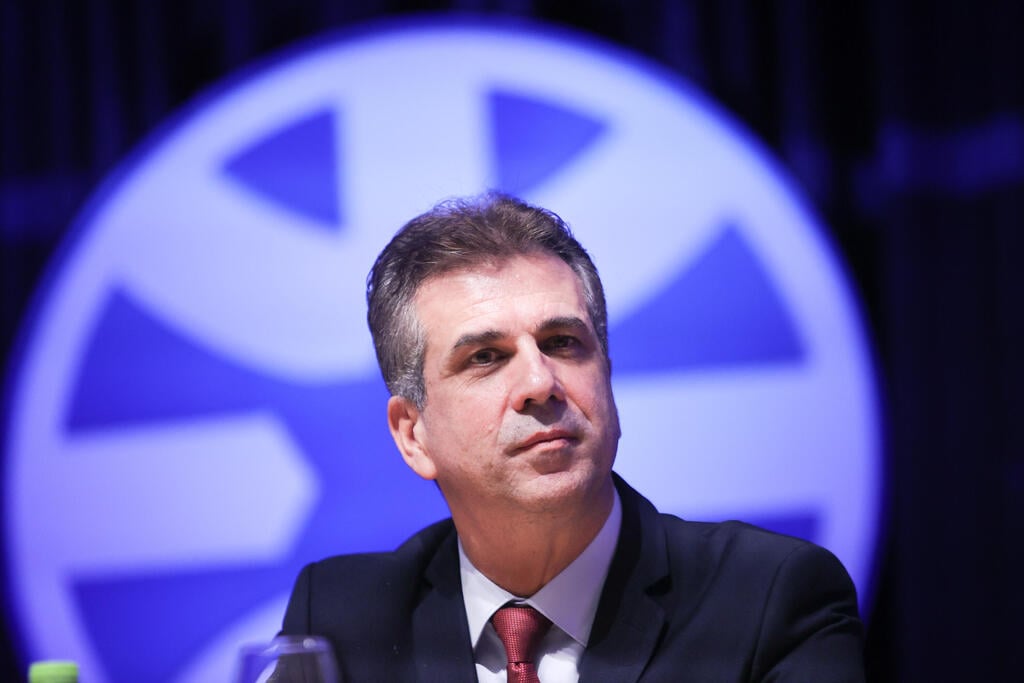
Cohen
(Photo: Alex Kolomoisky)
Cohen called the approval of the gas deal “a historic moment for the State of Israel — both strategically and economically.” Cohen said the agreement “cements our status as a leading regional energy power on which our neighbors can rely.”
He described months of intensive negotiations, stressing that Israel protected its security interests and that infrastructure investment tied to the deal will total 16 billion shekels ($5 billion). “This is the first export approval that gives priority to the domestic market. We agreed on a range of mechanisms that will improve gas prices for the Israeli market,” Cohen said.
The Energy and Infrastructure Ministry emphasized that this is the first export approval that guarantees priority for the domestic market. According to the ministry, the Leviathan gas field will be obligated to supply any amount of gas required by the Israeli market, and exports will be permitted only if daily local demand is fully met.
The agreement also includes a provision beginning in 2032 that grants the ministry’s Petroleum Commissioner the authority to reduce export volumes in order to prioritize domestic needs, including for competitive market considerations, the ministry said.
Paves way for Trump‑Netanyahu‑Sisi summit
The announcement also clears a path for a trilateral summit between Netanyahu, U.S. President Donald Trump and Egyptian President Abdel Fattah el‑Sisi. Egyptian officials had made approval of the gas deal a condition for Sisi’s participation, and the three leaders are expected to meet at Trump’s Mar‑a‑Lago estate.
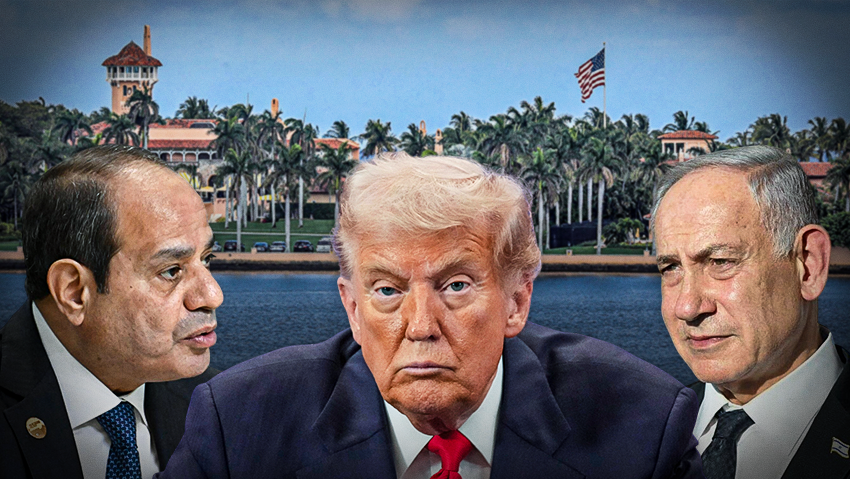
(Photo: AP/Mark Schiefelbein, AP/Alexander Nemenov, AFP, GPO)
In his remarks Wednesday, Netanyahu reiterated that he approved the deal only after safeguarding Israel’s security and vital interests, though it remains unclear what specific security commitments Egypt offered in return. It is not yet known whether Egypt pledged to crack down on smuggling of weapons into Gaza or take other steps affecting security coordination with Israel. Jerusalem also pressed broader concerns tied to alleged violations of the 1979 peace treaty related to the movement of forces, weapons and infrastructure in the Sinai.
U.S. officials, for their part, sought a deal that would also benefit Washington. American energy giant Chevron stands to profit from the agreement, and U.S. officials say enhanced regional stability and stronger ties between Egypt and Israel serve broader American strategic and economic interests.