

Zhang, 43, is worth more than $105 billion after his fortune jumped by more than $12 billion since the beginning of the month. According to the Bloomberg Billionaires Index, his wealth has now surpassed that of Indian tycoon Gautam Adani, whose group controls Haifa Port. That marks an eightfold increase from the $13 billion fortune Bloomberg recorded in March 2019, when it began tracking Zhang’s wealth.
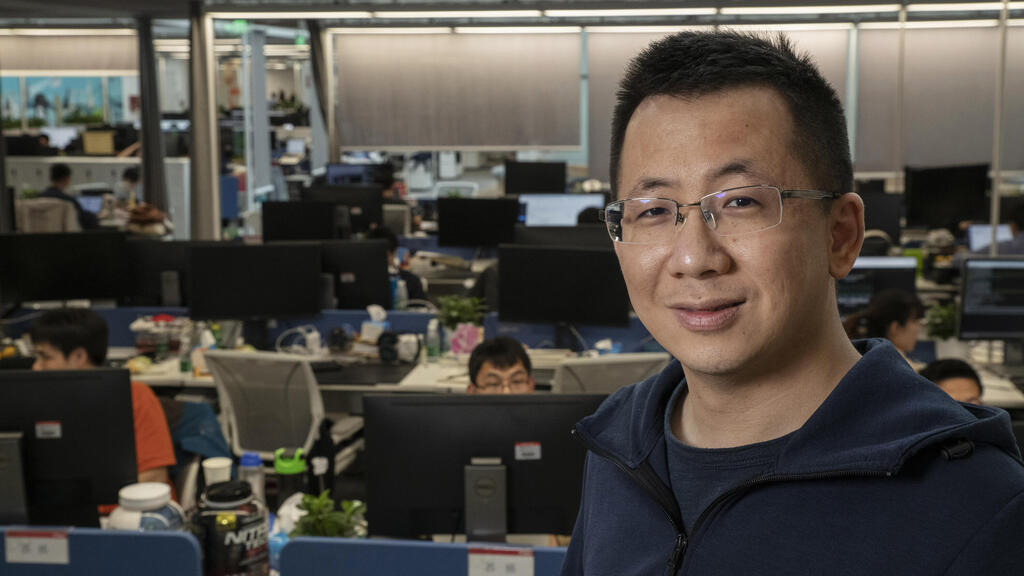
ByteDance founder Zhang Yiming
(Photo: Gilles Sabrie/Bloomberg)
Zhang was already China’s richest person, thanks in part to TikTok’s enormous popularity and ByteDance’s expansion into artificial intelligence, including the popular AI chatbot Doubao and video generator Seedance. The latest increase in his fortune highlights the scale of new wealth created by the AI boom.
At the same time, TikTok has faced the threat of a U.S. ban in recent years. In 2024, a law was passed requiring ByteDance to give up control of its U.S. operations. The app was briefly shut down in January 2025, but enforcement of the law was delayed after Donald Trump returned to the White House.
In January 2026, an agreement was completed under which a new U.S. entity was established for TikTok, with ByteDance retaining a 19.9% stake, removing the threat of a ban.
Zhang founded ByteDance in 2012. The company first gained prominence with Toutiao, a news app built around algorithms that personalized content for users. It later expanded into short-form video, launching Douyin in China in 2016 and its international version, TikTok, a year later.
ByteDance acquired Musical.ly in 2017 and merged it into TikTok in 2018, a move that helped propel the app’s growth in Western markets. Zhang stepped down as ByteDance CEO in 2021 and was succeeded by Liang Rubo, his co-founder.
Market declines hit Adani
“Zhang plays his cards right,” said Lian Jye Su, chief analyst at research firm Omdia. “He stayed on course and then continued to double down on AI investment.”
Su said Zhang made a successful bet by continuing to develop the company’s artificial intelligence technologies even as the U.S. Congress questioned TikTok CEO Shou Chew in 2023.
ByteDance could also benefit from the enormous pool of data it has accumulated through its social media platforms to train AI models, Su said. AI-related products and services now represent ByteDance’s biggest opportunity following the success of its video platform, he added, while intense competition in China is also its greatest risk.
Adani’s fortune, meanwhile, climbed to about $120 billion in June but has fallen in recent months after a rebalancing of MSCI indexes weighed on shares across his business empire. Broader market declines, driven by rising oil prices and bond yields, have also pressured the group’s stocks.
The AI boom has already created new billionaires in China, including owners of companies that have yet to turn a profit. It has also generated a new class of extreme wealth in less obvious corners of the manufacturing sector.
China has been pushing the development of AI in recent years as part of its competition with the United States for global influence in technology. It recently criticized calls by senior figures in the U.S. tech industry to slow the pace of AI development and impose tougher restrictions on Chinese companies developing AI models.