

Greece has become a favored destination for Israelis in recent years — whether for investment, refuge from the war, or the promise of a new beginning.
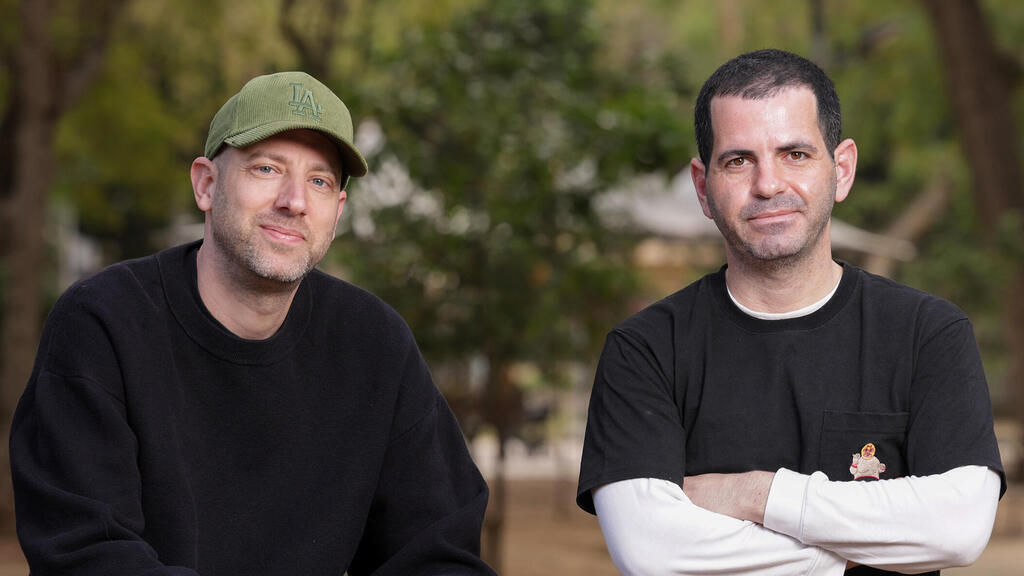
But while many Israelis have looked for apartments, only a small number of restaurateurs and food entrepreneurs have taken the next step and built businesses from scratch. Eyal Kitches and Yonatan Gissler opened a fine-dining restaurant in Athens, while Uri Eshet runs a boutique hotel and restaurant in the Cyclades.
In the restaurant industry, however, the wave remains limited, largely because of Greece’s slow bureaucracy. At least two additional projects are currently in development, but their owners have asked not to be interviewed while they are still in the early stages.
‘At first, the bureaucracy drove me crazy’
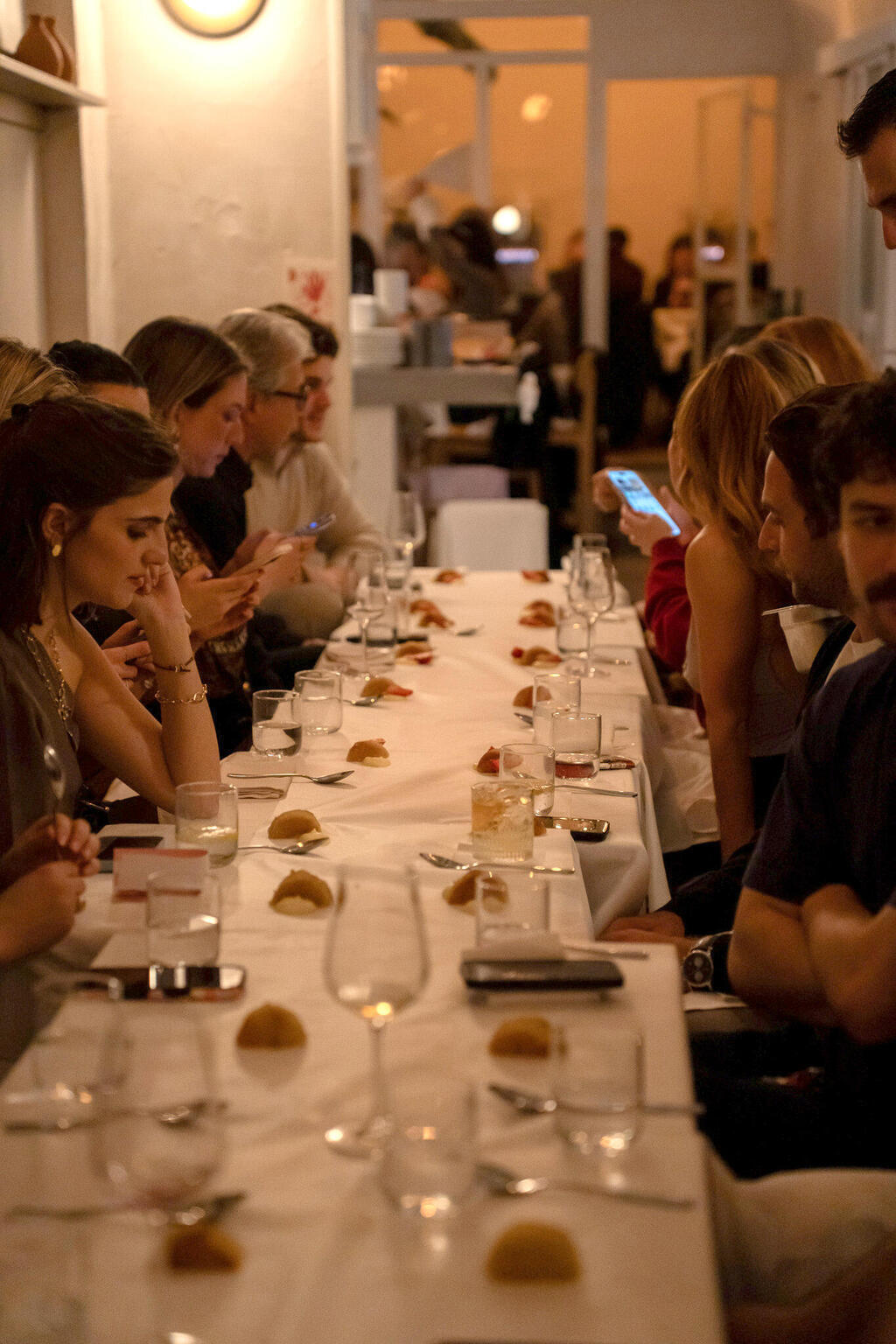
Kitches and Gissler opened Via Maris in January 2024 in Psiri, one of Athens’ best-known and most tourist-heavy neighborhoods.
Kitches, 42, owns the Japanese-style hamburger spot Osu in Tel Aviv’s Carmel Market. His résumé also includes The Bun, a successful Asian eatery that operated in the market, and a nearby skewer restaurant. He previously managed Pop & Pope for three years and began his career in New York, working under chefs Alain Ducasse and Jean-Georges Vongerichten.
Did you want another restaurant?
“Yes,” he said. “I wanted to fulfill an old dream and open a fine dining, to realize what I learned and did in New York 20 years ago. I understood that I could open another restaurant in Athens for a quarter of the price in Israel. By the way, the people who spoke to me there actually wanted me to open a hummus place. But I was charmed by the street and the space, and imagined something else there. We decided to do something less familiar there, a kind of fine tapas. The audience defines it as ‘modern Greek.’”
Kitches brings ingredients from Israel to the restaurant, including spices from Carmel Market vendors Habashush and Sharim. The menu includes warm goat cheese with matbucha and za’atar, sea fish sashimi with fermented pepper sauce and calamari with mojo verde.
“We are an odd bird there,” he said of fine dining in Greece. “But in the end, it was actually the locals, not the tourists, who fell in love with it, because it is different for them both in flavor and in service, which is not exactly inspiring there.”
Asked what he learned along the way, Kitches answered: “You mean the hard way.”
“Mainly, I learned about Greek bureaucracy,” he said. “Things like the fact that workers there are entitled to 14 salaries a year, not 12. I encountered anachronism everywhere — at the bank, in the tax offices. Everything is slow, and you try to bring the Israeli in you, thinking you will change the world, and then you understand you will not change it.”
“They tell you to come on Sunday, but that means in a month. Your credit card gets swallowed, and it takes two weeks to get it back. You hit a wall. Everything there really is ‘siga siga’ — easy, easy, slowly in Greek. They like working under the table, and we didn’t understand that, so 30,000 euros in VAT was stuck with them for two years. You don’t get a refund a month later like in Israel, and that hurt our cash flow. If money is stuck, it is not working and it is not earning interest. That conduct drove me crazy. Now I’ve gotten used to it.”
Via Maris
(Photo: Evan Maroulis)
Beyond that, he said, “no one is waiting for you, and that place does not push businesses toward success — there are no loans, no financing, no leveraging, and that is what drives an economy.”
“With great difficulty, we managed to get through the first months and the first year. We almost closed,” he said. “Just like in Israel, in Greece too no one is waiting for you, and success is slow and hard, especially in restaurants. Only someone who manages to be consistent, patient and the best every day, even if no one comes and the restaurant is empty, survives.”
Via Maris lost money for nine months after opening. Kitches says the restaurant has only now begun to turn a profit, allowing him to feel cautiously optimistic ahead of the summer. If the high season does not work, as has happened to him before, he will have to rethink his path.
Asked whether he would repeat the adventure, he said: “If I thought about it again, maybe it would not happen. It is unpleasant and painful financially and mentally. I don’t regret it, but I wouldn’t do it again.”
Gissler, 37, who moved to Greece two years ago for the restaurant, also admits that in hindsight he would not have opened a restaurant there.
“I wanted to open it for the adventure,” he said. “The idea of opening in Greece is very easy in your head, and since I moved here I understand that is not true. Actually, in Israel, the state is more supportive, even if restaurants in Israel are not profitable. If I opened there again today, I could save myself at least $100,000 in tuition on mistakes I made along the way.”
Kitches says he would prefer to open his next restaurant in Israel.
“My ability to grow in Israel is greater. It sounds crazy, but it is true,” he said. “The economy in Greece pushes less toward success. We are much more capitalist than they are. They are much sleepier, and here you make more money. So maybe it costs a quarter of the price to open a restaurant there, but it also brings in a quarter of what it would bring in Israel.”
‘The locals were against us. They were afraid we would build a monster’
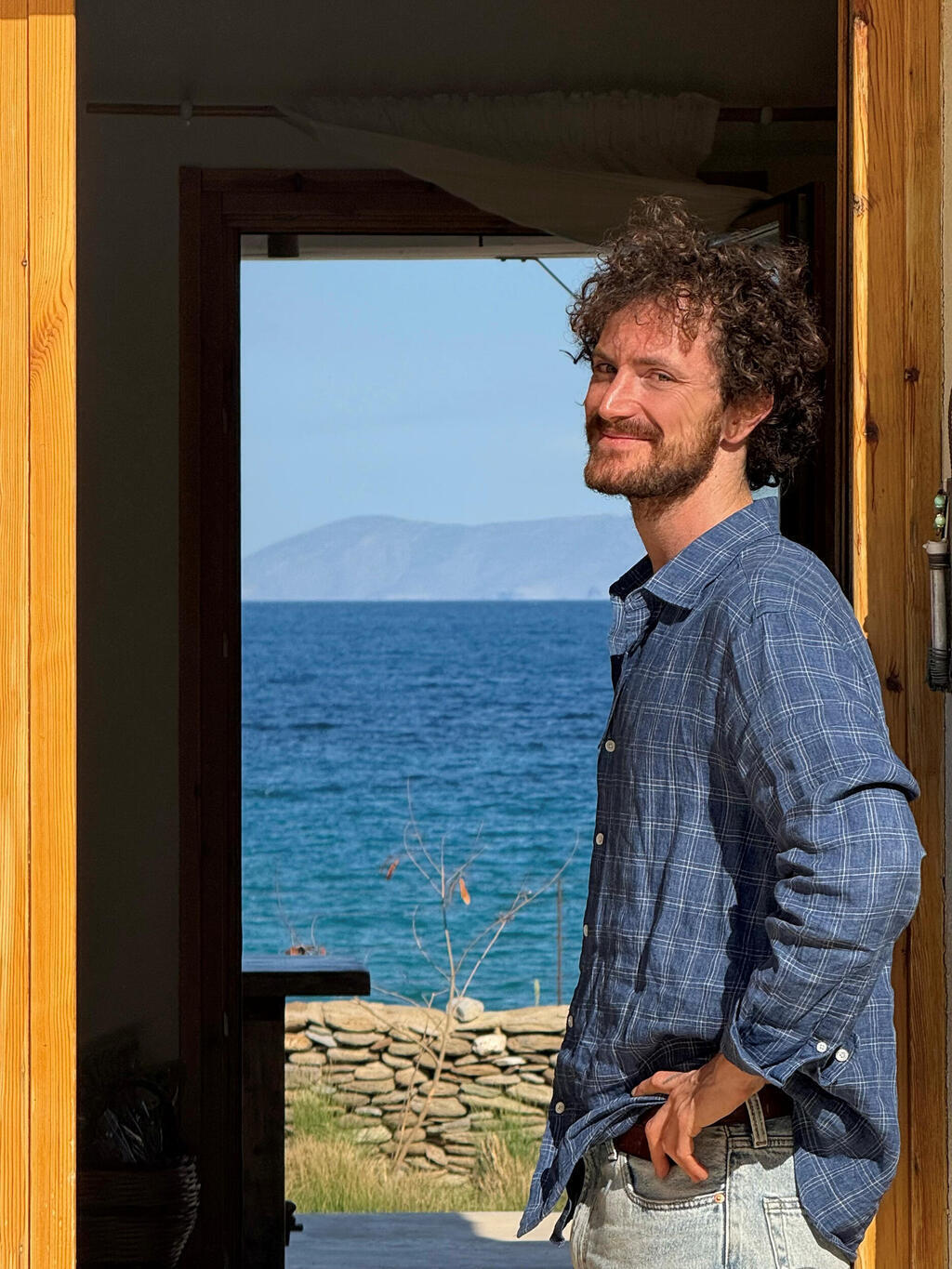
Uri Eshet, 30, son of Tzviki Eshet of the Greek restaurant chain Greco, travels to Greece every year for the tourist season, from April 1 to November 1. He and his brother Yonatan run a boutique hotel and restaurant called Kea Retreat on the island of Kea, near mainland Greece.
The hotel is small, with eight rooms, and also includes a yoga workshop space. The restaurant operates whenever the hotel is open and serves hotel guests in the morning, afternoon and evening. It also functions as a restaurant for outside guests, seating 20 people. According to Eshet, visitors come from around the world specifically for the tasting menu, which is based on local island ingredients.
Uri Eshet
“It is not Greek food,” he said. “It is a special, wild place. We get fish from local fishermen, make our own olive oil and grow fruits and vegetables on our farm.”
Eshet worked with his father at Greco, trained in high-end restaurants including Noma and Blue Hill, managed the Greenberg hamburger restaurant in Tel Aviv’s Azorei Hen neighborhood and remains involved there. He also offers luxury meals at his father’s home, though only occasionally.
He opened the restaurant with his brother in the summer of 2022 after five years of work.
“We started thinking about it years earlier,” he said. “It is an island we have visited since I was 2, and we fell in love with the place.”
The locals, he said, were deeply suspicious at first.
“It is an extremely local island, and at first they were against us,” he said. “They were afraid we would destroy things and build some kind of monster. We made enormous efforts to preserve the stone huts, which are 300 to 500 years old and were once used by shepherds.”
Eshet says the project had nothing to do with the war or Israel’s political upheaval.
“We started developing it before,” he said. “I did not have a passion to open something in Greece or anywhere else. I am most connected to Israel. I live here at least half the time and create a lot here. In Greece, it emerged from a space that already existed for us and from an opportunity for me to express myself there.”
He does not hide the fact that it is harder and more expensive to manage and operate a restaurant in Israel.
“Everyone knows the story,” he said. “And still, people do everything they can to make things better here.”
Asked whether a restaurant abroad is a kind of insurance policy, Eshet rejected the idea.
“The place where I feel safest is Israel, because here they are supposed to protect me as an Israeli and as a Jew,” he said. “So I do not feel safer in Greece, and anyone telling themselves that story may not be connected to history and reality.”
“You know there are masses of Israelis buying entire neighborhoods and entire islands in Greece and Athens,” he said. “I am afraid of that. I am on an isolated island and try to keep quiet and not make too much noise. When purchasing groups buy properties as investments and rent them out at higher prices, the locals suffer because they cannot afford it. And it is always easiest to blame foreigners who came and bought. Even though most of the foreigners are actually Chinese, British, German and American, it is always easiest to blame Jews. So this is a thin line, and it can turn against us. Breathing air is a blessing, but it is not a safe haven.”
Asked how they advertise the place, Eshet said they do not openly present themselves as Israelis.
“We do not write openly that we are Israelis because it is unpleasant,” he said. “Those who know, know. The audience is mostly foreign, and less than 20% Israeli. We are the first restaurant not owned by Greeks that received so much attention, and many people did not like that. I had a pop-up in Athens canceled because of it. So yes, some people respond badly, but I have not experienced anything extreme. The local population accepts and respects us.”
Does everyone need something outside Israel?
“I can speak only for myself,” Eshet said. “I lived abroad a lot, and despite how hard it is here and despite things that demand fixing, it is still an illusion. A property abroad is not an insurance policy.”
“If I had a family and children, I don’t know what I would think, and still, the future is dynamic,” he said. “I grew up in New Zealand, the most disconnected place, and I felt least safe there. It is all a perception of time and reality that can change. If I ever have to flee somewhere, it will be from there, not from here.”