

When Matias Sigal landed in Israel from Argentina nearly eight years ago, he wasn’t planning to stay. At the time, Sigal was fascinated by Israeli tech culture and wanted to understand how such a small country had become a global startup powerhouse. His original plan was simple: learn from the ecosystem and eventually return home to Argentina. Instead, Israel became the place where he built his company, his network and eventually his future.
In his early years in Israel, Sigal spent much of his time trying to understand how the local ecosystem actually worked. He began meeting founders, investors and operators one coffee meeting at a time, while simultaneously working on renewable energy project development across several international markets. As a newcomer to Israel, he had to learn the culture, build relationships and earn trust from scratch.

“I wanted to build a company that creates real impact”, he said. “So every Monday night after work, I dedicated time to studying problems, exploring markets and validating startup ideas. I called it ‘Startup Monday’”.
During his time in renewable energy project development, Sigal traveled around the world developing projects, and repeatedly encountered the same problem: companies and investors were spending enormous amounts of time and money advancing projects without truly understanding whether those projects were financially and operationally viable.
In 2019, while developing a renewable energy project in Australia, Sigal and his team spent months securing agreements with landowners, the local energy company and the municipality. But after more than a year and a half of work, the project was ultimately rejected because the land was classified as a historical site.
“We lost 18 months because the entire process relied on fragmented information and manual work”, Sigal said.
The experience pushed him to dig deeper. Over time, he interviewed more than 300 professionals involved in renewable energy project development and discovered a pattern that surprised him: roughly 80% of renewable energy projects fail somewhere between the initial development stages and becoming ready for construction.

Matias Sigal
(Photo: Techstars Tel Aviv)
That realization eventually became the foundation for REplace, a Tel Aviv-based AI startup operating at the intersection of energy and M&A. The company develops technology that analyzes thousands of complex energy-related documents, including grid interconnection studies, regulatory filings and technical reports, and converts them into structured data that helps acquisition teams identify viable projects, evaluate inbound deals and track market activity more efficiently.
The company already works with major energy companies such as Enlight, Nofar Israel, Hanwha Renewables, EDF Renewables, and others. It raised roughly $2.1 million from investors, including Gravity Climate Fund, Adam/a, Techstars, Malbec Ventures, and others, and recently began expanding into the U.S. market as demand from American customers accelerated.
“This could only happen in Israel”
Alongside the challenges of building REplace, Sigal says he also discovered something else: the unusual openness of the Israeli startup ecosystem. He found himself constantly surprised by how accessible experienced founders, professors and investors were.
One of Sigal’s favorite stories dates back to his early days in Israel. At the time, he posted in a Facebook group about renting a parking spot and ended up speaking with someone who replied to the post. During the conversation, Sigal mentioned that he wanted to build a startup around ideas he was exploring.
The man casually mentioned that he was a successful tech entrepreneur. Only afterward did Sigal Google him and realize he had built a multibillion-dollar company. Despite having no prior connection to him, the entrepreneur offered to meet for coffee and continued helping him afterward.
“For me, that summarized Israel”, Sigal recalled. “You can arrive knowing nobody, and suddenly experienced founders and entrepreneurs are willing to help you”.
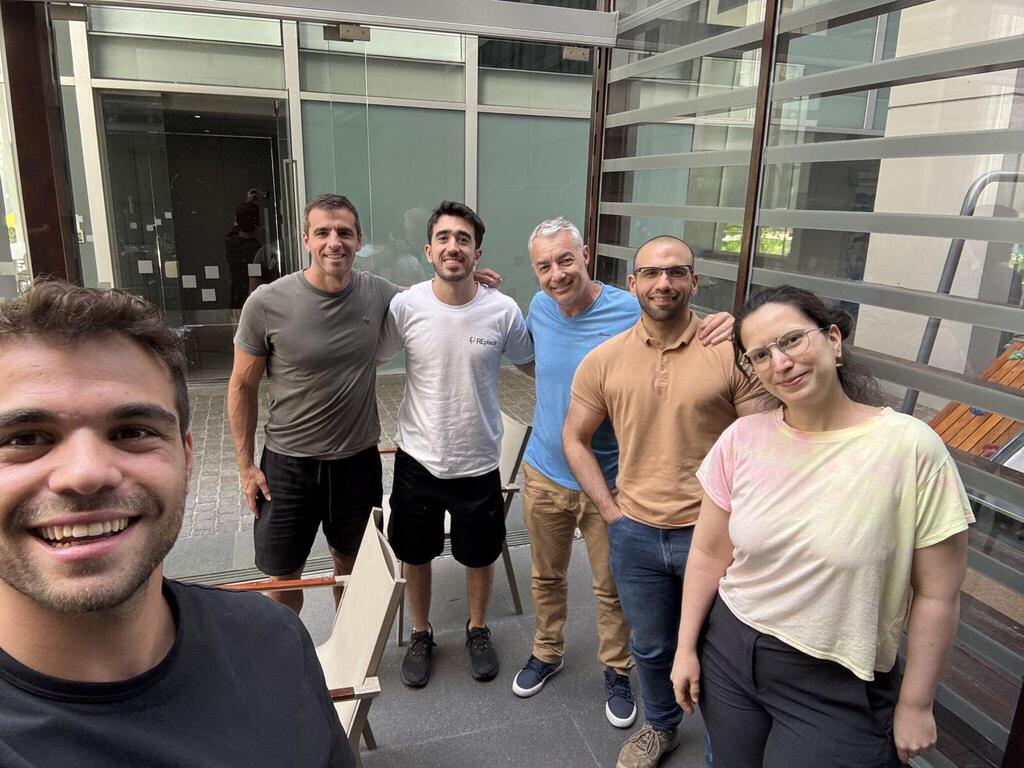
Matias Sigal with friends
(Photo: REplace)
Sigal says similar encounters happened repeatedly during his early years in Israel, as experienced founders, investors and mentors agreed to help him despite having no prior connection to him.
“In many places around the world, customers tell you: ‘Come back when the product is ready’”, Sigal said. “In Israel, customers would say: ‘Let’s sign the agreement now, and when you grow, we’ll grow together. You find an entrepreneurial mindset in every corporation”.
The energy crunch creating a new AI opportunity
REplace’s growth comes as the global energy sector faces mounting pressure. Every year, hundreds of billions of dollars are invested into renewable energy projects around the world, yet many of those projects never reach construction. Developers and investors often spend years advancing projects, only to discover too late that grid interconnection costs, infrastructure limitations or regulatory constraints make the economics far less attractive than expected.
At the same time, the rapid expansion of AI and data centers is dramatically increasing global electricity demand, creating pressure to accelerate the development of new power infrastructure. In the U.S. alone, thousands of renewable energy projects are currently waiting in grid interconnection queues, while investment and M&A activity in the sector continues to grow rapidly.
In a market where developing new energy capacity can take years, the ability to identify viable projects earlier has become increasingly important. That dynamic is creating growing demand for tools that help energy companies and investors evaluate, acquire and develop renewable energy projects more efficiently.
Sigal believes AI will fundamentally reshape how energy investments are evaluated.
“There’s enormous pressure to make faster decisions”, he said. “But these are incredibly complex projects with huge financial implications. The industry still relies on people manually reviewing thousands of pages”.
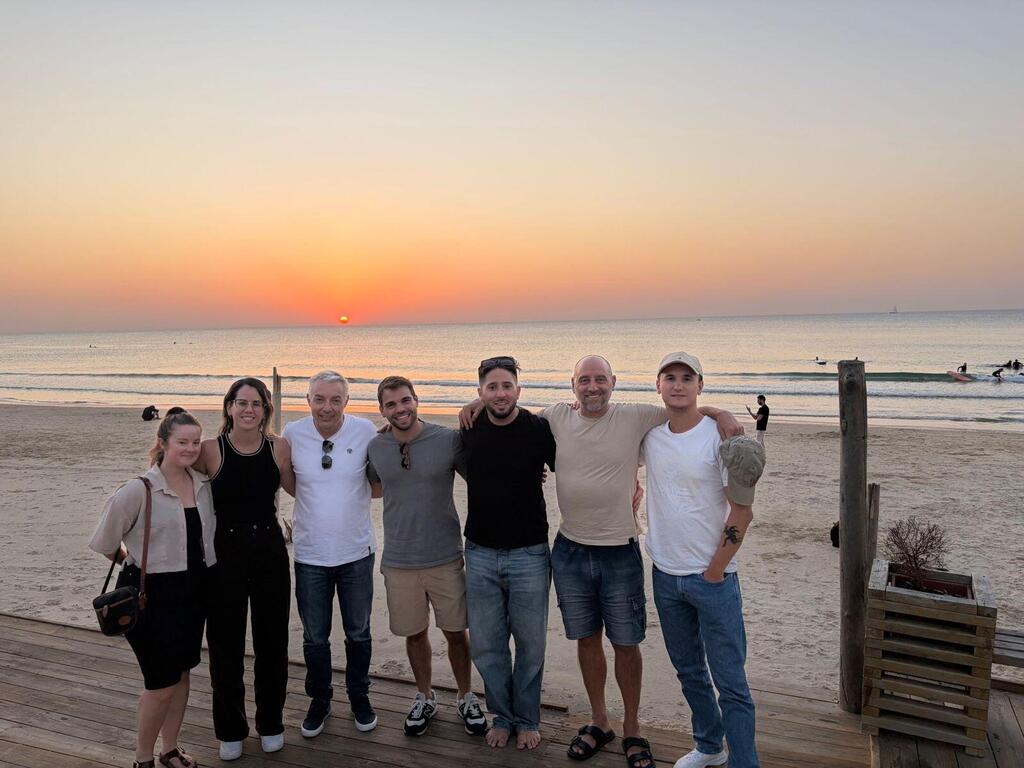
Matias Sigal with friends
(Photo: REplace)
REplace aims to shorten that process by helping acquisition teams, developers and investors identify risks, bottlenecks and opportunities much earlier. Rather than relying on fragmented information spread across thousands of documents, the platform consolidates the data into a clearer picture of a project’s status, risk profile and likelihood of actually reaching construction.
The company initially operated across several markets, including Spain, Israel, Canada and the United States, but quickly began attracting growing interest from American customers. According to Sigal, demand from the U.S. According to Sigal, demand from the U.S. market accelerated rapidly over the past year, eventually prompting the company to focus much more heavily on its American expansion and leading him to relocate to New York.
Building big while starting small
Sigal believes part of REplace’s DNA comes from the combination of Israeli and Argentine culture inside the company. “Israel teaches you to think big”, he said. “There’s this mentality that you can build globally from day one”.
At the same time, Sigal says moving from Argentina to Israel forced him to become comfortable with uncertainty and constant adaptation, traits that later became essential while building a startup from scratch in a new country and business culture.
Even after years in Israel, Sigal still remembers arriving without connections, trying to understand how the ecosystem worked and building relationships one coffee meeting at a time.
“There are very few places in the world where you can arrive knowing almost nobody and still build something meaningful in such a short amount of time”, Sigal said. “For me, Israel became that place”.