


Serious disruptions to Israeli military intelligence systems during the war in Gaza prompted senior intelligence officials to threaten to end their relationship with U.S. technology giant Cisco, forcing the company to mobilize teams of experts and urgently send employees to Israel to resolve the crisis, according to internal company documents revealed in an investigation published over the weekend by the British newspaper The Guardian.
According to the documents, computer networks used by Israeli military intelligence suffered repeated outages lasting hours, crashes and technical problems that built-in diagnostic systems failed to detect and resolve. The problems emerged as intelligence agencies were upgrading their digital infrastructure, disrupted critical operations and jeopardized business that generated about $67 million for Cisco over three years.
“This series of events happened during the period of war, deeply impacting customer sentiment,” a draft internal Cisco memo from September 2025 said, highlighting the effect on critical operations during the fighting. Employees said the failures endangered intelligence personnel’s access to military data, although the documents do not specify which operations were affected or provide evidence that a particular strike or military operation was disrupted.
Cisco realized the danger extended beyond the technical problems themselves. Losing the Israeli customer’s confidence could cost the company tens of millions of dollars and jeopardize its continued business with the intelligence community. According to the documents, Cisco brought in senior executives, mobilized several professional teams and spent months addressing the crisis. Employees were sent to military sites in Israel during the war under unusually stringent security arrangements.
Cisco services ‘as important as aircraft and tanks’ to IDF
One of the sites they visited belonged to Sapir, a little-known technological unit within the IDF Military Intelligence Directorate. The unit is responsible for operating intelligence communications and computing infrastructure, including managing and protecting Military Intelligence’s main data center, which also provides digital hosting for major units such as Unit 8200. After the October 7 attack, Sapir was given an additional mission: accelerating the transfer of intelligence operations to underground facilities so that the IDF could continue functioning during missile attacks and other threats. The documents do not establish that the underground transition caused the Cisco failures. After months of work, however, Cisco resolved the technical problems between 2024 and the summer of 2025. The company said the Israeli customer was satisfied with the result and presented its handling of the crisis internally as a “customer success story.” Cisco’s sales teams had turned a crisis that nearly cost the company a major customer into an example of successfully resolving a complex technical failure.
Cisco’s relationship with Israel’s defense establishment predates the latest war by years. Headquartered in San Jose, California, the company is one of the world’s largest suppliers of networking equipment and computing infrastructure. Its routers, servers and cybersecurity systems are used to move data between computers, data centers and government and military networks. In fiscal 2026, Cisco reported revenue of $63.3 billion and net income of $13.3 billion.
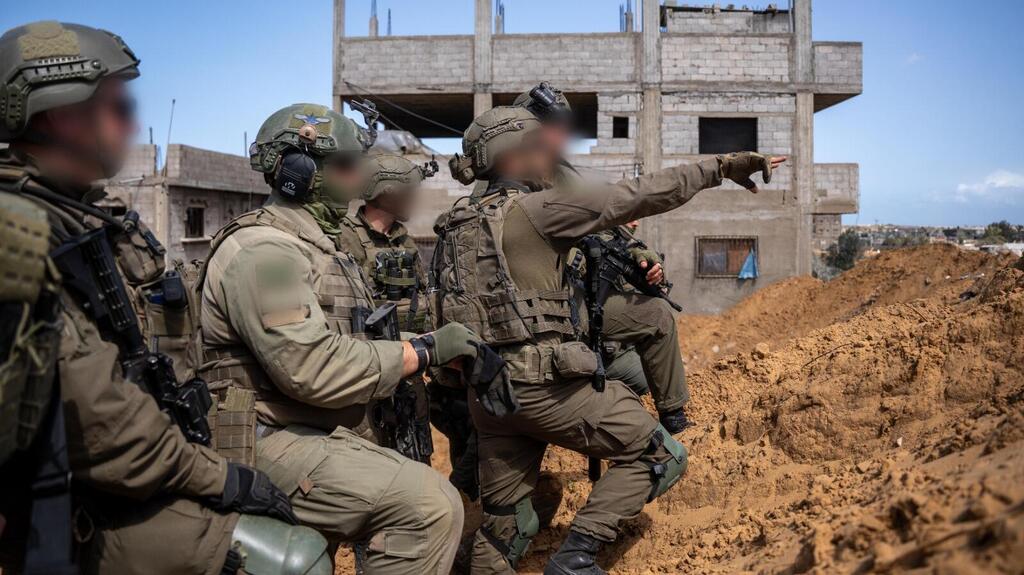
IDF troops in Gaza
(Photo: IDF)
An internal document from April 2021 illustrates the importance of the Israeli relationship. Cisco described its computing and communications services as essential to the IDF, comparing their importance to “aircrafts, tanks and any other essential military tools,” and called itself the Defense Ministry’s dominant information and communications technology partner. According to the document, the account encompassed 10 classified organizations and at the time accounted for about half of Cisco Israel’s revenue.
Other documents show that Cisco’s revenue in Israel rose from $122 million in fiscal 2015 to $283 million in 2024. One of the main engines of that growth was the Defense Ministry: in the first half of 2024 alone, business with the ministry generated about $98 million, out of roughly $150 million in total Israeli revenue.
An internal presentation circulated that year carried the line “Never let a good crisis go to waste,” a saying incorrectly attributed to Winston Churchill. The war was presented as an opportunity to expand sales to Israel’s defense establishment, with $111 million in Cisco’s Israeli revenue categorized as “conflict impact.” Among the opportunities listed were a $50 million artificial-intelligence computing project and a $15 million routed optical-network project.
Days after the October 7 attack, Cisco CEO Chuck Robbins told employees the company was working “day and night” to send technology to Israel, including specialized cybersecurity capabilities requested by officials in the country.
Project Nimbus
The newly leaked documents indicate that those efforts continued into this year. They detail dozens of deals and business opportunities pursued by Cisco with Israeli government bodies, including intelligence agencies, the Air Force and the Navy. Many were tagged as AI-related deals involving expanded capacity to process vast amounts of information. The documents also show that Splunk, which Cisco acquired in 2024 for approximately $28 billion, sought to participate in the Israeli government’s Project Nimbus cloud program, whose principal cloud contracts were awarded to Google and Amazon in 2021 as part of a project valued at roughly $1.2 billion. Splunk specializes in analyzing large volumes of machine-generated data, including for detecting technical failures and cybersecurity threats. Government procurement records show that Israel’s National Digital Agency has relied on Splunk products for years, and in September published notice of an intended NIS 12 million continuation agreement. An earlier government document said officials examined replacing Splunk with Google’s Chronicle platform under Nimbus, but concluded that at that stage it did not meet the agency’s analytical, operational and security requirements.
As Cisco expanded its business with the IDF, it also faced opposition from within its own workforce. Bridge to Humanity, a group of current and former Cisco employees, has argued that the company’s work with the Israeli military conflicts with the human rights values it publicly promotes. Members of the group said Cisco was “no different to an arms company that is supplying the bombs and fighter jets.” They alleged that while executives dismissed employees’ concerns about the company’s role in the war, Cisco was working behind the scenes to expand its military business and went “above and beyond” to ensure it did not lose revenue.

Unit 8200 base in Glilot
(Photo: Yariv Katz)
In 2024, more than 1,700 employees signed a letter calling on Cisco to disclose its ties to Israel and stop supplying technology to the IDF. The campaign was accompanied by allegations of harassment targeting Muslim and Palestinian employees. Earlier this year, the U.S. Equal Employment Opportunity Commission found reasonable cause to believe Cisco had subjected Middle Eastern and Muslim employees, and people associated with them, to a hostile work environment. Complaints filed with the agency documented offensive statements on internal company forums, including a message suggesting that employees who signed the anti-Israel petition should “quit living,” as well as an attempt to compile the names of the petition’s signatories. Cisco rejected the EEOC’s determination, saying it had thoroughly investigated the concerns and taken appropriate action.
In March 2025, management announced that discussions of the war in Gaza would no longer be permitted in company-wide or organization-wide forums. “Some topics are just simply too hard, too painful, too divisive, and they take our focus away from our ability to drive Cisco business,” Francine Katsoudas, Cisco’s executive vice president and chief people, policy and purpose officer, told employees. She cited the Middle East conflict as one example and said the subject could no longer be discussed or debated in company-wide meetings. The decision angered protesting employees, who accused management of trying to silence them.
The dispute is now reaching Cisco shareholders. On December 15, shareholders are scheduled to vote on a proposal led by Azzad Asset Management, a U.S. investment firm that follows Islamic, Shariah-based investment principles and holds Cisco shares on behalf of clients. Azzad, which has participated in other shareholder initiatives concerning technology companies and Palestinian issues, is seeking an independent third-party human rights impact assessment of risks associated with high-risk customers, end users and business relationships, including military, intelligence, surveillance and other sensitive government uses. Cisco’s board is recommending that shareholders vote against the proposal, saying the company already conducts risk-based human rights due diligence and impact assessments. The Anti-Defamation League and Jewish investor network JLens have also urged shareholders to oppose it, arguing that although the resolution is broadly framed as a human rights initiative, its supporting case focuses heavily on Israel and overlaps with objectives promoted by the BDS movement.
Cisco did not respond to requests for comment about the leaked documents. The IDF said it uses services provided by various companies to meet its ongoing needs and objectives, but does not comment on contracts or services provided by outside entities.