

Cybersecurity startup Jazz said Tuesday it has raised $61 million in early-stage funding and emerged from stealth with a platform aimed at rethinking how companies prevent sensitive data from leaking outside their organizations.
The funding — a combination of seed and Series A rounds — was led by Glilot Capital Partners and Team8, with participation from Ten Eleven Ventures, Merlin Ventures, Encoded Ventures and MassMutual Ventures, as well as several cybersecurity entrepreneurs. The company said the investment will help expand its engineering, research and sales operations as it seeks to scale globally and increase adoption among large enterprises.
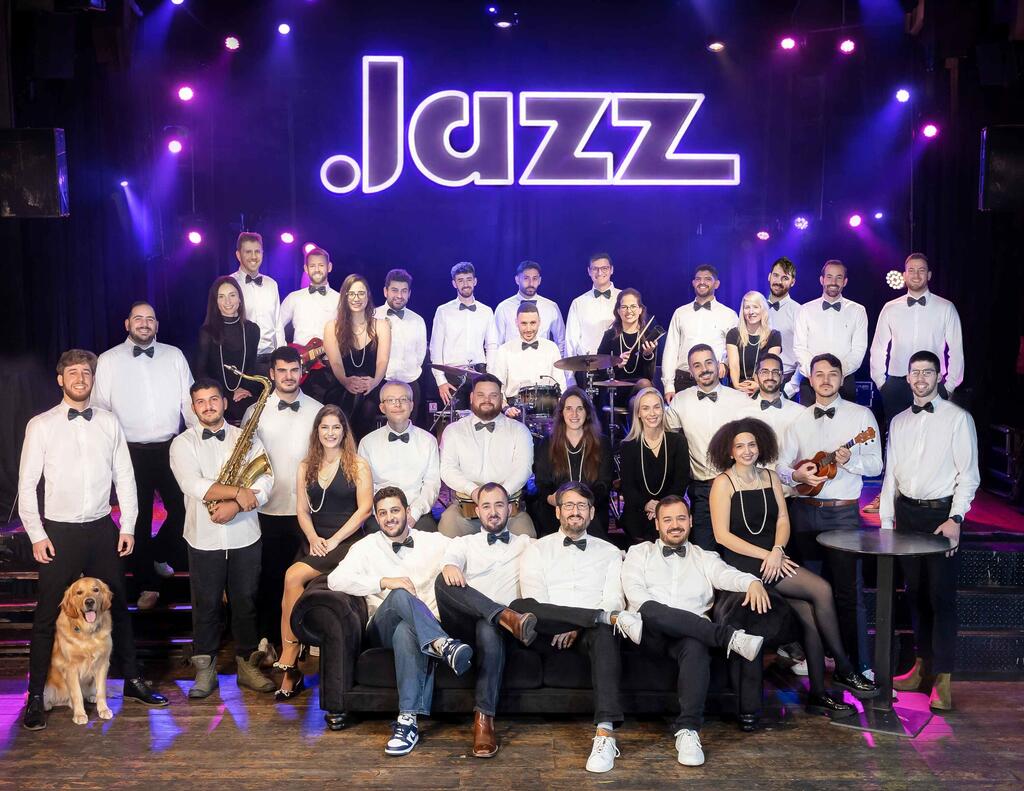
Jazz Group team
(Photo: Shai Shachar)
Jazz is developing a new approach to Data Loss Prevention, or DLP — security tools designed to prevent sensitive information such as product plans, source code, customer lists and financial documents from leaving company systems through everyday work activities.
Traditional DLP tools have typically relied on rule-based systems that require security teams to define and maintain policies for thousands of possible scenarios. Those systems are widely criticized in the industry for generating large volumes of alerts and creating operational friction without reliably stopping real risks.
According to Verizon’s 2025 Data Breach Investigations Report, the “human element” — including employee mistakes, social engineering and insider misuse — is involved in about 60% of data breaches.
That leaves many security teams either maintaining legacy DLP systems largely for compliance purposes or avoiding them altogether because of the operational burden, even though the risk of sensitive data exposure remains high.
Jazz says its platform uses artificial intelligence to analyze the context of data activity rather than relying primarily on predefined rules.
The company’s system uses what it calls an “agentic investigator,” software designed to study how an organization’s employees, systems and workflows interact with data. By analyzing the user, the data, the system involved and the surrounding business process, the platform attempts to determine whether an action reflects legitimate work activity or a potential security threat.
“For years, security leaders have been stuck choosing between protecting their data and maintaining their business agility,” said Ido Livneh, co-founder and chief executive of Jazz. “Traditional DLP was built on rigid rules that don’t understand how modern work actually happens, which leaves teams drowning in noise while real risks slip through.”
In one deployment involving a company with about 5,000 employees, Jazz said the system reduced the number of daily DLP alerts from tens of thousands of low-confidence detections to roughly 10 incidents that had already been analyzed and prioritized.
The platform is already in use in dozens of organizations, the company said, including Lemonade, AlphaSense and CAVA.
Oliver Newbury, the former global chief information security officer at Barclays, said managing data security in large financial institutions has become increasingly difficult as data volumes and regulatory requirements grow.
“Jazz’s AI-native, context-driven platform is the only scalable way to manage data risk in the modern enterprise,” he said.
Investors say the company is attempting to rebuild the DLP category using artificial intelligence rather than incremental improvements to existing tools.
“For more than 20 years, DLP has forced security teams into an unfair tradeoff: accept the risk, or accept the operational pain,” said Kobi Samboursky, co-founder and managing partner at Glilot Capital Partners.
Jazz was founded by Ido Livneh, Jake Tuertskey, Noam Issachar and Yonatan Zohar — veterans of Unit 81, an Israeli military technology unit, and alumni of cybersecurity companies including Axonius and Laminar.
The company said its platform combines a forensic endpoint monitoring agent with its AI-based investigative system, providing organizations with analysis of potential data exposure events rather than raw alerts.