

As the defense establishment wraps up its long campaign in Gaza, the Finance Ministry has declared a fiscal ceasefire: no more money for the army. Treasury officials say the end of fighting in Gaza and the cancellation of plans for a broader ground offensive eliminate any justification for increasing the defense budget, even as the IDF demands an additional 20 billion shekels for 2025. “The war is over. It’s time for the IDF to streamline,” a senior Finance Ministry official told Ynet.
Last month, the Knesset approved an exceptional 30 billion shekel supplement for the defense establishment, which included 1.6 billion shekels in humanitarian aid to Gaza. That expansion blew open the state budget, forcing cuts across nearly all ministries—most notably education, health and welfare.

However, the IDF returned with another request for additional funds. According to a senior Treasury source, there is no room to expand the defense budget further, especially after the cancellation of the ground offensive in Gaza City and the formal end of the war. “There’s absolutely no reason to transfer even one more shekel to the army,” the source said. “If they face shortfalls, they can draw from the efficiency savings already agreed upon with the Defense Ministry but never implemented.”
Dispute over the Nagel Committee recommendations
According to the Nagel Committee framework, the defense budget for 2025 was expected to total 123 billion shekels, including a special 9 billion shekel addition. In practice, it has already grown to 163 billion shekels, a move that pushed the overall state budget to 650 billion and triggered cuts of over 3 percent across all ministries and government units. The report recommended a gradual decrease, projecting a defense budget of 96 billion shekels in 2026 and a rise to about 100 billion by 2028. But the Treasury stresses the government never formally adopted those recommendations, calling them merely a reference point, not a commitment.

Netanyahu receives the Nagel Committee’s recommendations
(Photo: Maayan Toaf /GPO)
Defense officials reject that stance, arguing the report fails to reflect recent developments: the confrontation with Iran, the costly strikes on Yemen’s Houthis and the unexpectedly prolonged fighting in Gaza. They say countering threats from the south and east has required especially expensive procurement and maintenance.
The numbers behind the clash
A single day of fighting in Gaza cost more than half a billion shekels. Each interception missile cost around 10 million, with the costs of intercepting incoming threats from Yemen mounting to nearly a billion. Airstrikes in Yemen required dozens of aircraft, expensive ammunition and complex refueling operations, with each mission costing tens of millions.
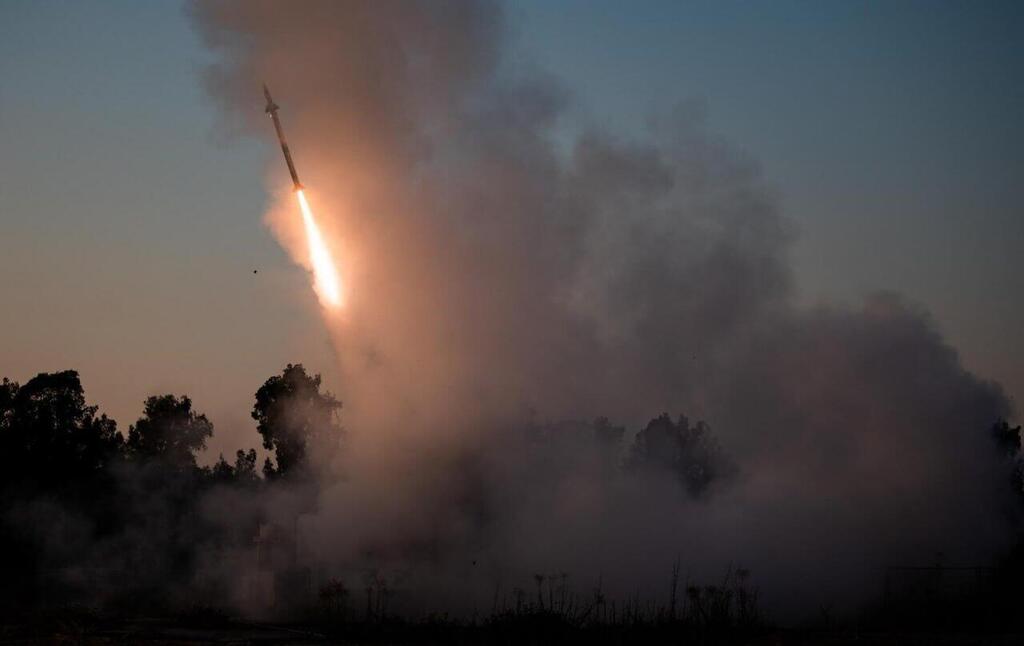
Air defense systems
(Photo: IDF)
For 2025, the IDF is seeking a 20 billion shekel increase. For 2026, the gap between the Defense Ministry’s requests and Treasury projections already stands at 25 billion. Defense officials want a 135 billion shekel budget—excluding certain procurement costs—while the Treasury insists on a ceiling of about 110 billion. Officials warn that the economy cannot sustain the army’s demands. The fiscal deficit has risen to 5.2 percent. Many reservists’ families and businesses have seen income losses, dozens of Israeli firms abroad are facing boycotts and the National Insurance Institute has paid out massive grants.
Now, with a ceasefire in place and most troops returning home, the Treasury hopes to redirect spending. A senior official said the end of the Gaza war and the upcoming withdrawal of forces will make it possible to restore billions to education, prevent welfare and healthcare cuts and revive postponed road and rail projects. The government may even roll back planned tax increases and recent hikes to health and social insurance contributions. “As in any election year, it will be politically easier to give benefits than to cut,” a senior economist said.
Economic outlook: growth expected to rebound
If the ceasefire holds, Treasury forecasts show growth resuming as early as 2026, at least one percentage point above previous projections, allowing the deficit to narrow, even if not to prewar targets.
This year’s deficit is projected at 5.2 percent, compared to a 2.8 percent target and the Bank of Israel’s earlier forecast of 4.2 percent. The debt-to-GDP ratio, which climbed from 60 percent in 2022 to nearly 72 percent this year, is expected to fall again by 2026 to around 70 percent. Under that scenario, the Bank of Israel could lower its benchmark interest rate to 3.75 percent by mid-2026, down from the current 4.5 percent.