

Israeli venture studio Inevitable AI Group said Wednesday it has raised $6 million in pre-seed funding to launch dozens of artificial intelligence-native software companies, betting that AI is fundamentally reshaping how software businesses are built and operated.
The funding round was led by Israeli venture capital firm Aleph.
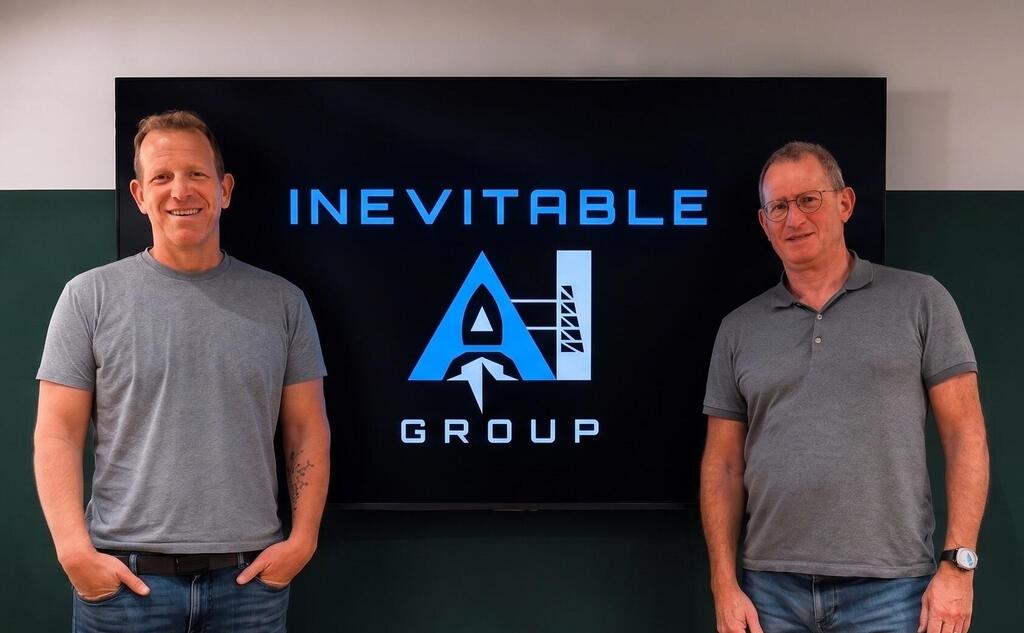
IAIG founder Nimrod Lehavi and Ofer Bar-Or
(Photo: IAIG)
Founded by technology entrepreneurs Nimrod Lehavi and Ofer Bar-Or, Inevitable AI Group, or IAIG, operates as a venture studio rather than a traditional startup, partnering with entrepreneurs to build and launch AI-first software companies in established markets where artificial intelligence can improve efficiency, accessibility or pricing.
The company said it aims to bring new products to market within weeks by using AI throughout the development process, from product design and engineering to operations, marketing and growth.
"We believe AI is changing the foundations of how software businesses are built, marketed, grow and exit," Lehavi, the company's founder and CEO, said in a statement. "Many of today’s software companies were designed for a different technological era. We see an opportunity to build a new generation of companies that can move faster, operate more efficiently, and deliver greater value to customers."
Unlike conventional startups focused on a single product, IAIG plans to create dozens of AI-native software businesses simultaneously, providing founders with operational infrastructure and technical support while leveraging AI to reduce development time and operating costs.
The company said it has launched five ventures since beginning operations in January and expects to launch dozens more by the end of the year.
IAIG focuses on software categories with established demand rather than creating entirely new markets, seeking opportunities where AI can streamline development or significantly reduce costs.
Aleph partner Eden Shochat said advances in AI are transforming, rather than replacing, the software-as-a-service, or SaaS, industry.
"SaaS isn't dying, it's being reinvented," Shochat said. "AI gives customers the ability to create tools tailored to their needs on demand. We backed IAIG because the team understands that the winners of this transition will be those building entirely new categories of software."
Lehavi previously founded cryptocurrency payments company Simplex, which was acquired by Canadian payments technology company Nuvei in a deal valued at about $300 million.
Bar-Or brings more than three decades of entrepreneurial experience spanning telecommunications, semiconductors, internet infrastructure, machine learning and deep technology. A graduate of Israel's elite Talpiot military program, he also spent seven years working in Israel's space program.
"The biggest challenge in startups has always been finding something the market truly needs and then executing well," Bar-Or said. "AI is dramatically reducing the barriers to execution, allowing entrepreneurs to spend more time solving meaningful problems and less time navigating the complexity of software development."
IAIG said it expects the next phase of the software industry to be driven by smaller, more efficient companies capable of delivering enterprise-grade products more quickly and at lower cost. It also anticipates increased acquisitions, partnerships and integrations between AI-native startups and established software companies as the industry adapts to AI-driven development.
The company plans to expand its network of founders, enter additional software markets and further develop its AI-driven venture-building model.