

Senior industry leaders in Israel expressed confusion and concern after U.S. President Donald Trump revised his administration’s tariff policy following a U.S. Supreme Court decision that struck down the White House’s previous tariff framework.
After the court ruling, Trump announced a 10% tariff on all countries trading with the United States. In Israel, which had originally been subject to a 15% tariff, officials initially welcomed the development.
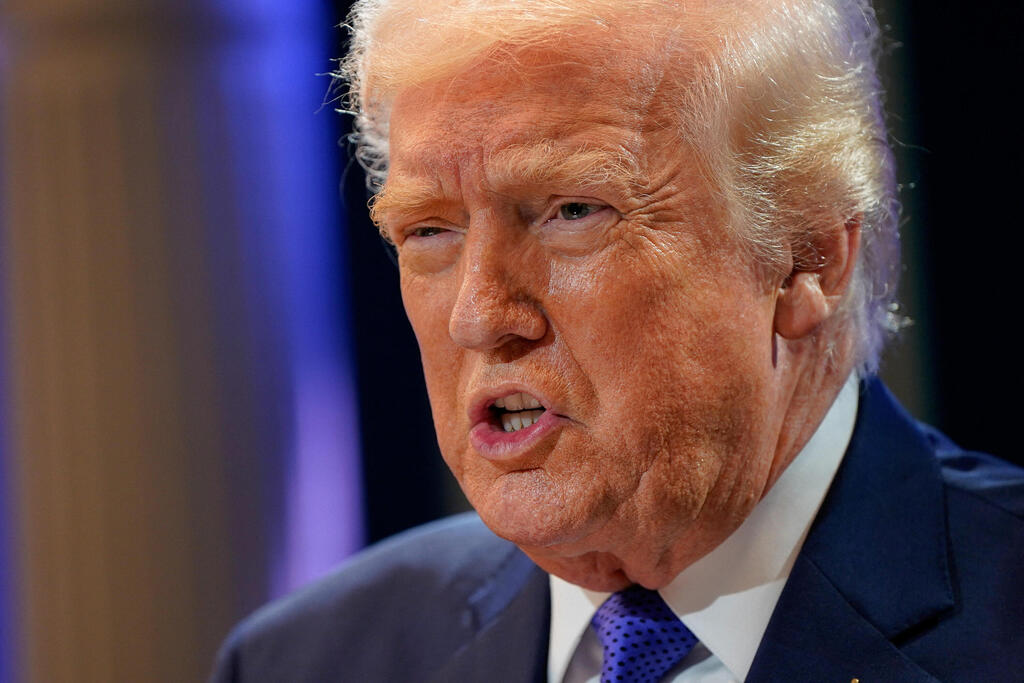
(Photo: REUTERS/Elizabeth Frantz)
However, the president later amended the announcement, setting the tariff rate at 15%.
Under U.S. law, the president may impose tariffs of up to 15% for a limited period of five months. The measure cannot be extended beyond that timeframe.
Industry leaders in Israel are now hoping that the tariffs will be lifted entirely by late July, when the five-month period is expected to end, restoring previous trade conditions and effectively returning to a free trade framework between the United States and Israel.
Despite the uncertainty, senior figures in the business sector said they were relieved that the previously announced permanent 15% tariff on most exports to the United States had been replaced by what they described as a temporary measure applied globally.
“There is still good news here,” said Dr. Ron Tomer, a former president of the Manufacturers Association and owner of a pharmaceutical plant. “We can only hope that in the summer the tariffs will dissipate and we will return to our advantage under our longstanding and strong trade agreement with the United States.”
At the same time, Tomer warned that exporters face a difficult interim period.
“We are left for five months with a 15% tariff, but now without an advantage over countries that previously had higher tariffs,” he said. “That means the situation for exporters to the United States is worse today, at least temporarily.”
Before Trump’s tariff policy was introduced at the start of his term, Israel had a free trade agreement with the United States that provided broad tariff exemptions. That arrangement gave industry in Israel a significant competitive advantage over exporters from the European Union, Turkey and many East Asian countries that did not benefit from similar exemptions.
Trump’s new policy effectively places Israel on the same tariff level as those countries, eliminating that relative advantage.
Abraham “Novo” Novogrodsky, president of the Manufacturers Association, welcomed the U.S. Supreme Court decision but cautioned that the relief was partial and temporary.
“Immediately after the ruling, President Trump announced a sweeping 10% tariff and within hours raised it to 15%,” Novogrodsky said. “This returns uncertainty to new heights and shows that global trade wars are far from over.”
He added that industry in Israel and worldwide is still assessing the immediate implications of the latest decisions.