

While global attention has focused on the war with Iran and U.S. President Donald Trump's announcement this week that the ceasefire had collapsed, Washington has also intensified pressure on Cuba through a broad sanctions campaign that is deepening the island's economic crisis and reshaping parts of its economy.
The U.S. measures, which include tighter sanctions and restrictions on trade and financial transactions, have sharply curtailed Cuba's ability to import fuel, worsening the country's energy shortages and contributing to growing food, water and medicine shortages.
Gallery
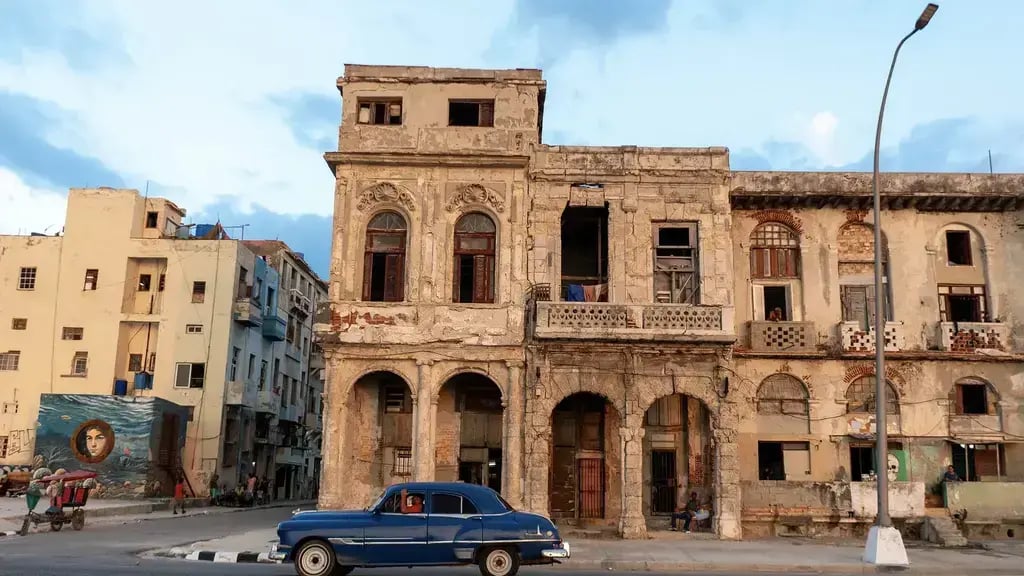
An abandoned residential building in Havana, Cuba
(Photo: Magdalena Chodownik/Anadolu/Gettyimages)
The sanctions, combined with longstanding restrictions on foreign companies doing business with Cuba, have pushed the country's economy closer to collapse. The United Nations has warned that worsening shortages risk triggering a humanitarian crisis.
Last month, the U.S. Treasury Department imposed additional sanctions targeting Cuban banks, mining and logistics companies, as well as the daughter-in-law of former president Raúl Castro. The measures have prompted some international hotel operators to leave the country and have led to the suspension of several mining projects.
According to The Wall Street Journal, the Trump administration has also focused on one of Cuba's most valuable exports: its overseas medical missions, which are among the country's few remaining major sources of hard currency.
For decades, Cuba has sent doctors and other medical personnel to more than 50 countries under government agreements that generate billions of dollars in revenue for Havana.
According to the report, the United States is pressuring countries that employ Cuban medical workers to terminate or reduce those contracts, warning they could face visa restrictions and other punitive measures if they continue participating in the program.
U.S. officials argue the medical missions primarily serve as a revenue-generating scheme for Cuba's communist government.
Supporters of the program, however, say the doctors provide essential healthcare in underserved communities.
José Enamorado, a farmer in Honduras, said his father received free cataract surgery performed by a Cuban doctor — a procedure that would otherwise have cost about $2,000.
"The Cuban doctors brought hope to a lot of people," he said.
Adopting free market principles
As Cuba searches for ways to ease its deepening economic crisis, the communist government has quietly proposed sweeping free-market reforms to the United States, including privatizing state-owned companies and expanding the role of private enterprise, according to reports.
The proposals come as the island nation struggles under intensified U.S. sanctions that have worsened fuel shortages, contributed to repeated nationwide blackouts and pushed the economy closer to collapse.
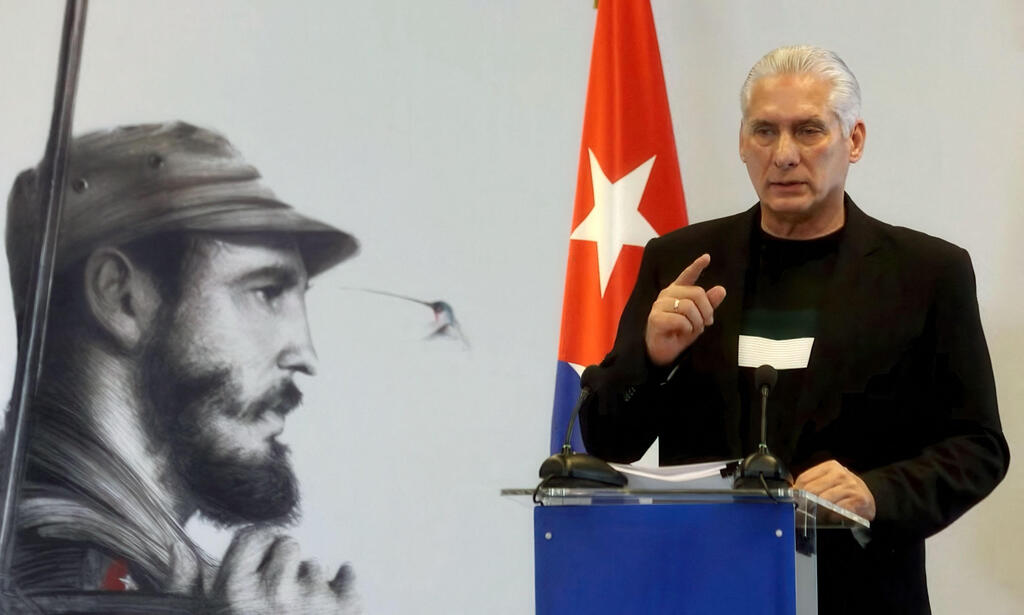
Cuban President Miguel Díaz-Canel
(Photo: Handout / CUBA TV / AFP)
According to Bloomberg, Cuban officials last month presented U.S. officials with a list of 176 proposed economic reforms aimed at easing tensions with Washington.
Although Cuba remains a communist state, the proposals reportedly include measures typically associated with free-market economies, including privatizing state-owned enterprises, converting sovereign debt into assets, opening more sectors to private businesses, lifting price controls and reducing the government's role in economic activity ranging from imports to attracting foreign investment.
Bloomberg described the package as Cuba's most ambitious move toward market-oriented reforms since Fidel Castro came to power in 1959 — in some respects going beyond what Washington itself had hoped to achieve.
Pedro Monreal, a Cuban economist who works with the United Nations, said the proposals appeared designed "to get the attention of the U.S. government."
So far, however, they have shown little sign of changing Trump's approach toward Cuba.
This week, the island's 9.6 million residents experienced another nationwide power outage — the third this year and the eighth since 2024.
Even before the latest round of U.S. sanctions, Cuba struggled to keep its aging power grid operating. The tightening of U.S. restrictions has further reduced already limited fuel supplies for power plants.
Since January, Washington has reportedly allowed only one fuel tanker to dock in Cuba. In an effort to conserve electricity, the Cuban government has imposed strict limits on energy consumption.
"Living like this is agony," Meyboll Font, a 51-year-old self-employed social media community manager from Havana, told The Guardian. She said her neighborhood typically receives only three or four hours of electricity a day, but the latest blackout has been even more difficult because residents do not know when power will return.
"We have no wifi, no electricity, we can’t work," a young software programmer working for a local tourism startup in another neighborhood told the newspaper.
Like the indirect negotiations between Washington and Tehran, contacts between the United States and Cuba have continued but produced little progress.
Earlier this month, a senior Cuban official acknowledged the talks had effectively reached "a dead end," while U.S. Secretary of State Marco Rubio said no agreement would be possible as long as Cuba's current political system remains in place.
Cuban officials have rejected that demand.
President Miguel Díaz-Canel said this month that "restoring capitalism to Cuba will never be one of our objectives," insisting the planned reforms are intended to "save the revolution and its undeniable social achievements."
Meanwhile, Havana is seeking to attract foreign investors.
Ahmed Faisal, an adviser to the Cuban government, told an Abu Dhabi newspaper that tentative agreements had been reached with Middle Eastern investors in tourism, aviation and healthcare. One potential project, he said, is the construction of a luxury resort called "Trump Island."
Ricardo Torres, a Cuban economist and professor at American University in Washington, said the reforms are unlikely to have a meaningful impact without broader political change.
"History is not on their side," he said of Cuba's government. "Without significant and comprehensive institutional change, investors have no guarantees or assurances that would bring them back to Cuba."