

Have you noticed that your cashier doesn’t really know Hebrew? In recent months, thousands of foreign workers have arrived in Israel to work in supermarket chains, mostly women. They come from Thailand, India, Sri Lanka and other countries, replacing Israeli workers who are increasingly unwilling to work in supermarkets at low wages and Palestinian workers whose entry into Israel was banned after the October 7 massacre.
Retail chain owners say that their personnel quotas for foreign workers (granted for the first time in the sector due to the war) are insufficient. They also express high praise for the work ethic of the new arrivals, at a retail conference held Tuesday alongside the Israfood Expo hosted by the Stier Group.
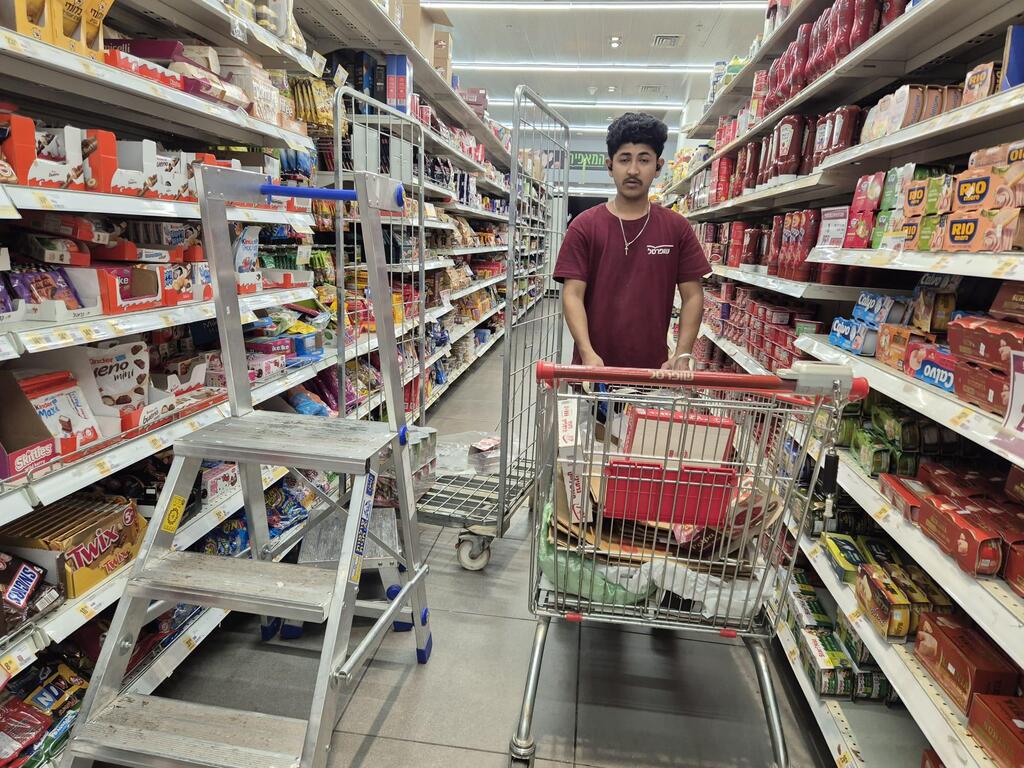
“We'll end up being like Dubai, with more foreign workers than residents", said Keinan Maman, CEO of the Keshet Te’amim chain.
“We have taken in 1,000 foreign workers and we need another 700‑800,” said Rami Levy, owner of the eponymous retail chain. Shufersal, the first chain to bring in foreign workers, has taken in a few hundred and “it’s not enough,” the company said.
'Thanks to the foreign workers, I will open more branches'
“We have been working with foreign staff for 3 to 3.5 months now," says Eyal Ravid, CEO and founder of the Victory supermarket chain, one of the first to employ foreign women as cashiers. "At my stores, the Thai women work on tablets and make the deliveries with zero shortages."
“In the past, foreign workers have made it possible for me to expand the chain," he told ynet in an interview. "Today, I’m afraid to open a new branch because there are no workers; having them back makoes me thrilled and passionate about opening new stores, even at a cost of an extra thousand shekels a month.
"As for Israeli workers, even if I pay two thousand shekels more, they still won't show up, and when they do and are assigned a task, they also drink coffee and scroll on TikTok instead. By contrast, these foreign women work 10.5 hours a day, up to 240 hours a month, not a minute more, and they do a perfect job. I send them a photo of the planogram (shelf schematic drawing) in the evening and in the morning, all is perfectly set.
“We are translating everything to Thai, as well as to Thai in English letters. We hang product photos with captions in the meat and fish departments too, and some of them become fully comfortable with the work after just three months. I love working with them. They show up in the morning well-groomed, and the stores with Thai women have a completely different atmosphere.”
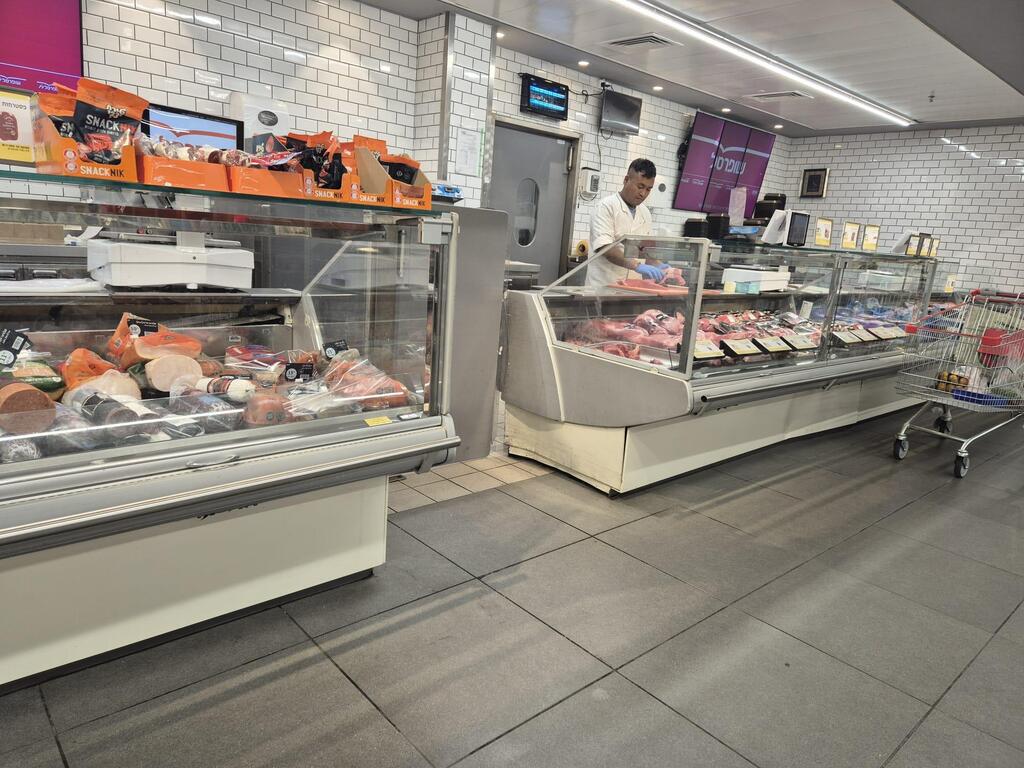
Also at the meat counter
(Photo: Meirav Crystal)
Victory is short hundreds of workers. The chain even appointed Thai management teams, including a regional manager and a general manager. They are provided with housing in furnished apartments (six under one roof), including large television screens and brand new home appliances, including a coffee machine.
“They’re here for five to 10 years,” said Ravid. “If they are comfortable in the apartment, they will come to work happy. When you give something good, you get good in return."
Victory once had 3,700 employees but lost several hundred, highlighting the industry-wide shortage. Still, according to Ravid, “Each of these foreign workers is worth two. I’m bringing in 80% from Thailand and 20% men from India who speak English.
"I already have Indian workers who are shift managers. We traveled to India specifically to recruit them. Yes, it costs money, but we expect it to become profitable by January."
'We housed workers in 40 hotel rooms by the Tel Aviv beach'
Michael Luboschitz, CEO of Carrefour Israel, told ynet about the high demand for these jobs. “A team of four from our company traveled to Thailand. We had 4,000 people show up daily for auditions. We couldn’t believe it.
"We ran them through supermarket and butcher shop tests, explained what’s required and built a training school for them. We didn’t just drop them in stores and say ‘figure it out.’ We’re an international chain, so our processes are very organized.
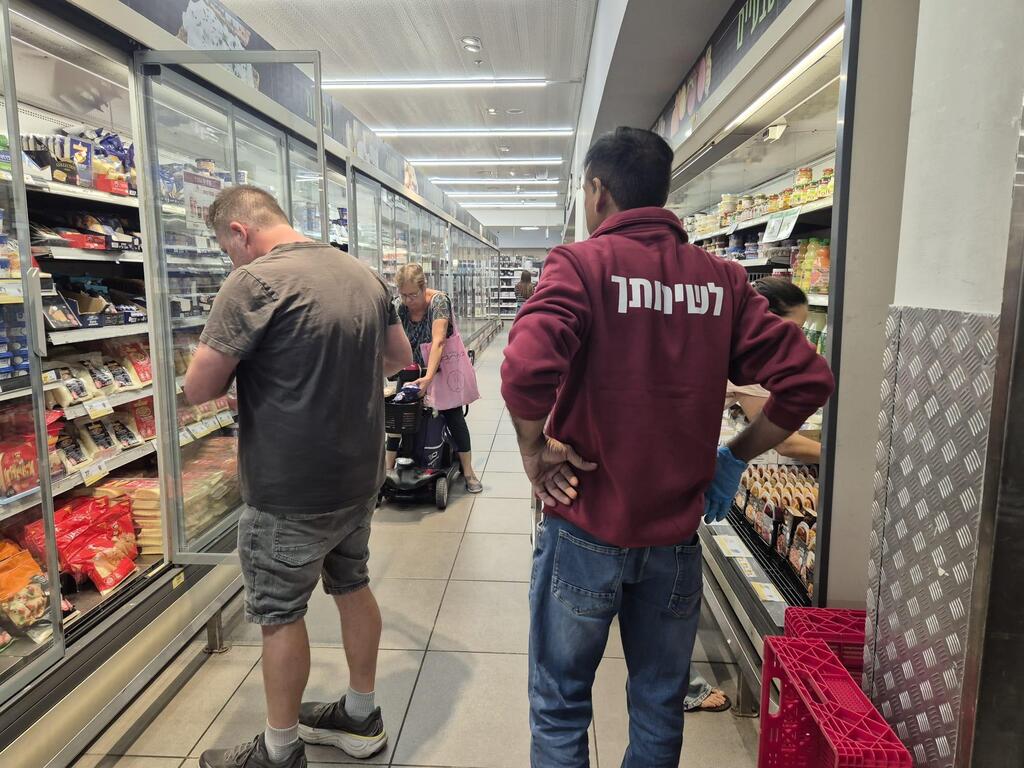
Excellent work ethic
(Photo: Meirav Crystal)
“I rented a hotel on Yarkon Street in Tel Aviv with 40 rooms, three people per room, all with a view of the ocean. I built them dining rooms and leisure areas, and they have a bomb shelter and 24-hour security.
"They arrived and were shocked by the hotel and the beach; they filmed everything for TikTok. Now, workers from other chains are reaching out to us, wanting to come too. We treat and employ them under the best conditions in the world," say officials in Carrefour.
“They immediately became company employees, not contract workers. We gave them 1,000 shekels in shopping vouchers and groceries, and conducted safety and sexual harassment training, as most of them are women.
"Our staff love them, host them and even invite them to Shabbat dinners. We invited everyone. They’re now undergoing a weeklong rotation across departments in our Netanya training center."
Industry still 20% short on workers
Hagai Shalom, owner and CEO of Tiv Ta’am, also spoke at the conference about the sector’s labor crisis. “We offer the best wages in the industry and still can’t find enough workers in Israel. There’s serious distress, and a high turnover rate, even though we invest heavily in retention.
"We currently have 100 workers from Sri Lanka, along with employees from Uzbekistan, Thailand and Romania. It’s not easy. It’s not cheap. But there’s no alternative."
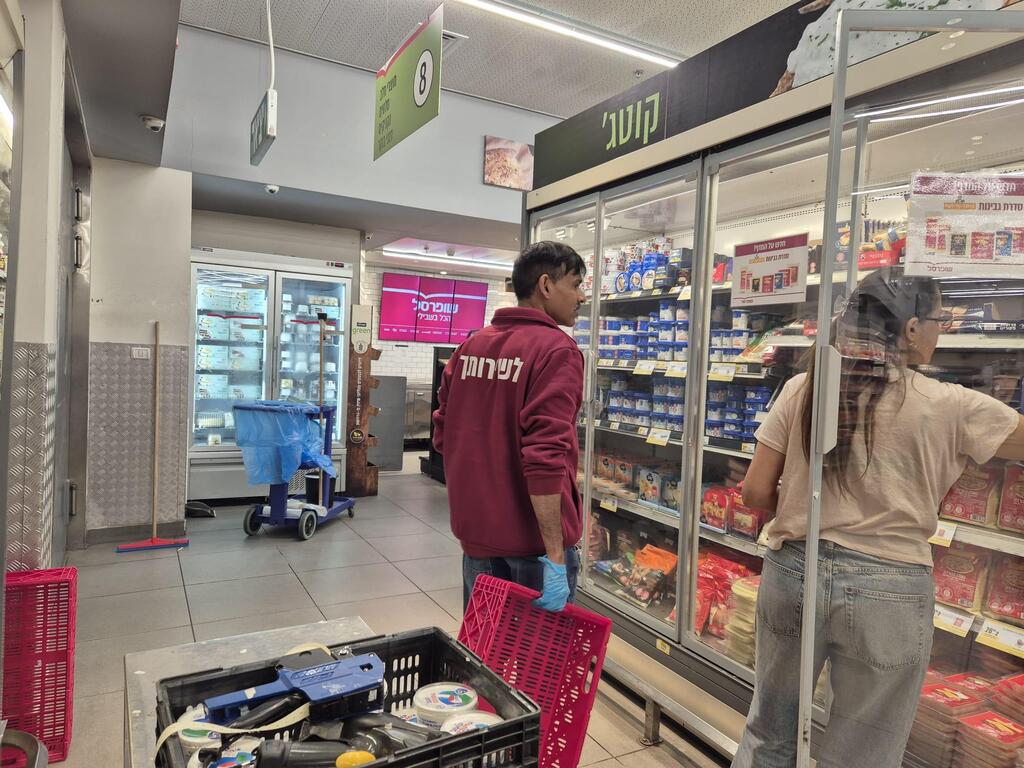
(Photo: Meirav Crystal)
Shmulik Navon, CEO of Wolt Market, said: “At any given moment, we’re 20% short on workers."
Majdi Ketany, CEO of the Kingstore chain, which mainly serves the Arab sector, said his chain has not yet felt the labor shortage: “I’m not experiencing the workforce crisis here. In general, in the Arab sector, I’m still at a point where it’s not a problem."
Oren Sapir, co-owner of Neto Hisachon and Super Sapir, said that due to personnel shortages, his branches are rapidly shifting to self-checkout: “We have stores with 14 checkout stations, of which 10 to 12 are self-service. Our large stores are going in that direction. We’re directing 80% of customers to self-checkout and self-weighing stations."