

A self-driving car can carry a passenger across San Francisco without anyone touching the wheel. Move that same system to another city, however, and much of the work starts again.
Roads must be mapped, local driving behavior understood, new traffic patterns tested and the system validated under a different set of conditions. After years spent proving that cars can drive themselves, the industry’s next challenge may be making that capability portable.
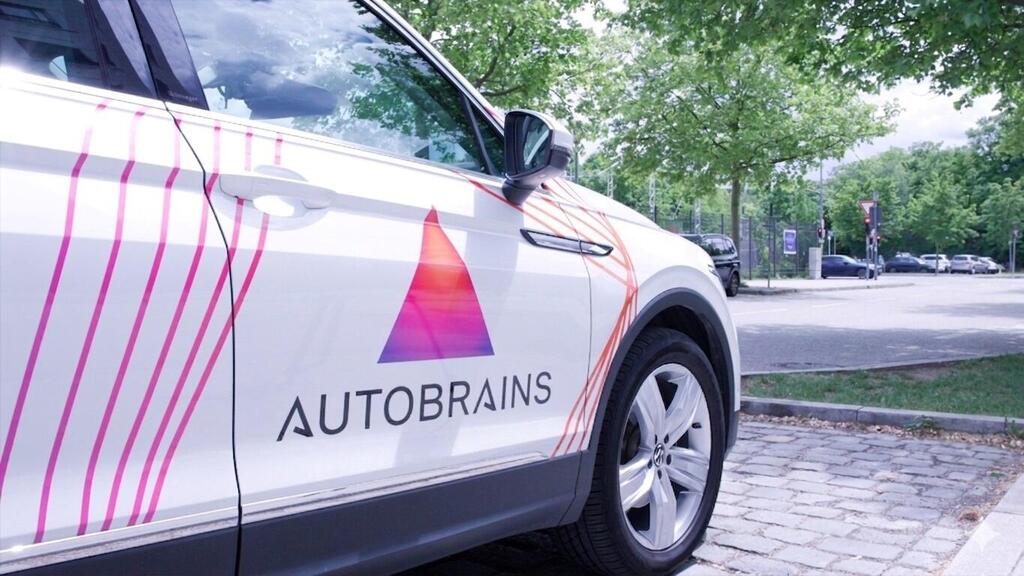
Israeli autonomous-driving company Autobrains is building its technology around that problem. Its software is already deployed in production vehicles made by VinFast in Southeast Asia, and in June, Uber, Autobrains and NVIDIA announced Munich as the first deployment city for a planned robotaxi program, with commercial driverless operations subject to regulatory approval.
The move from Southeast Asia to Europe will test a broader claim: that the same underlying technology can be adapted across different geographies, vehicles and levels of autonomy without turning every new city into a bespoke engineering project.
Even Waymo, despite completing millions of autonomous rides in the United States, has begun its Munich expansion with manual mapping and local testing. The question for the wider industry is whether those deployments can eventually become repeatable enough for autonomous mobility to move beyond a limited number of carefully prepared cities.
Today, much of the market sits at opposite ends of the spectrum. Robotaxi systems can achieve high levels of autonomy but remain expensive and geographically limited. Driver-assistance software in mass-market vehicles can reach far more customers, but generally at lower levels of autonomy.
Autobrains is attempting to narrow that gap by bringing more advanced autonomous capabilities to production vehicles without requiring the computing footprint and infrastructure associated with dedicated robotaxi fleets.
“There are 1.5 billion cars on the road,” founder and CEO Igal Raichelgauz said, calling that installed base “where we see the biggest opportunity.”
The company’s approach begins with the idea that driving is not one problem but many.
A roundabout, a truck in heavy rain and a pedestrian staring at a phone near a crosswalk each require different forms of judgment. Instead of relying on one large AI system to process every scenario in the same way, Autobrains divides driving tasks among specialized AI agents. An orchestration layer determines which expertise is needed at a given moment.
The goal is both technical and economic. Specialization allows the system to call on the intelligence required for a particular situation without running the entire software stack at maximum capacity continuously.
That can reduce computing demands, a significant consideration for production vehicles where cost, power consumption and hardware constraints are much tighter than in purpose-built robotaxi fleets.
Reducing the work of entering a new city
The second challenge comes before the vehicle even starts driving.
Autonomous systems typically require extensive preparation before entering a new market, including road mapping, local data collection, adaptation to unfamiliar traffic behavior and validation under different conditions.
Autobrains’ Air2Road technology is designed to reduce that burden. It combines imagery captured by drones or satellites with what the vehicle sees in real time, helping it determine its location without depending entirely on continuously maintained high-definition maps or large-scale road-data collection.
Munich gives the company a chance to test both sides of that strategy.

CEO Igal Raichelgauz
(Photos: Autobrains)
Germany was among the first countries to establish a legal framework for Level 4 autonomous driving in designated operating areas, while Munich offers dense urban streets, highways, cyclists, pedestrians, winter conditions and access to one of the world’s strongest automotive ecosystems.
Autobrains had already established an office in the city before the Uber program, making Munich an important base for its European development and testing.
For the autonomous-driving industry, the longer-term test is no longer whether one fleet can operate without a driver in one carefully defined area.
The bigger question is whether the same capability can be deployed repeatedly, from one city to another and eventually in the kinds of vehicles ordinary consumers buy.
If that becomes possible, autonomous driving may begin to look less like a specialized urban service and more like a technology that can scale across markets.