


Artificial intelligence is toppling companies around the world, and in Israel, the impact is especially sharp and painful. For years, warnings focused on AI replacing workers. Now it is happening, but not in the way most people expected.
AI’s disruption is threatening the business models of many of the world’s companies, led by the high-tech sector, forcing them to rebuild or risk disappearing. Along the way, employees are becoming the first casualties, not because AI has necessarily taken over their jobs, but because it has frightened their CEOs. The greater fear is that AI could replace the entire company.
Gallery
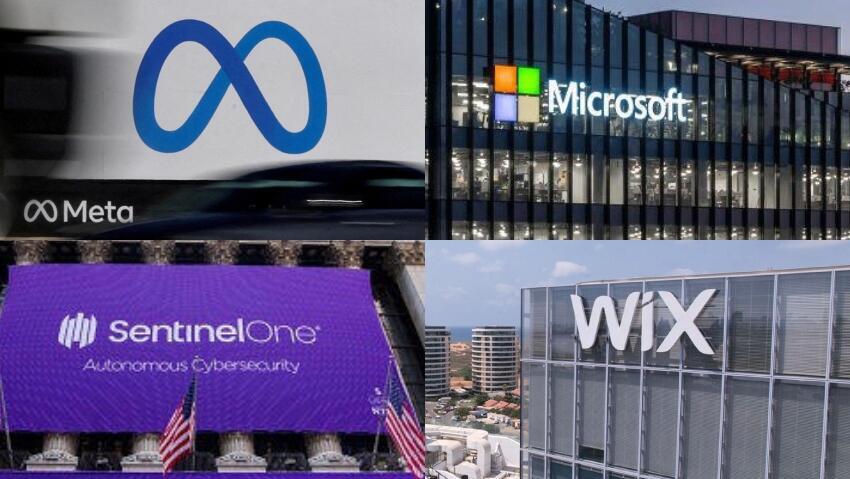
Meta, Microsoft, SentinelOne and Wix
(Photo: REUTERS/Carlos Barria, Amir Giron, Twitter@nirzo, SentinelOne)
The tech industry has seen many waves of layoffs in recent years, driven by different causes. This time, however, it is a layoff tsunami, with many more companies cutting staff in an effort to survive. Its impact will be felt across the economy. When the storm passes, little will look as it did before. Jobs will change, workplaces will change and the economy itself will operate differently. Fasten your seatbelts; this flight will be turbulent.
“I am not worried about the industry, but I am worried about the workers,” said investor Oren Zeev, one of the most prominent figures in Israeli tech. “There will be a very significant shock wave for employees, and I truly don’t know where it will lead. I don’t have a good answer, except to hope that somehow things work out.”
 Oren ZeevPhoto: Yariv Katz
“We are entering a situation in which the market is not moving in our favor,” added investor Avi Eyal, managing partner at Entrée Capital. “It is very hard to change market momentum. These are market forces. There is going to be a wave of layoffs here, and it is already beginning.”
Where is the government?
Layoff announcements began as a trickle in recent months, first at multinational companies with development centers in Israel, then in a growing wave of blue-and-white Israeli cuts.
Meta announced last week that it was laying off about 8,000 employees worldwide, including dozens in Israel. Microsoft announced voluntary departures and layoffs affecting about 7% of its U.S. workforce. Snap laid off about 16% of its employees worldwide, roughly 1,000 people. American companies ZoomInfo and Shutterfly closed their Israeli development centers and dismissed hundreds of workers. U.S. fintech companies PayPal and Intuit laid off dozens of employees in Israel.
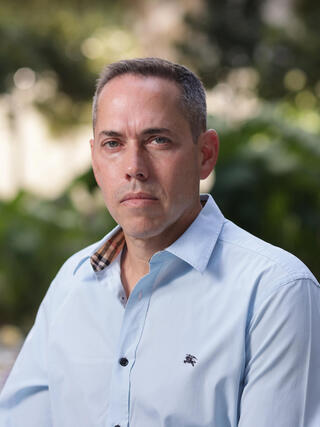 Avi EyalPhoto: Orel Cohen
Israeli company Wix announced this week that it was cutting 20% of its workforce, about 1,000 employees, including 900 in Israel. Israeli AI video company Lightricks laid off dozens. Israeli sports platform Minute Media cut 12% of its workforce worldwide, including 60 workers in Israel. Israeli online advertising company Taboola laid off about 100 employees.
The layoffs have also reached areas that once seemed especially resilient. Israeli fintech star Rapyd surprised the market by reporting hundreds of layoffs in Israel, though the final number has not been published. Israeli AI company AI21 shut down its AI model development operation and laid off 60% of its staff. Amdocs, one of the pillars of Israeli high-tech, reported layoffs affecting 10% of its workforce, including hundreds in Israel. Cybersecurity giant SentinelOne carried out a broad 10% workforce cut, affecting about 70 employees in Israel. Firebolt, cybersecurity company Axonius and fintech giant Nayax have also laid off dozens of employees each.
The layoffs are spreading like a forest fire, moving quickly from one company to the next. Even a supertanker would not put them out. In this case, Prime Minister Benjamin Netanyahu was not the first to identify the problem, and the government appears not to have given serious thought to the layoff waves or to the state of the tech sector, which carries the Israeli economy on its shoulders.
The AI washing
When all the companies’ explanations for the layoffs are gathered and viewed from a distance, a fairly uniform narrative emerges: tech giants report huge investments in building AI capabilities, hiring teams and purchasing computing infrastructure, while trying to offset the rising costs through layoffs. Many companies argue that AI tools allow teams to work more efficiently, meaning day-to-day operations require far fewer employees. In Israel, another explanation has been added: the strong shekel, which has sharply increased the cost of Israeli salaries.

The layoffs have also reached areas that once seemed especially resilient
Those explanations should be taken with a large grain of salt. Just this week, OpenAI CEO Sam Altman and Anthropic CEO Dario Amodei each separately admitted they had been wrong when they predicted AI would take workers’ jobs. “I’m glad I was wrong. I thought AI was going to have a bigger impact,” Altman said. Oops. Many CEOs carrying out layoffs are now struggling to rewrite the layoff narrative, which is being exposed, as many critics argued, as cynical “AI washing.”
Behind the CEOs’ crocodile tears lies a real fear about AI’s impact on companies’ business models. A company like Wix is discovering that AI could make its website-building tools redundant. Fiverr is discovering that AI could make the services of many of its freelancers unnecessary. Other companies that have not yet understood the threat may discover it too late.
The result is that many companies are shifting their full attention to developing capabilities that might help them face the threat, while shedding activities that do not contribute to that effort and cutting salary costs across the board in preparation for declining revenue.
In many cases, investor pressure also contributes to layoff decisions. Even companies with deep pockets, which under other circumstances might have absorbed changes such as the strengthening shekel, now want to keep showing profitability. They distribute dividends to shareholders, buy back shares to signal stability and, in Rapyd’s case, also finance basketball teams. At the same time, they lay off employees, while deep down they are very worried about what comes next.
“Clearly there are companies this hurts, but there are companies it helps a great deal,” Zeev said. “I think overall it helps more than it hurts. Wix and Fiverr are probably hurt by it, at least that is the market’s concern, but on the other hand there are many companies where it is the opposite.”
Companies such as Meta and Microsoft are diverting huge budgets to AI, then laying off workers so profitability is not hit.
“You can phrase it that way, but also the reverse: they have an opportunity to do things much more efficiently thanks to AI,” Zeev said. “In general, AI helps technology companies a lot, but clearly there are also companies that will be hurt by it. I have one company that was worth $12 billion or $13 billion, and today it is worth nothing because of AI. But I have so many amazing companies right now. I have been investing for 30 years and there has never been anything this crazy, and that is why I am so optimistic about the industry.”
Eyal said Israel must also confront the impact of the strong shekel on industries that bring the country its highest revenues.
“We need to solve this, and it is not simple,” he said. “The dollar will reach 2.5 shekels by the end of 2026, and there is nothing that can really stop it. There are several things the government can do to encourage a weakening of the shekel. A quarter-point interest rate cut is not enough; it needs to be cut by a full percentage point. Small companies, which can take bigger risks and are less affected by the conditions, need to be encouraged. Investors should be encouraged with a program like QSBS in the U.S., which gives investors in high-tech and defense-tech tax benefits in order to encourage the creation of new companies and new developments.”