


Late last Wednesday night, Barcelona was anything but calm. Thousands of pro-Palestinian demonstrators clashed with local police as some took aim at shuttered branches of McDonald’s and Starbucks, vandalizing them in acts of protest.
While some protesters sprayed slogans opposing Israel and supporting Palestinians, others smashed windows, causing tens of thousands of euros in damage. The attacks on the fast-food chains were part of a broader strategy promoted by the BDS (Boycott, Divestment and Sanctions) movement, which had been active before the war but intensified its efforts after Oct. 7.
Gallery
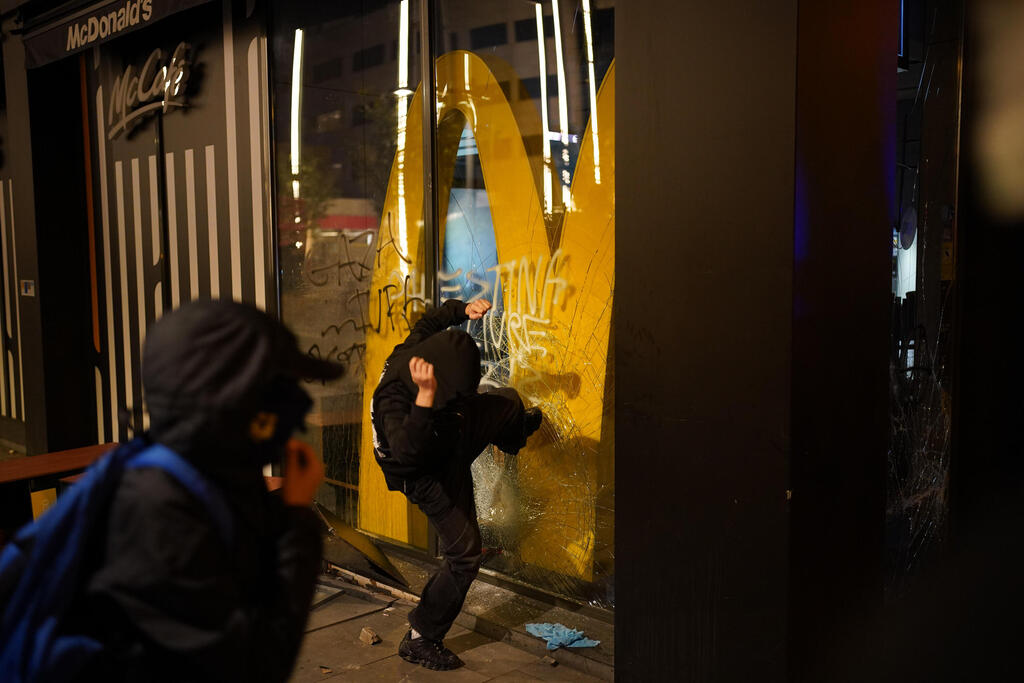
Pro-Palestinian demonstrators vandalize a shuttered McDonald’s branch in Barcelona, Spain
(Photo: AP Photo/Joan Mateu Parra)
Why were these particular chains singled out? One explanation is that they represent global capitalism and Western values—making them symbolic targets for far-left activists, many of whom identify with the pro-Palestinian cause.
In an interview with Time magazine, a BDS leader admitted that while ties to Israel or donations to the Israeli military are key factors in choosing boycott targets, the movement also selects companies likely to generate noise on social media or have a public impact, even if they don't meet the original criteria.
In McDonald’s case, the trigger was a series of posts by the Israeli franchisee announcing discounts and free meals for Israeli security forces and first responders following Oct. 7. These posts fueled backlash from pro-Palestinian groups, placing the brand in the movement’s crosshairs.

(Photo: AP Photo/Joan Mateu Parra)
Statements from McDonald’s global headquarters distancing itself from the Israeli franchisee’s actions failed to remove the chain from protest lists. In an attempt to limit the damage, McDonald’s issued a statement saying it “is not funding or supporting any governments involved in this conflict” and that “any actions from our local development licensee business partners were made independently without McDonald's consent or approval.”
Ironically, the chain’s worst losses have come in Muslim-majority countries, where mass boycotts led to sharp sales declines. In Malaysia, the local franchisee filed a defamation lawsuit against the BDS movement over what it called damaging misinformation. European countries with significant Muslim populations, such as France, have also reported disappointing performance at McDonald’s locations compared to pre-war levels.
A 'Zionist' coffee and the Billie Eilish backlash
“A cup of coffee that funds genocide”: While McDonald’s has drawn ire over the actions of its Israeli franchise, Starbucks has faced boycott calls despite having no operations in Israel since 2003. Its brief presence in the country ended for business reasons after struggling to compete with established local chains.
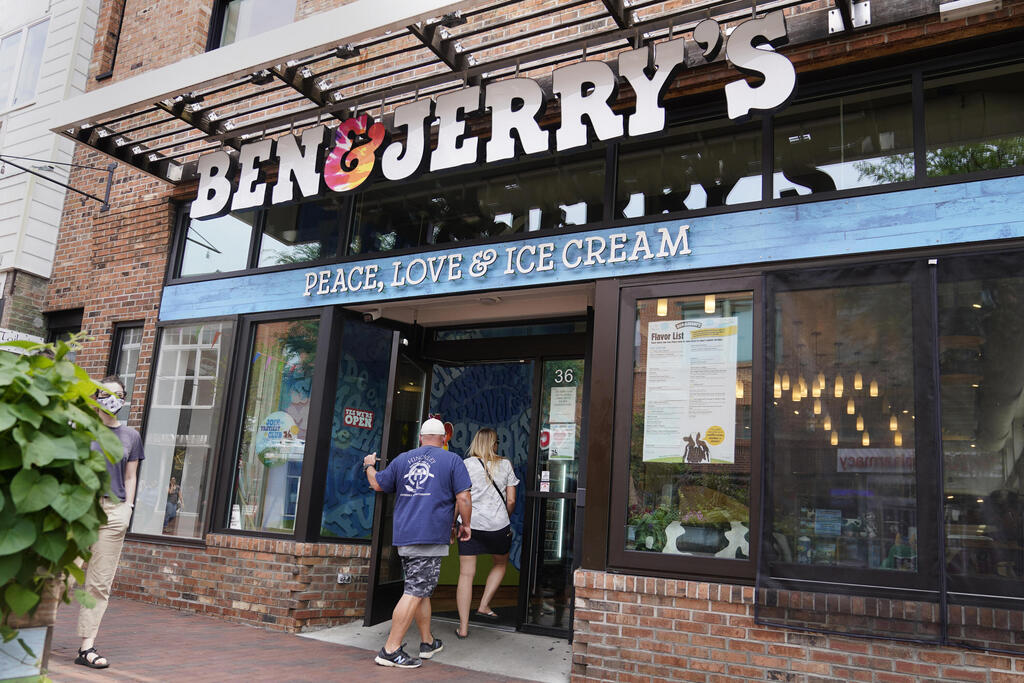
Ben & Jerry’s in Burlington, Vermont
(Photo: AP)
Unlike politically vocal brands such as Ben & Jerry’s—which severed ties with its Israeli franchise—Starbucks has generally avoided controversial issues, focusing instead on business growth and global expansion.
So why was Starbucks targeted? The controversy began with an Oct. 9 post by the Starbucks Workers United union expressing solidarity with Palestinians amid Israel’s retaliatory strikes. The post came just two days after the Oct. 7 attacks and was later deleted. Starbucks responded with a trademark infringement lawsuit, arguing the union had no authority to use the company’s name to express political views.
The company followed up with a statement reaffirming its political neutrality, an expected move for a global brand aiming to avoid alienating customers on either side of a polarizing issue. Nonetheless, the episode left a sour taste for pro-Palestinian activists, and Starbucks joined McDonald’s on the boycott list.
One prominent target was pop star Billie Eilish, who had publicly criticized Israel and wore a “Ceasefire” pin at high-profile events, but was photographed holding a Starbucks drink.
Online conspiracies soon targeted Starbucks’ former CEO and chairman, Howard Schultz, a Jewish businessman from Seattle. Claims circulated that he had personally donated to the IDF, and that Starbucks as a company had also contributed to Israel and its security forces over the years.
In response, the company issued a statement flatly denying the allegations, calling them entirely false. Starbucks said neither it nor Schultz had ever donated to the IDF or the Israeli government, and emphasized that as a publicly traded company, its financial activity is fully transparent and subject to public scrutiny.
But the denials did little to convince pro-Palestinian activists. The boycott continued alongside acts of vandalism and online campaigns targeting celebrities who were seen drinking Starbucks coffee. One prominent target was pop star Billie Eilish, who had publicly criticized Israel and wore a “Ceasefire” pin at high-profile events, but was photographed holding a Starbucks drink. Protesters accused her of hypocrisy—supporting Palestinians in statements, yet unwilling to make what they viewed as a small personal sacrifice by avoiding the coffee chain.

Pro-Palestinian demonstrators vandalize a shuttered Starbucks branch in Barcelona, Spain
(Photo: AP Photo/Joan Mateu Parra)
One activist on social media explained the boycott’s logic: “I don’t think buying a cup of coffee makes you a Zionist. But if Palestinians ask me to do something and I can, then why not? Politics doesn’t just happen in government buildings where people in suits argue over laws. Politics is in the food you eat, the water you drink, the home you live in. Almost every part of our lives is soaked in politics, so yes—our purchases are inherently political and never truly neutral.”
In the first few months of the war, Starbucks reported a 2% drop in sales in North America and a 7% decline globally. The company’s international earnings fell by 23%. While other factors—such as rising raw material costs and a slowdown in China—also played a role, company officials acknowledged that the war in Gaza had affected results.
A long-term challenge for the brand
In the short term, local franchisees in countries with strong pro-Palestinian sentiment have borne the brunt of the backlash. But can brands like Starbucks shake off the boycott in the medium and long term?
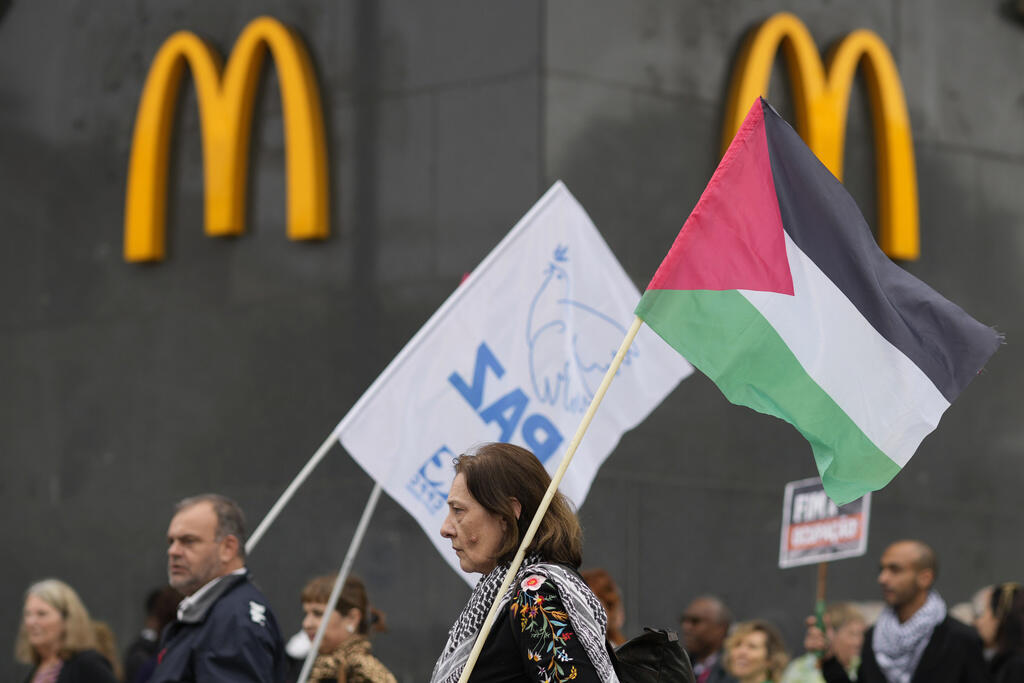
Pro-Palestinian demonstration outside a McDonald's branch in Portugal
(Photo: AP)
According to Avi Zithan, a marketing and strategy expert, these global brands were not chosen at random. “They operate worldwide and have high visibility. They reflect American culture and symbolize the West,” he said.
“In the short term, brands take a hit—from protests, property damage and a rapidly spreading negative reputation online. When people say your brand is morally flawed, it leaves a mark. Among younger generations, a company’s moral stance plays a big role in consumer choice. A reputation for being unethical can make it harder to recruit employees, form partnerships or maintain a positive image,” Zithan said.
As for the longer term?
“Global brands know how to rehabilitate their image. Nike, Coca-Cola, Unilever—they’ve all faced boycotts and PR crises, and within a few years, the public often forgets. If a brand stays consistent and present, it usually overcomes the ideology. The real risk is prolonged political association that becomes part of the brand’s identity. To recover, brands need to project a more neutral, humanitarian image and rebuild trust,” he said.
Should companies stay quiet and wait out the storm, or respond forcefully to the accusations?
“The smart approach is not to remain completely silent, but also not to engage in direct confrontation. Respond intelligently—clearly and factually, but not politically or emotionally. Silence creates an information vacuum, and if a brand doesn’t address rumors or disinformation, it can look like an admission. That leaves the narrative to the other side. In the age of social media and TikTok, if you don’t tell your story, someone else will. On the other hand, an emotional or political response can inflame the situation. So it's best to respond briefly and focus on the company’s universal values,” he said.