

Gasoline prices are expected to fall significantly at midnight Monday, offering consumers some relief ahead of the High Holiday season as tensions between Iran and the United States ease.
Current estimates indicate that the price will fall by about 0.25 shekels per liter, bringing the cost of gasoline back below 8 shekels per liter. The final price is expected to be set Sunday morning.
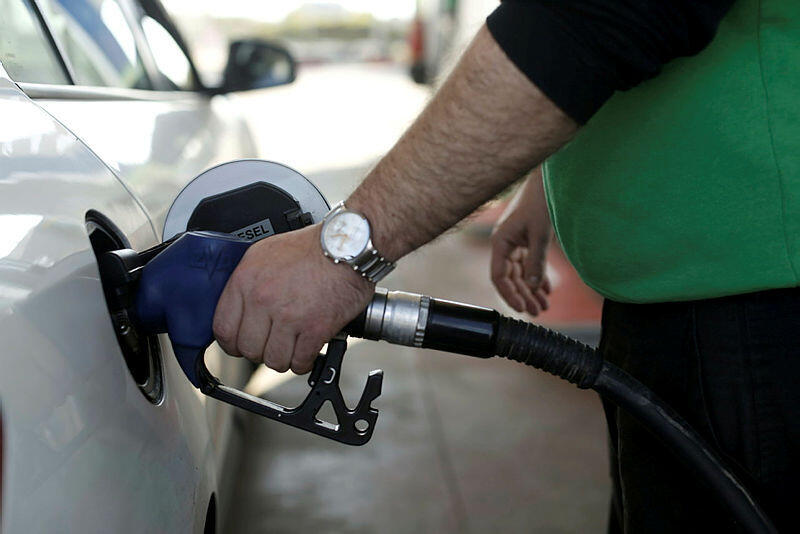
(Photo: Amit Shaal)
At the beginning of August, as tensions around the Strait of Hormuz reached a peak, gasoline prices rose 8.2%, or 0.61 shekels per liter, to their highest level since September 2012.
The maximum price for a liter of self-service 95-octane gasoline rose to 8.09 shekels, while full-service gasoline reached 8.34 shekels per liter. In Eilat, where fuel is exempt from value-added tax, the self-service price was set at 6.85 shekels per liter.
The self-service price is now expected to fall to about 7.84 shekels per liter, though the final figure will not be determined until Sunday morning.
Israeli gasoline prices are calculated using the average price of oil products in the Mediterranean basin during five trading days near the end of each month, through two days before the month's end, as well as the dollar-shekel exchange rate when the new price is announced.
A decline of 0.25 shekels per liter would reduce the cost of filling a 50-liter, or 13.2-gallon, tank by 12.50 shekels. A driver who fills such a tank four times a month would save about 50 shekels monthly.
Brent crude was trading at about $87 a barrel Thursday morning, roughly 10% below its level at the end of July. The dollar was trading at around 2.97 shekels Thursday morning, compared with 3.07 shekels at the end of July, a decline of about 3%.
The sharp increase in gasoline prices in August is expected to push the consumer price index for the month to as much as 1%, significantly affecting the inflation rate. That could prevent the Bank of Israel from announcing a third consecutive interest rate cut Tuesday.