

Israeli cybersecurity startup Oak emerged from stealth on Tuesday with $60 million in seed funding, saying it aims to replace the fragmented identity management tools used by large organizations with a single artificial intelligence-powered platform designed for the growing number of human, machine and AI identities in modern enterprises.
The funding round was co-led by venture capital firms Accel, Greylock Partners and CRV, with participation from Hetz Ventures, AlphaDrive Ventures and a group of strategic angel investors.
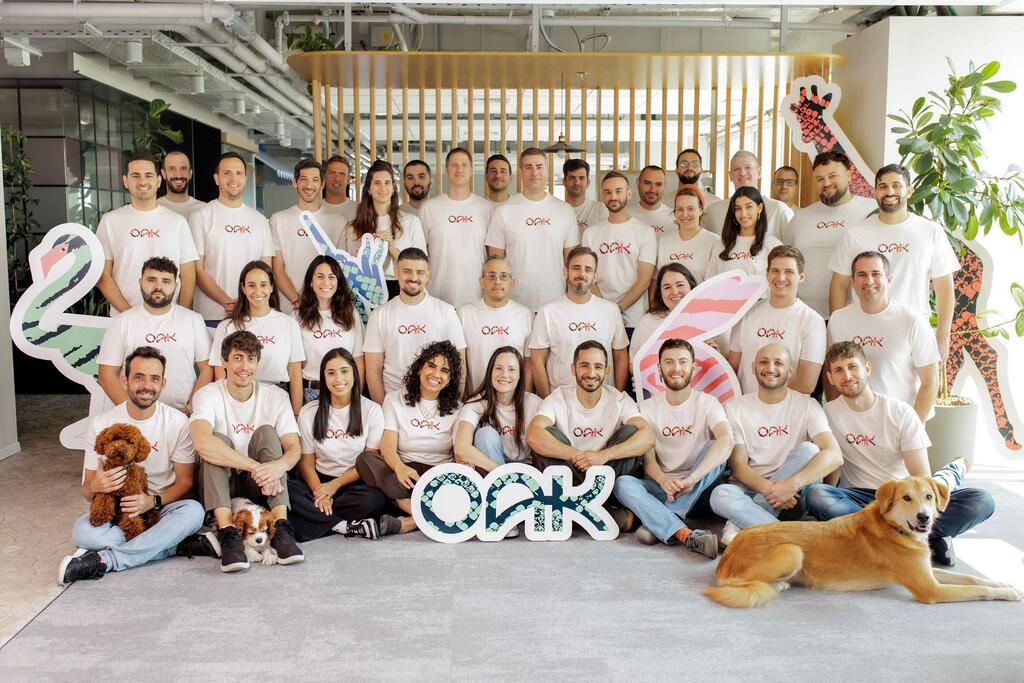
Oak team
(Photo: Omer Hacohen)
Oak said its platform is already generally available and has been deployed by enterprise customers, though it did not disclose customer names.
The company was founded by serial cybersecurity entrepreneur Shai Morag and Tal Marom, both former executives at cybersecurity company Ermetic, which was acquired by Tenable in 2023.
Morag has founded three cybersecurity companies that were later acquired by larger technology firms. Integrity-Project was acquired by Mellanox Technologies in 2014 before Mellanox itself was purchased by Nvidia, while endpoint security company Secdo was acquired by Palo Alto Networks in 2018. Ermetic, which specialized in cloud identity security, was acquired by Tenable, where Morag later served as chief product officer.
Marom, Oak's co-founder and chief product officer, previously led product teams at Tenable and Salesforce.
Oak said its goal is to create what it calls an "Identity Operating System," a unified platform that governs digital identities across an organization, including employees, contractors, software applications, machines and AI agents.
Identity and access management has become an increasingly important area of cybersecurity as organizations expand their cloud infrastructure and deploy AI-powered software agents that require their own credentials and permissions.
The company argues that many existing identity governance products were designed for traditional corporate networks with relatively static workforces and have struggled to adapt to today's rapidly growing number of machine identities and autonomous AI systems.
According to research cited by Oak from Gartner, by 2028 approximately 70% of chief information security officers are expected to adopt identity visibility and intelligence capabilities to better manage cybersecurity risks.
Morag said existing identity management products have evolved by adding new features to aging platforms rather than being redesigned for AI-era computing.
"The tools were never built to work as one, and adding more of them was never going to fix it," Morag said in a statement. "Oak is the platform the industry has needed for twenty years, and could never build until now."
Oak said its AI-native architecture enables the platform to connect with enterprise applications more quickly than traditional identity management systems. Rather than relying solely on static identity records, it continuously analyzes raw operational data to build what it describes as a live identity graph that maps every user's and system's permissions and actual activity.
The platform is designed to manage the entire lifecycle of digital identities, using AI to assess risk in real time and recommend or automate remediation when unnecessary or risky access is detected.
Marom said the company interviewed more than 100 chief information security officers and identity management leaders before developing the platform.
"We spent months speaking with more than 100 CISOs and IAM leaders, and they all share the same problems of running too many disconnected tools, being unable to see how access is used, and no way to govern AI agents," he said in a statement.
Andrei Brasoveanu, a partner at Accel, said the firm viewed enterprise identity management as one of cybersecurity's largest remaining challenges.
"Identity is the biggest one left standing," Brasoveanu said. "Oak has the team, the timing, and the technology to take on the whole category."
Oak said it plans to use the new funding to expand its engineering and product teams, hiring specialists in cybersecurity and artificial intelligence as it develops the platform further.
The company is scheduled to publicly demonstrate its technology at the Black Hat USA cybersecurity conference in August.