

Israeli cabinet ministers approved the transfer of approximately NIS 1 billion to the defense budget through a WhatsApp vote Wednesday morning, with the funds earmarked for the urgent purchase of 12 Apache attack helicopters for the Israeli Air Force. Most of the money was drawn from future allocations designated for the development of Israel's Arab communities, with cuts extending through 2029.
Ministers were told that the allocation was necessary for "urgent defense procurement that cannot be delayed." Defense Ministry officials had determined that the purchase represented an immediate security priority that justified accelerating the budgetary process.
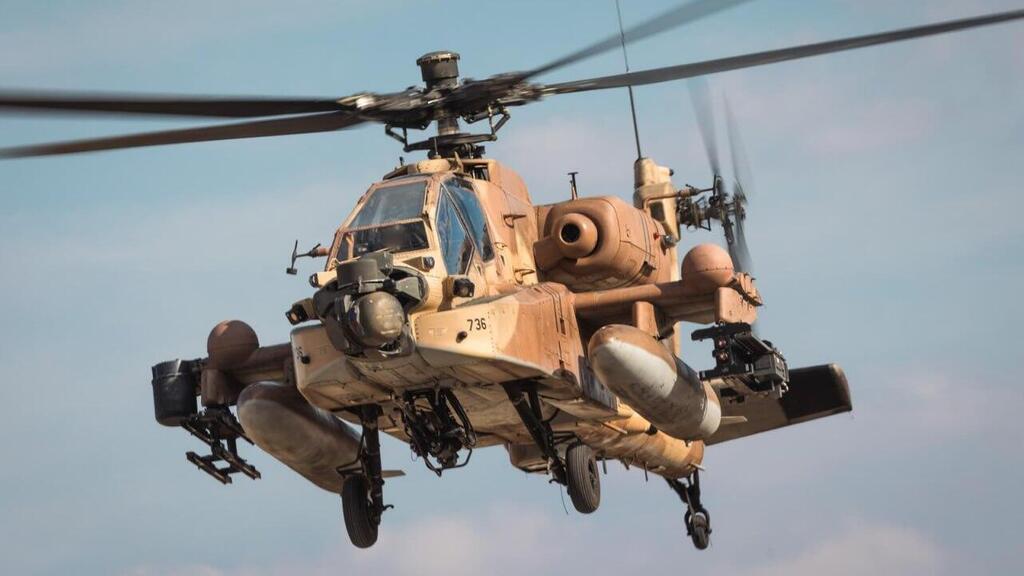
Apache attack helicopter
(Photo: IDF)
The bulk of the funding came from planned allocations for Arab society between 2027 and 2029, rather than from the following year's budget alone. The cuts were set to increase annually, with NIS 169 million in reductions scheduled for 2027, NIS 342 million for 2028 and NIS 453 million for 2029, totaling NIS 964 million.
An additional NIS 68 million was allocated to the Defense Ministry for 2026, financed through funds originally reserved for government interest payments and fees. The combined budgetary adjustments amounted to approximately NIS 1.03 billion.
The accelerated procurement and revised payment schedule had received preliminary approval in August 2026 but remained subject to an amended government decision and final authorization from the ministerial committee responsible for defense procurement. Defense Minister Israel Katz supported the move.
The Knesset's joint committee overseeing the defense budget was expected to approve a separate NIS 17.5 billion transfer to the defense establishment the following week, after the Finance Committee had already approved it.
A last-minute effort to rescue the Apache deal
The decision came amid an escalating dispute between the Finance and Defense ministries over military procurement funding. The previous week, a roughly $1 billion agreement to purchase 12 Apache attack helicopters from U.S. aerospace giant Boeing had fallen through after the ministries failed to agree on how to finance approximately $288 million of the cost.
The dispute followed repeated extensions granted by the U.S. administration, with the final deadline for placing the order having expired the previous week.
Earlier in the week, defense officials had insisted that the proposed emergency budget cuts were unrelated to the Apache deal, accusing the Finance Ministry of misrepresenting the funding dispute.
On Wednesday, however, defense officials acknowledged that the budgetary adjustment was intended to rescue the purchase and allow Israel to proceed with ordering the 12 helicopters.
The officials said the effort was moving forward despite the expiration of the final ordering deadline, which had already been extended several times by the U.S. administration.
According to defense officials, the remaining funds needed to complete the transaction were to come from postponing payments on other future defense contracts. They described the arrangement as a technical accounting measure required by the Finance Ministry to enable the Apache agreement to be signed.
The decision provided a potential way forward for the helicopter purchase, but it also shifted a substantial share of the financial burden onto future budgets intended for the development of Israel's Arab communities. The deal still required final procurement approval before the order could be completed.