

Dressed in a sand-colored smart-casual suit by American Vintage and a pair of striking Asics sneakers, Aviv Kapulsky sinks into an armchair at the boutique bearing his name in Tel Aviv's Neve Tzedek neighborhood. But first, he turns up his playlist and scoops Messi, his gray French bulldog, into his lap.
If there's one thing Kapulsky doesn't regret, it's trusting his instincts and deciding to open his designer fashion boutique not in Paris, but at home in Tel Aviv.
Gallery
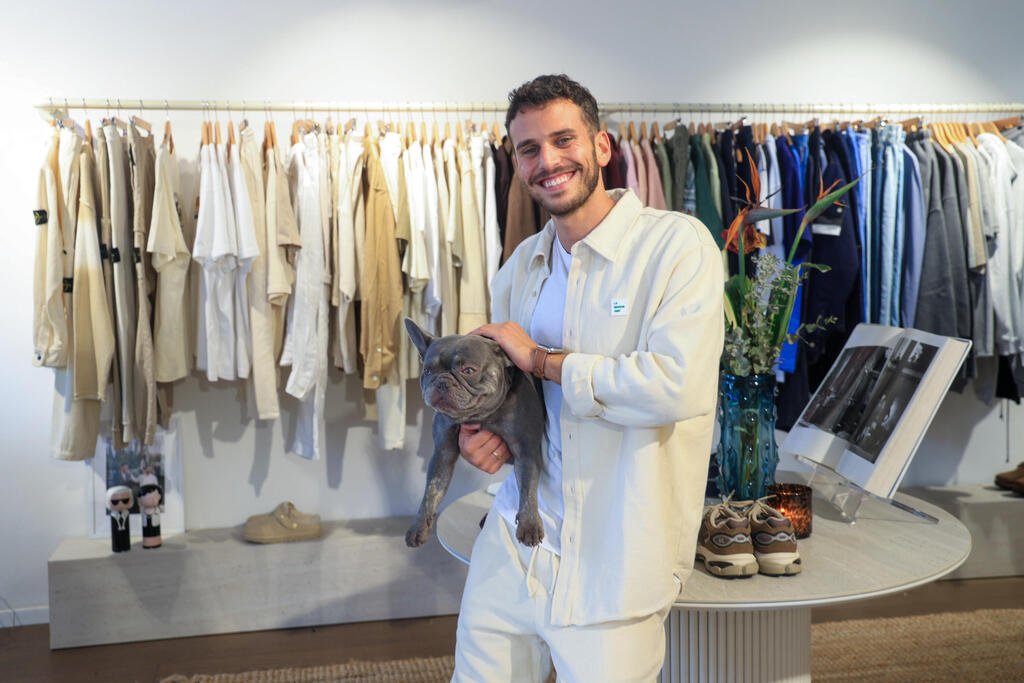
Aviv Kapulsky, grandson of the Kapulsky founders, opens a fashion boutique
(Photo: Avigail Uzi)
He chose fashion over the family pastry business
No matter what he does or how successful he becomes in the fashion industry, the first question most people ask is whether he is related to the famous Kapulsky family. The answer is yes. But Aviv knew from a young age that his passion lay in fashion rather than the food business, and that, too, has family roots.
Aviv's great-grandfather, Menashe Kapulsky, was born in Lithuania and immigrated to Israel after the Holocaust. Together with his two sons, Yisrael and Aryeh, he opened a pastry shop and cafe in Jerusalem's Zion Square that quickly became an institution.
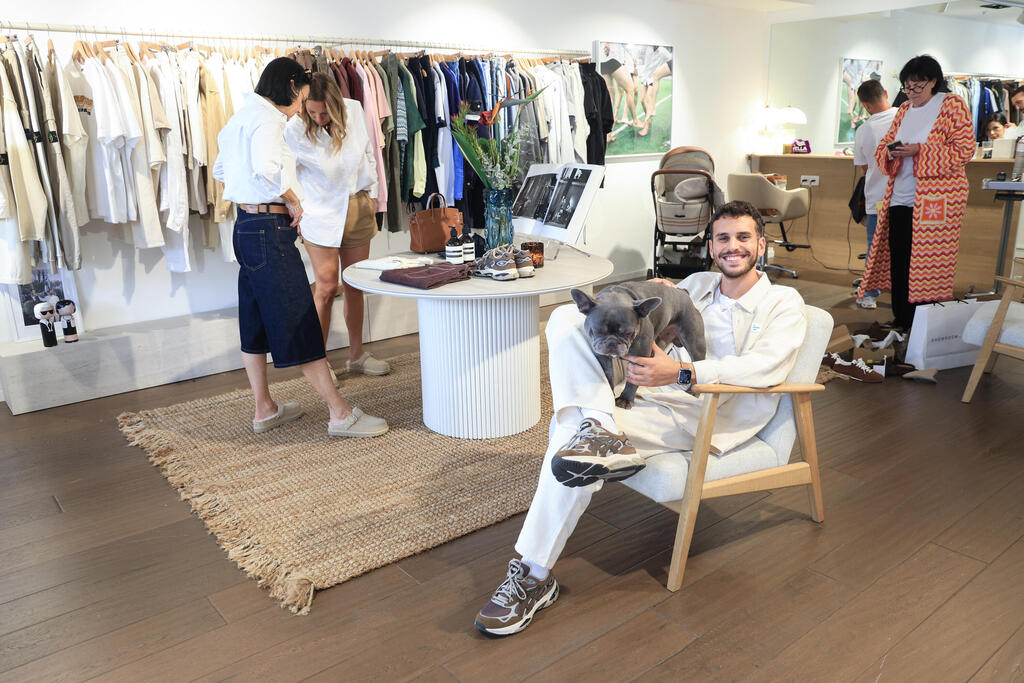
Aviv Kapulsky, grandson of the Kapulsky founders, opens a fashion boutique
(Photo: Avigail Uzi)
"Cakes from Kapulsky's pastry shop were delivered to King Abdullah. Menachem Begin used to come in to buy pastries and eat, and Geula Cohen was a regular customer too, along with Jerusalem's entire elite," recalls Rachel Kapulsky, Aviv's mother, who works at the boutique alongside him and his partner Roy, who owns the hair salon operating within the stylish space. "Later, Aryeh Kapulsky married Nina, née Mikulinsky, and they had one son, Shlomi, who is my husband and Aviv's father," Rachel adds, completing the family tree.
"It's true that my grandmother, Nina Kapulsky, died when I was in kindergarten, but she passed down the family's cake-making tradition, and I absorbed it as a child. In the Kapulsky family, there's no such thing as skipping dessert. We always eat dessert, even if you're on a diet."

Kapulsky
(Photo: Zoltan Kluger Collection, Israel State Archives)
Kapulsky began working in clothing stores at a young age, following in the footsteps of Bianca Mikulinsky, the first lady of style and the woman behind a shoe empire on Tel Aviv's Dizengoff Street during its heyday, when everyone who was anyone flocked to her store, quite literally at her feet.
"When my grandmother Nina died, her twin sister Bianca became the grandmother who raised me. By the time I was 12 or 13, I was stuck to her like glue from morning to night. I would walk with her from her home in Gan Ha'ir to the shoe store on Dizengoff and spend the entire day watching her sell. She mesmerized everyone around her in the store. A customer would walk in, and Grandma Bianca would focus all her attention on her and make the sale."
So that's where you got your sales instincts?
"Yes, absolutely, but also from working at Factory 54, which is an excellent training ground for fashion, punctuality, dealing with Israeli customers and managing incoming and outgoing merchandise. Ultimately, the best place to learn sales is on the sales floor, and I've spent plenty of time there."
'People want a clean, comfortable look'
What are customers looking for these days when it comes to designer labels and high-end fashion?
"Today, even the flashiest guys want a clean, simple look without logos. People want comfortable clothes. To me, style is comfort. I would never buy shoes if they weren't comfortable."
Throughout our interview, the 25-year-old Kapulsky, who opened his boutique in February, just weeks before Operation Roaring Lion, keeps a close eye on every customer emerging from the fitting room. He interrupts our conversation to check how clothes fit, offer styling advice and even respond positively to a woman asking whether the boutique is hiring, telling her to leave her phone number.
"That's the secret to success," he says when I compliment him on his clear priorities. "Take that customer who's trying on a suit right now. His name is Aviv. Yes, we have the same name," he says with a smile. "He's just come back from London and told me he'd rather shop here because he knows I'll give him the most accurate feedback. After all, anyone can say, 'Looks great, it suits you,' just to make a sale."
Aviv, the customer, explains: "I sent him a photo of the coat and asked whether he could get it for me. Within two months, it arrived, at a better price than anything I'd seen on Google. The boutique's prices are very accessible." Rachel, Aviv's mother, also confirms that her son prefers to work with lower profit margins as long as customers are satisfied and buy more.
It all started with posting photos to Instagram Stories
When Kapulsky opened his boutique, he initially targeted young people around his age and slightly older. Today, his customer base has expanded to include women in their 60s who come looking for brands that aren't always easy to find in Israel, such as Kith and Stone Island, alongside distinctive designs from major labels including Levi's and Birkenstock.
Kapulsky says designer brands have been his specialty since he began working as a personal shopper. He was 20 when he traveled abroad after completing his military service and decided to stay in Madrid, where he began posting photos of collections he spotted in luxury designer boutiques to his social media Stories.
"Suddenly, women back in Israel who lived in Herzliya Pituach and Kfar Shmaryahu saw the pieces in my Stories and flooded me with messages: 'I want that in red,' 'Get me that in black.' I realized I could go to a store, have a cup of coffee and make money at the same time, because the secret is that one satisfied customer brings another 10. That's how I started.
"I'd walk around in sneakers, jeans and a T-shirt, walk into Hermès in Madrid, and the manager and I would become best friends. He'd put aside everything new for me before anyone else, and I'd photograph it and post it to my Stories. The customers there are oligarchs' wives, wives of Madrid soccer players and people who drive Rolls-Royces. It's nothing like what you see in Israel," he says.
At 20, Kapulsky moved from product launches to fashion shows, moving between Prada and Hermès as his clients clamored for the latest items. "We don't have Chanel and Hermès stores in Israel, and I managed to get into Madrid's most exclusive events, the ones all the oligarchs' wives attended, and take pictures there. But to be a personal shopper for brands at that level, you have to be extremely professional because these aren't items you can return. If a woman tells me she's a size 37, I need to know whether that particular style really fits true to size or whether she'd be better off with a 37.5."
What do you make of the riots and looting of stores in Paris and Milan, Europe's fashion capitals?
"It's horrific. When you see that kind of barbarity, you're shocked that things could even reach that point. And in general, trying to resolve anything through violence is always terrible. I think it could happen again, and on an even larger scale.
"Once they've done it to stores belonging to brands like Hermès or Celine, they'll go after the Ritz and the other luxury hotels in Paris, because they want to target the wealthy. That's who they're after. They could easily walk into the lobby of a luxury hotel and strip it of its lamps and paintings. What's the difference between a hotel lobby and a store lobby?"
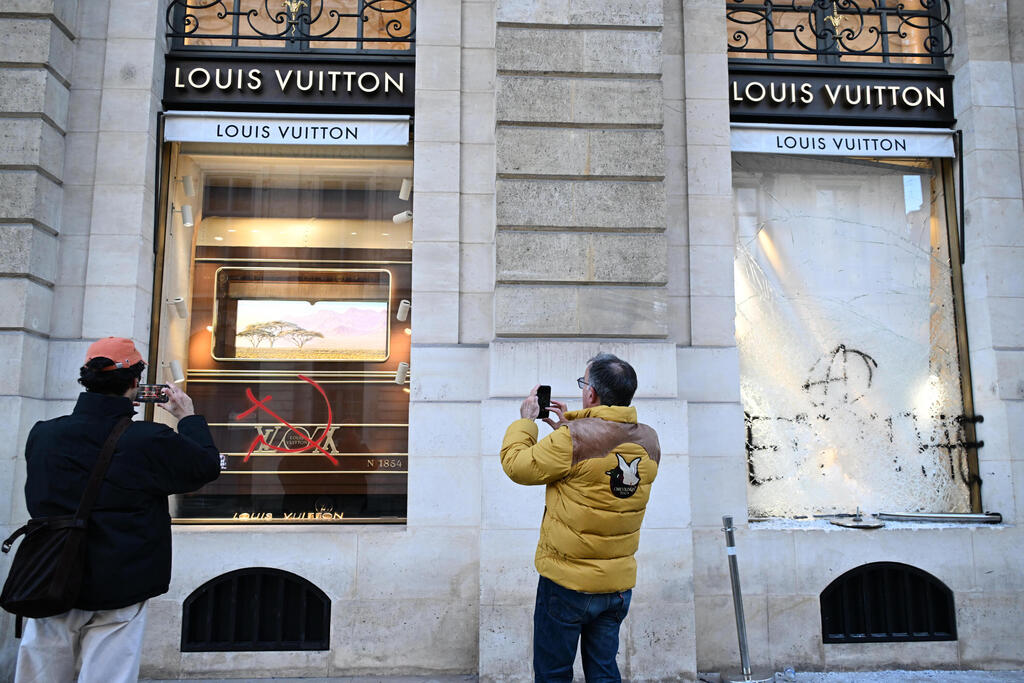
A vandalized Louis Vuitton store in Paris
(Photo: Emma Da Silva/AP)
Among the coveted labels he carries at his boutique is American Vintage, whose European base is in Marseille, one of the cities at the center of the unrest and known for its strong Islamist atmosphere. According to Kapulsky, however, the situation has yet to affect the fashion industry.
"In Marseille's fashion industry, and in the fashion world in general, everything is business as usual. Shipments are still arriving on time despite the riots. But I do see a lot of French people coming into my boutique and saying, 'This is home. This is where we want to live.' Some of them can't make aliyah because they have property in France, but it's no secret that Israel is the only place where they feel comfortable and aren't afraid to leave the house or wear a Star of David.
"I have plenty of French customers who carry Birkins and Chanel bags, but what's the point of living in a palace in Paris if you're afraid to leave your home? To me, freedom is priceless. At the end of the day, life is safest here, and we have no other country," Kapulsky says.
What have you learned about Israel's luxury fashion market?
"For Israeli customers buying luxury fashion, everything is about the here and now. When someone wants to buy something, they don't have the patience to wait for it to be ordered and delivered. It's not like Europe. Here, people buy whatever is available in the store at that moment."
Of course, there could be missiles tomorrow.
"Exactly. That's our mentality. I hate to say it, but in the boutiques around Kikar Hamedina in Tel Aviv, you can be helping a customer, and two weeks later that person could be murdered. When I worked in boutiques there, I'd put together collections for customers and get ready to ship them, only to find that the person was no longer alive. After all, these are also the people who buy luxury fashion in our country.
"When I walked into Hermès in Madrid, people spoke quietly. It was a different European mentality. But despite all the noise, Israelis are the best customers there are. If someone likes something, they'll tell you, 'Get me my size in every color.' At the end of the day, we're the best people there are."
How is the fashion industry treating Israel these days?
"Anyone who tells you that everyone loves us and everything is wonderful is talking nonsense. There were brands I wanted to bring here, such as Our Legacy from Sweden and Antonia in Milan, which has been my biggest inspiration. I contacted them, and they didn't even bother to respond. They wouldn't cooperate.
"It's the same in the fragrance industry. They aren't interested in coming here. I approached Le Labo, for example, and their response made it very clear that Israel doesn't interest them. But I've also discovered countries where people love Israel. Mexico, for instance, is where I source Caravana, a brand sold at some of the most incredible beach clubs. They even want to come here and hold a launch event.
"It's easy to say Israel is the hardest place to do business, but I'm telling you, in the end, Israel is the easiest. Once all this chaos is over and tourists start coming back, things will really take off here, because American Jews who visit Israel want to support Israeli businesses. An American who comes here and sees a store owned by a young guy like me will come in, buy something and show his support.
"A Mandarin Oriental is also opening soon near Carmel Market, and Six Senses is coming to the neighborhood. I'm certain that once things calm down and life here gets better, people will flock to Israel, because there's nothing like our mentality, and ultimately, Jews are the most successful people in the world.
"If I had this store in Paris, I'd be crying today. I'd be completely discouraged, because abroad you don't have that feeling of home. You don't have neighbors who will help when you need something, and your parents aren't nearby. I can't function for a single moment without my parents. And Roy and I, as a gay couple, want to have children only here in Israel."