

Sir David Attenborough turned 100 over the weekend, and Lego marked the occasion with a small but revealing tribute.
For years, the Danish company’s boxes carried the familiar age range: “4-99.” In honor of Attenborough’s milestone birthday, Lego temporarily changed it to “4-100.”
On the surface, it was a clever little marketing gesture. In reality, it captured something much bigger about what Lego has become.
Lego in 2026 is no longer just a toy company. In fact, calling it a toy company almost feels too small. It is a global culture brand, a visual language, a nostalgia engine, a premium design object — and, in recent months, one of the most recognizable styles in the AI video boom.
During the war with Iran, Lego-style AI clips flooded TikTok, Instagram and X. Some showed Donald Trump bombing targets in Iran. Others, including clips circulated by accounts identified with pro-Iranian messaging, mocked the war and the U.S. president through colorful brick-like figures, plastic faces and cinematic action scenes.
Many of the videos racked up millions of views within hours.
That is part of Lego’s strange new power: even when the company itself has nothing to do with a viral clip, its aesthetic is instantly understood. Lego has become a language the internet speaks fluently.
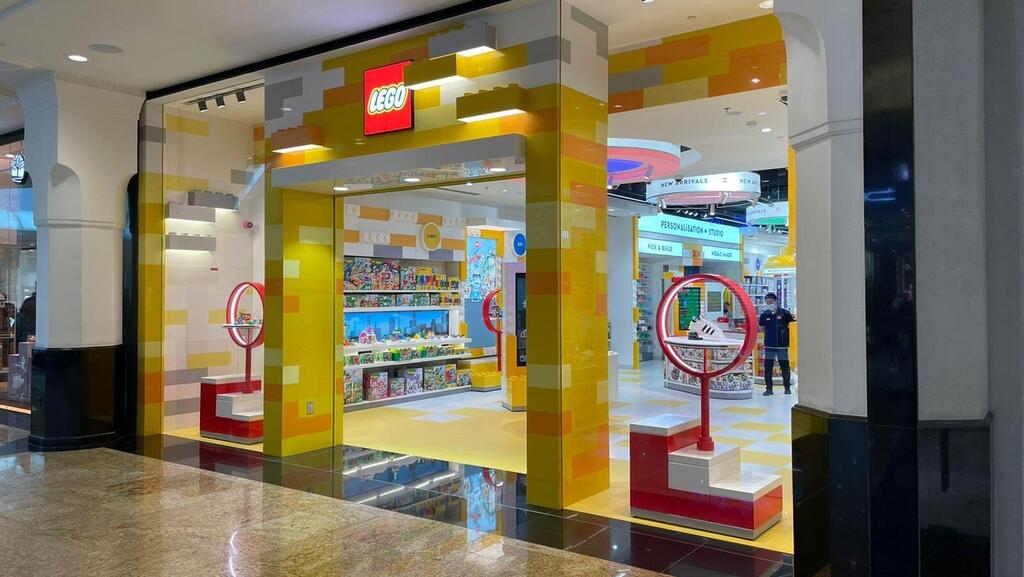
A Lego store
The Danish company, founded in 1932, has spent nearly a century reinventing itself. But its most important transformation was not technical. It was psychological. Lego stopped thinking of itself only as a children’s toy brand — and realized that some of its most loyal, emotionally invested and profitable customers were adults.
The company that almost fell apart
It is easy to forget now, but Lego was once in serious trouble.
In the early 2000s, sales were falling, the company had lost focus and some believed it was heading toward collapse. Lego had tried to expand in almost every possible direction: theme parks, computer games, strange product lines and failed toy concepts. Instead of strengthening the brand, the sprawl weakened it.
By 2003, the crisis had become severe. Lego posted a major loss and was forced into a painful strategic overhaul.
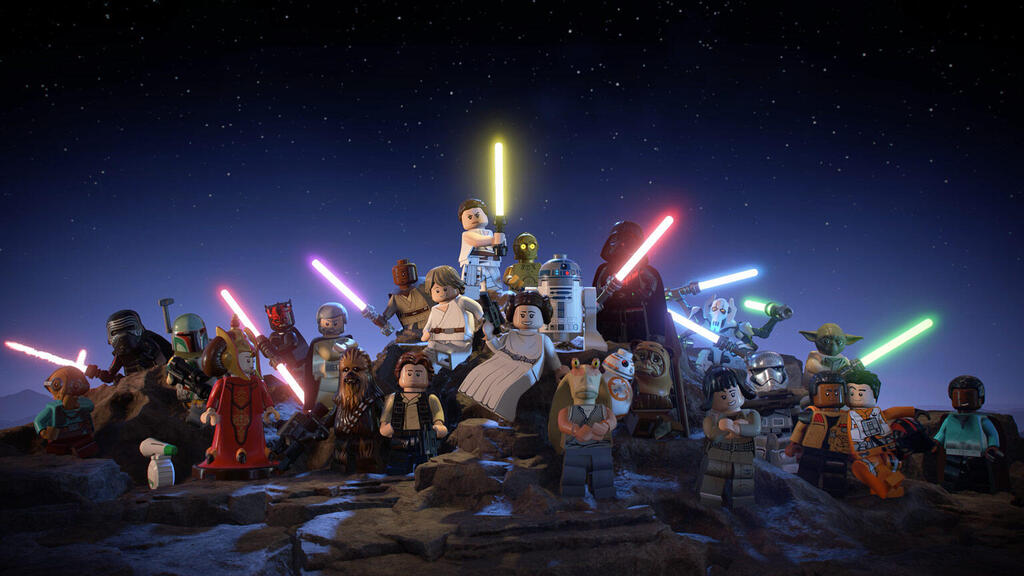
LEGO Star Wars: The Skywalker Saga
(Photo: TT Games)
The key insight was simple: the people who loved Lego most were not necessarily 8-year-olds. They were 30-, 40- and 50-year-olds — people who had grown up with the bricks and were now willing to spend serious money on them.
That realization changed the company’s future.
While many traditional toy companies struggled with children moving toward screens, gaming and online entertainment, Lego found a different path. It leaned into collectors, nostalgia and premium sets. Today, according to analysts and industry experts, Lego is not really competing only with other toy companies. It is competing with everything that fights for people’s leisure time: Netflix, PlayStation, TikTok and the rest of the attention economy.
The 'nerds' who saved Lego
Adult Lego fans were once treated as a niche: grown-ups stuck somewhere in the 1980s, obsessed with Star Wars and willing to pay hundreds of dollars for a Millennium Falcon set.
Today, that audience is one of Lego’s greatest assets.
They even have an official name: AFOLs, or Adult Fans of Lego.
These customers are not buying small boxes for children. They are buying massive sets that can cost hundreds or thousands of shekels: the Titanic, the DeLorean from Back to the Future, the Black Pearl from Pirates of the Caribbean, luxury cars, space stations, Fender guitars, Formula 1 cars and more.
Some sets contain thousands of pieces and require dozens of hours to complete. Others come in sleek black packaging that looks closer to an Apple product than a traditional toy box.
Lego understood something crucial: adults do not want to feel as if they are playing with a toy. They want to feel as if they are building, collecting, designing and creating.
That distinction helped turn Lego from a playroom brand into a lifestyle product.
Nostalgia became a business model
To understand Lego’s comeback, it helps to understand millennials — the generation born from the early 1980s through the mid-1990s.
They grew up with VHS tapes, CDs, the first PlayStation consoles and the explosion of pop culture in the late 1990s and early 2000s. For many of them, Lego is not just a product. It is a portal.
Surveys and studies in the United States have found that more adults over 30 are asking for Lego as gifts for themselves, not only for their children. When asked to explain the attraction, some describe the building process as calming, almost therapeutic — a direct shot of nostalgia.
The COVID pandemic accelerated the trend dramatically. As millions of people were stuck at home, Lego sales surged. Adults who had not touched the bricks in years suddenly found themselves building late at night to relax.
But nostalgia alone would not have been enough.
Lego also understood that it had to be wherever pop culture was. That meant partnerships — lots of them. Star Wars was one of the major turning points, followed by Marvel, DC, Harry Potter, Nintendo, Sonic, Porsche, Ferrari, Batman, The Lord of the Rings, Friends, Seinfeld and even The Office.
The message was clear: Lego was not just a toy. It was a way to own, rebuild and display pieces of culture.
Then Lego entered the World Cup
One of Lego’s smartest recent moves has been its push into sports — especially the World Cup, one of the biggest cultural events on the planet.
To promote its new World Cup sets, Lego brought together some of the biggest names in global soccer in one campaign: Cristiano Ronaldo, Lionel Messi, Kylian Mbappé and Vinícius Júnior.

Lionel Messi, Cristiano Ronaldo, Vinícius Júnior and Kylian Mbappé
(Photo: X)
The ad effectively broke the internet.
It allowed fans to see, at least symbolically, four of the sport’s biggest superstars around the same table in a playful, humorous setting. Even though they did not actually share direct screen time together, the effect was immediate.
That campaign showed why Lego works so well in the modern media environment. It can make almost anything feel lighter, more accessible and more shareable — even global sports rivalries.
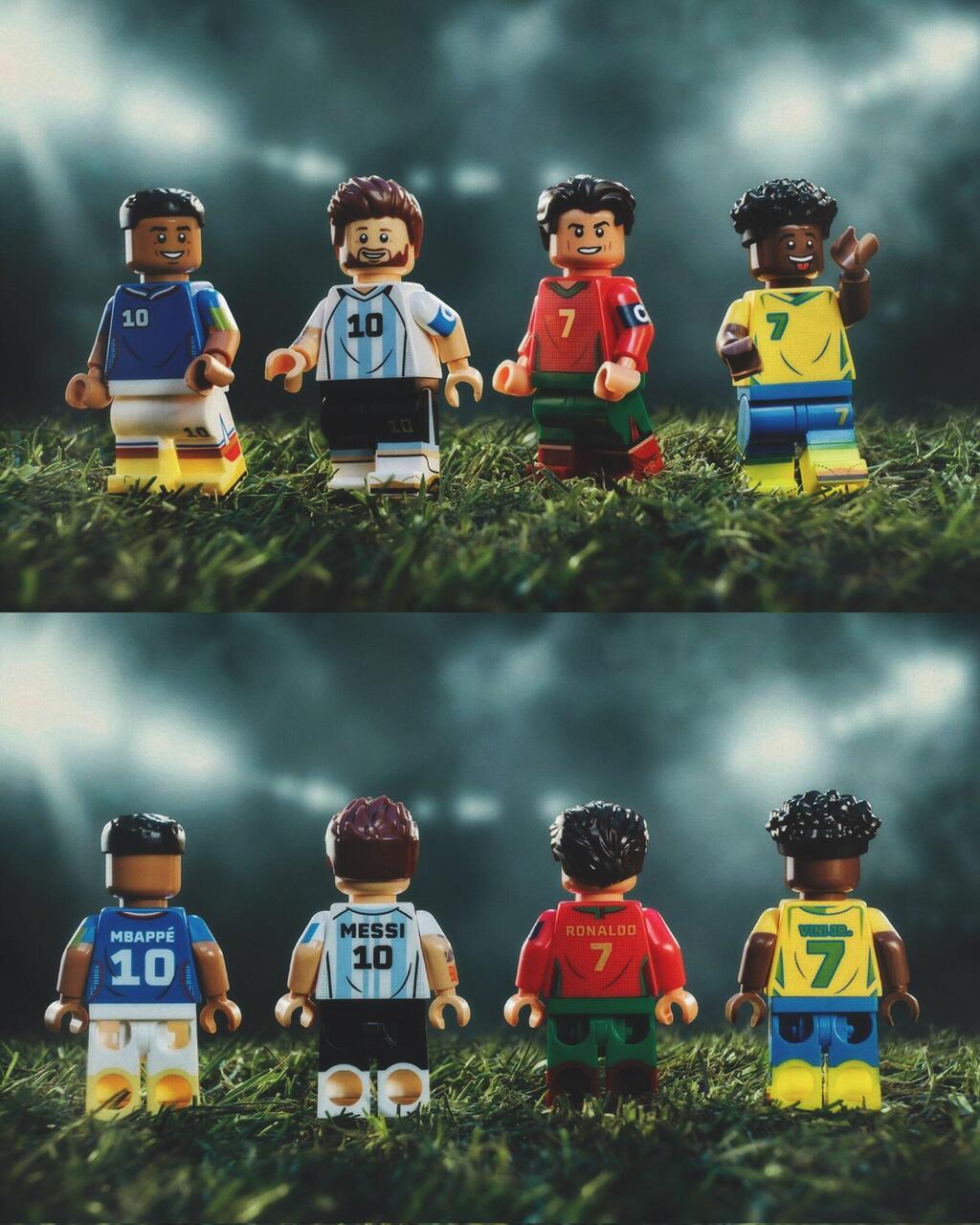
Lionel Messi, Cristiano Ronaldo, Vinícius Júnior and Kylian Mbappé as Lego figures
(Photo: X)
And then came AI
Over the past year, artificial intelligence has pushed Lego into yet another role: not just as a product, but as an internet style.
In the past, creating a polished Lego-style animation required professional animators and serious production resources. Now, almost anyone with a basic AI tool can generate a video in minutes that looks like a Hollywood-style Lego trailer.
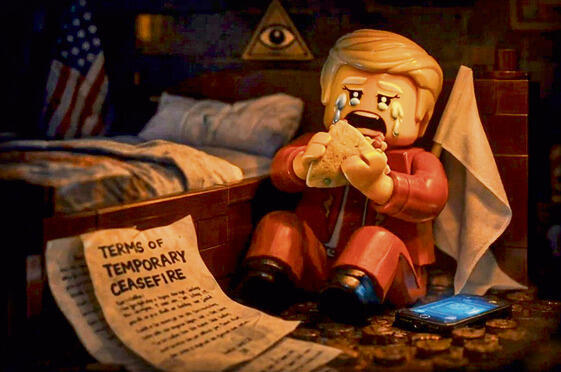
Trump’s likeness in an Iranian video circulating on social media
The internet has been flooded with AI clips showing politicians as Lego figures, action scenes, natural disasters, science-fiction sequences and even recreations of major news events. In Lego form, even grim scenes can appear softer, more playful and easier to consume.
That dynamic was especially visible during the war with Iran. AI-generated Lego-style videos showed Trump, American fighter jets, missiles, Iranian leaders and full war scenes, all filtered through colorful bricks and plastic figures.
Some of those clips were reportedly created or shared by accounts associated with pro-Iranian messaging. That alone says something striking: even anti-Western propaganda operators appear to understand the cultural power of Lego’s visual language.

From a Lego-style video showing Iranian propaganda
Propaganda through toy bricks sounds absurd. But in 2026, it also makes perfect sense.
Lego’s genius is that it no longer belongs only to children. It belongs to adults, collectors, meme-makers, advertisers, sports fans, film studios, AI creators and anyone looking for a familiar visual shortcut.
The company nearly collapsed when it tried to be everything at once. It recovered when it remembered what made people love it in the first place — and then found a way to sell that feeling back to them, one brick at a time.