

Qodo, an AI code review and governance company that counts Walmart, NVIDIA, Red Hat, Box, Intuit, Ford Motor and Monday.com among its customers, said Tuesday it had raised $70 million in Series B funding, bringing its total funding to $120 million.
The round was led by Qumra Capital, with participation from Maor Ventures, Phoenix Venture Partners, S Ventures, Square Peg, Susa Ventures, TLV Partners, Vine Ventures, OpenAI executive Peter Welinder and Meta executive Clara Shih.
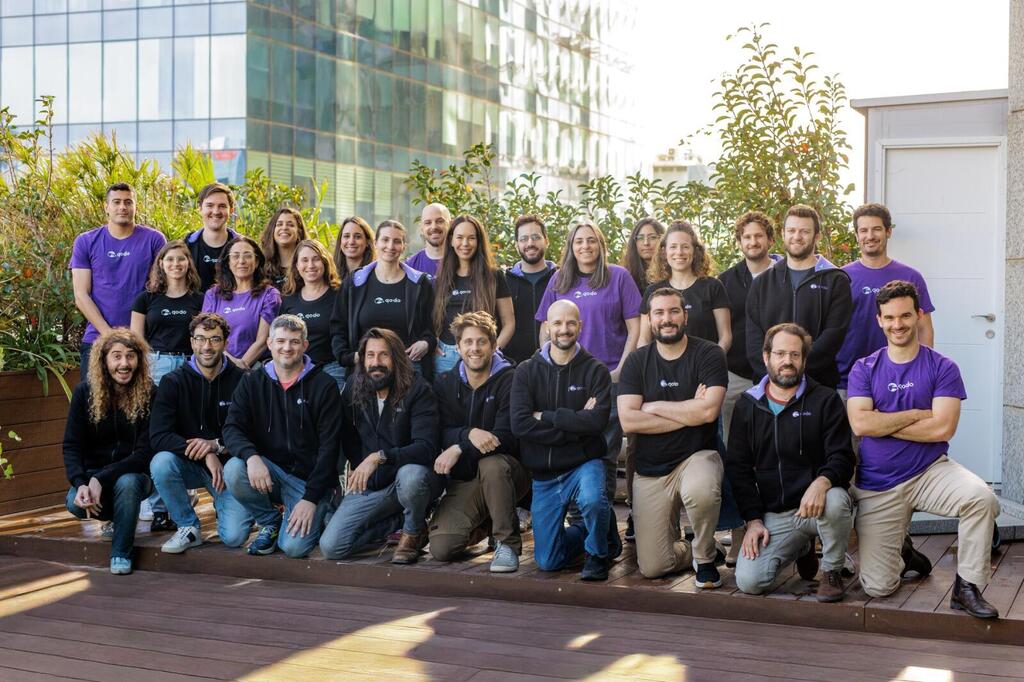
Qodo team
(Photo: Omer HaCohen)
The company said the new funding will be used to expand its global enterprise operations, grow its engineering and product teams and accelerate hiring at its Tel Aviv office. It also plans to step up development of AI-driven governance tools aimed at helping companies use artificial intelligence in software development while maintaining standards for code quality, security and compliance.
Qodo says it is trying to address a growing problem for software companies as AI-generated code moves into production faster than human engineers can review and test it. The company said AI agents can increasingly generate code autonomously, but often lack awareness of an organization’s internal standards, architectural history and tolerance for risk.
Citing a recent survey of 500 developers, Qodo said 95% of respondents reported that knowing code was generated by AI changed how closely they reviewed it, while 45% said their review process now required additional tests, benchmarks or documentation.
Qodo recently ranked first on Martian’s Code Review Bench, which it described as the first independent evaluation of AI code review tools. The company said it posted an F1 score of 64.3%, outperforming the next closest competitor by 10.5 percentage points and exceeding Claude Code Review by 25%.
According to the company, its platform is designed to identify logic errors, cross-file inconsistencies and architectural violations while reducing unnecessary alerts for developers. Unlike many AI review tools that focus only on code changes, Qodo said its system analyzes the broader effect of changes across repositories, against a codebase’s history and according to engineering standards set by the organization.
“As we expand the use of AI-assisted development across our platforms, Qodo ensures every line of code meets our standards for performance, security and compliance,” Christian Rudolph, head of platform services at TUI Group, said in a statement released by the company. He said the platform’s governance layer was helping TUI move faster while maintaining reliability across its global travel operations.
“The era of unverified AI software development is over,” Itamar Friedman, Qodo’s CEO and co-founder, said in the statement. He said the company aims to build a “system of record” for code quality and trust as enterprises move from experimental AI use to mission-critical automation.
Boaz Morris, a partner at Qumra Capital, said AI has made code cheap to generate and shifted the scarce resource to trust. He said Qodo was building infrastructure intended to scale human judgment to match the speed of AI.
Qodo describes itself as a platform for AI code review and software quality aimed at enterprise engineering teams. With its Qodo 2.2 release, the company says it offers context engineering and a multi-agent review system that draws on full-repository signals, including codebase history and prior pull request decisions, to deliver more accurate and actionable feedback while enforcing organization-specific standards.
Founded in 2018, Qodo said it has now raised $120 million from investors including Maor Ventures, Phoenix Venture Capital, Qumra Capital, S Ventures, Square Peg, Susa Ventures, TLV Partners and Vine Ventures, as well as angel investors that include executives from OpenAI, Meta, Shopify and Snyk.