


A behind-the-scenes contest is underway among Israeli municipalities vying to host Nvidia’s next tech campus, as local leaders quietly pitch their cities as ideal homes for the chip giant’s expanding presence in Israel.
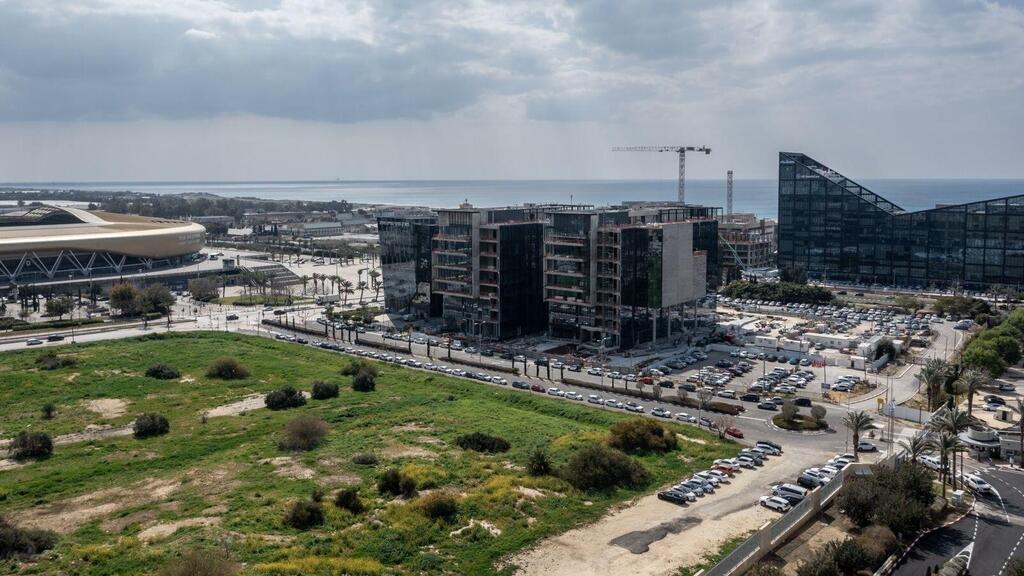
“The land we’re offering meets all the criteria outlined in Nvidia’s recent call for proposals. It’s one of the best-connected locations in the country, adjacent to academic hubs that produce top-tier talent in computer science, electrical engineering, AI, chip design and more, and near two new residential neighborhoods slated to include around 10,000 housing units.”
Markovich, who was appointed to the position about six months ago after two decades in high-tech product marketing and development, was referring to Nvidia’s announcement last week that it plans to expand in Israel with a massive new campus in the north. The planned site would include about 180,000 square meters of built space (roughly 120 dunams) and house approximately 12,000 employees.
Haifa is offering Nvidia a site in its Science and High-Tech Park, jointly owned by the Haifa Economic Corporation and the Mivne Group, located across from the Matam technology park. “A company of this size—a global conglomerate—needs a complete solution, not just a real estate offering,” Markovich emphasized.
What does that mean in practice?
“First and foremost, it means human capital, housing solutions, education, sports and recreation and one of the best transportation systems in the country,” he explained. “Haifa is a port city with an airport, a subway (the Carmelit), heavy rail with a station adjacent to the tech park, a central bus station right next door, the Metronit (a BRT system unique in Israel), the Rakbalit cable car connecting to the Technion and University of Haifa and the Carmel Tunnels. Accessibility is already built-in.”
Hanan Markovich, CEO of the Haifa Economic Corporation
(Photo: Micha Brickman)
He added that the Technion and Haifa University—both key research institutions—are just a short drive away, offering significant opportunities for patent commercialization and competitive advantage. Nearby residential neighborhoods include the established Neot Peres and the new Neot Navon, currently under construction.
What about Yokneam, which offers tax benefits and already has an Nvidia branch?
“Those tax breaks are a major achievement by former Yokneam Mayor Simon Alfasi, but they come at a cost,” Markovich said. “It’s a zero-sum game—many of the companies that grew in Yokneam did so at Haifa’s expense. Still, I don’t believe tax benefits will be the deciding factor. The biggest tech giants—Amazon, Google, Microsoft and Apple—chose to build their R&D centers here in Haifa.”
Get the Ynetnews app on your smartphone: Google Play: https://bit.ly/4eJ37pE | Apple App Store: https://bit.ly/3ZL7iNv
At a recent Knesset discussion on Nvidia’s move, Finance Ministry officials reportedly expressed surprise.
“I was in Jerusalem the day before yesterday, at the request of Mayor Yona Yahav, to attend a session of the Knesset’s Special Committee for the Development of the Negev and Galilee, chaired by MK Oded Forer,” said Markovich. “The discussion focused on how to attract Nvidia to build its campus in the Galilee region. I made the point that the gap between Haifa and the north in general, and the center of the country, has been one of decades, and it’s no accident.”
“The Israeli government understandably invests in Jerusalem, but it also pours massive resources into the center—Tel Aviv and surrounding cities. It’s the strongest economic zone, and yet the state is investing some 300 billion shekels in light rail and metro projects to fix its collapsing transportation infrastructure. On top of that, it plans to impose congestion charges on drivers entering the area.”
“This disproportionately harms Haifa, the capital of the northern metropolis, just as it harms Be’er Sheva in the south,” he continued. “From a Zionist, economic and security perspective, the right thing to do is shift demand to the north and south. That way, we can save money, make smarter investments and achieve much more by generating new growth in other regions.”