

Twenty years ago, Ben & Jerry’s was seen as an emerging ice cream empire, with annual revenue of $270 million. Today, that figure is $1.3 billion.
In the summer of 2006, I took part in an amusing and unforgettable tour of Ben & Jerry’s headquarters and ice cream plant in Vermont, a company already considered a pioneer in combining business with social values and exceptional creativity. Everywhere, the connection to the community was emphasized: from milk sourced from local Vermont farms, to a high rate of donations relative to revenue, limits on executive salaries and progressive-inspired social concern. That DNA would one day lead it to extreme anti-Israel positions and threats to revoke the company’s license in Israel.
My hosts in the offices, the factory and the “flavor graveyard,” which included hundreds of tombstones for discontinued flavors, were Ben Cohen and Jerry Greenfield, the brand’s founders. They had already sold control of the company to Unilever, which today owns 19.9% of the brand’s parent company, but they still worked there. From Israel came the local licensee, Avi Zinger.
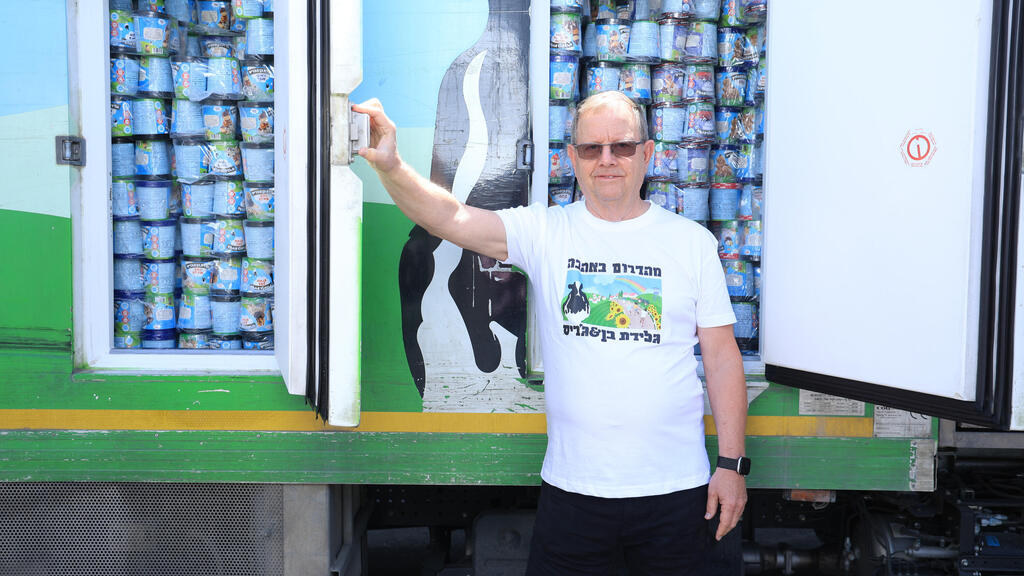
They looked and sounded like the best trio of friends in the world. Thanks to Zinger, I was able to interview the two Jewish partners, childhood friends who rarely gave interviews.
“We had fantastic relations. My family and I visited them twice a year, and I brought both Ben and Jerry to visit Israel,” Zinger recalls. “They always presented me as an example of someone who succeeded in maintaining both product quality and the values behind it. I saw them as the center of my life.”
But no one present at that meeting, myself included, could have imagined that from this friendship and those innocent cream ice creams with original flavors would emerge one of the most aggressive boycotts of Israeli products — a move that would ignite an unprecedented legal, business and political battle. Zinger went to war against the brand he had represented for years and ultimately won. He acquired the right to use the Ben & Jerry’s brand independently in Israel, to produce and sell it in Israel and the territories. For how much? He is not willing to say.
“We are a private company,” he says. “Luckily, the final outcome of the whole mess was the best I could have dreamed of. I stayed with everything I love.” Everything, except Cohen and Greenfield.
In the days after October 7, with someone like Zohran Mamdani heading New York City, mass protests against Israel taking place every week in major Western cities, and even supermarkets in New York boycotting blue-and-white products and removing them demonstratively from shelves, Zinger’s story, and the lessons and insights he drew from his battle, are more relevant than ever.
These days, he is launching a new flavor: “Milk and Honey.” The gesture is clear. So is the patriotism, wrapped in a sweet wink at the story of his personal fight. Naturally, he did not launch the flavor in cooperation with Ben & Jerry’s International. Zinger releases three to four new flavors of his own each year for the Israeli market.
“I have no idea whether the international company follows them,” he says with a smile.
A taste of patriotism
Israel’s ice cream market is estimated at 1.3 billion shekels a year, with 50% coming from what is known professionally as “impulse purchases” at convenience stores, kiosks, beaches and other outlets. About 35% to 37% comes from retail chains, and the rest from the institutional market.
The largest segment in retail chains is the family-size ice cream market, where, according to Zinger’s figures, Ben & Jerry’s accounts for more than 50% of sales. The company entered the multipack market about a year and a half ago, and its sales are rising.
Ben & Jerry’s in Israel generates about 220 million shekels a year. Zinger employs around 200 workers, most of them at the production plant in Be’er Tuvia. About 130 million shekels will be invested in a new plant to be built in Kiryat Gat, expected to begin operating in 2029.
How did a former student in New York, employee of the Israeli consulate and ice cream lover reach such success, which was almost snatched from his hands because of BDS battles?
“To this day, I’m one of those people who can sit down with a pint and finish it. And in my view, the best ice cream is the one that comes off the production line,” Zinger admits with a smile.
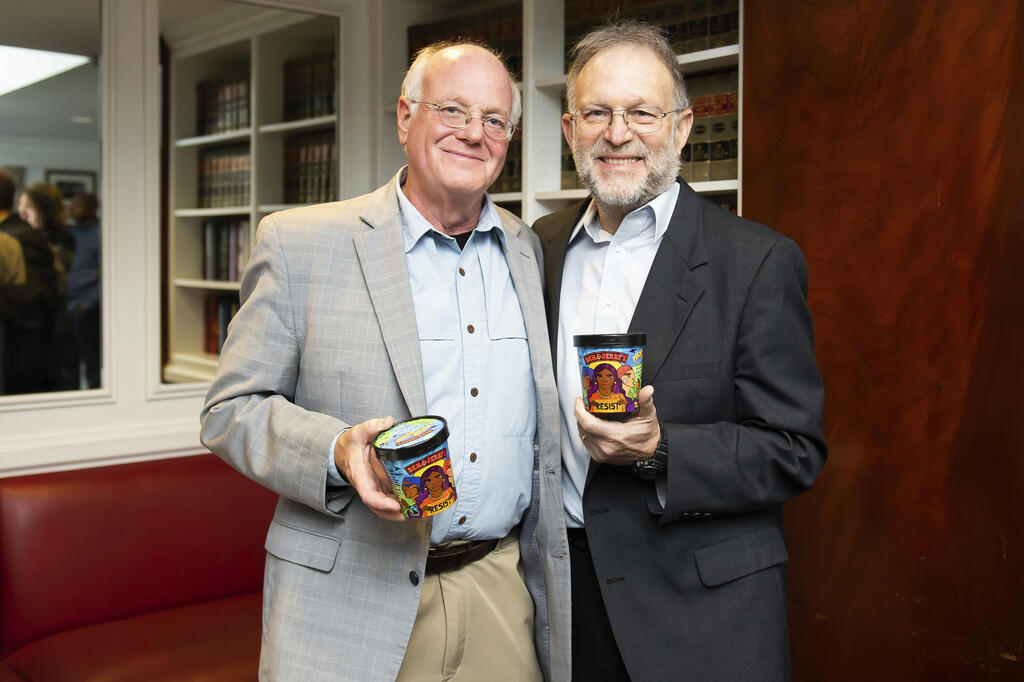
Zinger discovered Ben and Jerry, two Jewish childhood friends born in Brooklyn four days apart, in 1983 during a ski trip to Vermont, where he tasted Ben & Jerry’s ice cream at the shop the two had opened in May 1978 in a gas station they had bought in Vermont.
Among the reasons for their success were precisely the unusual ingredients that larger companies struggled with: the large size of the chocolate chunks, which Ben insisted on despite the fact that they clogged the machines; stronger-than-usual flavors; the pint size so they could sell to grocery stores; and combinations of ingredients that did not seem to go together.
“They were the first, for example, to come out with a combination that included salty pretzels inside ice cream,” Zinger says.
How did the business cooperation between you begin?
“My brother introduced me to the two of them. I met them in Ben’s studio apartment in Brooklyn. I admitted that I didn’t know much about ice cream, but I wanted to produce it in Israel and buy the production equipment. They asked whether Israel had milk and eggs. When they heard that it did, they referred me to their lawyer, who lived in Ithaca, seven hours from New York City.”
The saga with the lawyer lasted a year, during which it turned out he was having trouble drafting an agreement. Zinger’s lawyer drafted the final contract, which included royalties from profits — 3%.
“For years at the beginning, I did not pay royalties because those were very difficult years,” Singer says.
The agreement also included a commitment to allocate revenue to social initiatives.
“Ben & Jerry’s Israel donated a fortune over the years to this, including many coexistence projects,” Zinger says, “and a commitment to the brand’s values.”
The boycott storm
Zinger entered Israel with an ice cream shop in Dizengoff Square in 1987, and by 2000 had reached 16 shops. The intifada badly hurt them. His breakthrough came when the late Mordechai Kreiner, Shufersal’s deputy CEO and an iconic brand builder in Israel’s supermarket world, tasted the ice cream and asked to sell it exclusively in the chain. A year later, Zinger entered the Co-op Blue Square chain, and the rest is history.
In 2000, Cohen and Greenfield sold the company to Unilever for $350 million. Unilever wanted to enter the premium ice cream world after its major rival Nestle acquired Haagen-Dazs. It was another American Cinderella story of two broke men becoming millionaires.
The original agreement granted the ice cream company’s board unusual independence regarding what was defined as the promotion of its social mission, brand integrity and policy. The condition for the sale was that the spirit of the company led by the two founders would continue. That was also the source of future trouble.
“Sen. Bernie Sanders, the Jewish, progressive, anti-Israel Democratic senator, is a good friend of Ben and Jerry, and they built him,” Zinger says. “For 10 years I heard from inside that there were trends to restrict my sales in Israel. The company was always owned by me. I operated with a production license, not as a franchisee, which comes with many restrictions.”
“It was a process that was part of the deterioration in Israel’s standing in the U.S. on one hand, and progressive brainwashing on the other,” he says. “They came to Ben and told him: ‘You support the environment and minority rights, how can you manufacture in Israel?’ They really ambushed him. They sent letters saying the plant in Be’er Tuvia sits on Palestinian land, that the water we use is taken from Palestinians.”
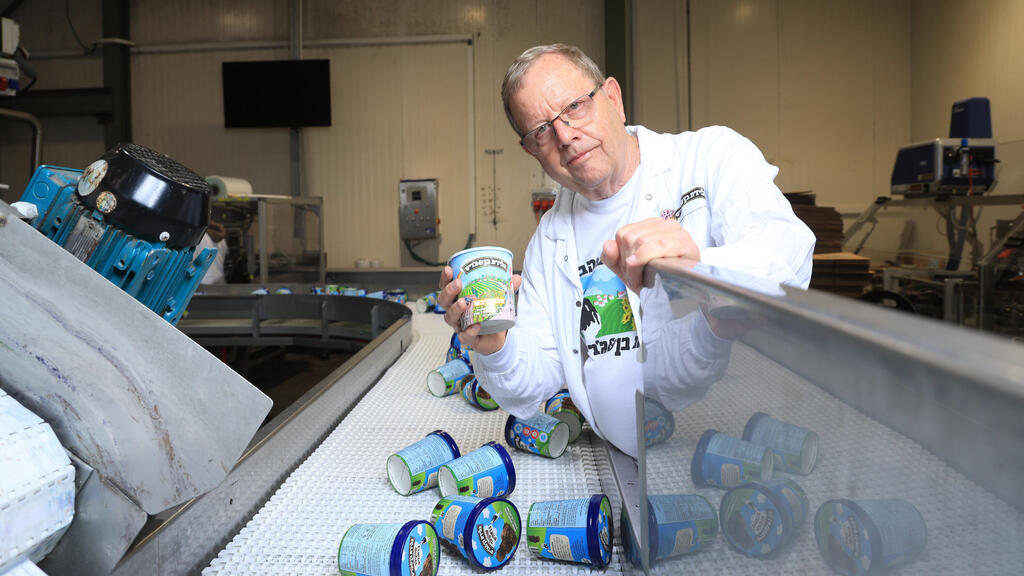
“At first I didn’t take it too seriously. I was afraid to involve Jewish organizations. Over time, I brought board members to Israel so they could see with their own eyes that there is no apartheid here. Ben and Jerry visited Israel at my initiative more than once. I was in touch with them 24/7, trying to stop it, telling them: 'You cannot demand something impossible from me, like not selling in the territories and Jerusalem.' I did not believe it would happen. Israel was, and still is, one of the most successful countries for Ben & Jerry’s product sales relative to population size,” he explains.
Then, in July 2021, the company’s independent board, led by chair Anuradha Mittal, published its surrender to BDS pressure and demanded that Ben & Jerry’s in Israel stop selling the brand’s products beyond the Green Line.
“Mittal was my friend. I thought there was mutual respect between us,” according to Singer.
A friend? In December 2023, after you acquired the right to produce in Israel, she tweeted a call for the U.S. government to stop arming Israel because of war crimes.
“I have no contact with her. I don’t know what’s happening there. It’s simply delusional.”
The affair created many storms and an unexpected challenge for Zinger with Israeli consumers, who did not understand the complexity of the affair and mistakenly directed their anger at him, as though he were a partner in the BDS movement.
“They broke a freezer of yours in Eilat. They thought you were an enemy of the state. There were customers in the settlements calling to boycott Ben & Jerry’s Israel. Customers told your distributors: ‘You support Hamas.’”
“There was total confusion because people thought the announcement came from me,” recalls Zinger, who entered media emergency mode at the time, giving nonstop interviews in Israel and abroad to explain that he had nothing to do with the decision.
“I suddenly became a media star in the global press too. Fox, Bloomberg, CNN — everyone wanted to interview me. I just wanted to explain that it wasn’t me.”
Just this week, ynet published another story about a boycott against a successful Israeli product in the U.S. What would you advise the owners of the EcoLove shampoo brand, whose products were boycotted by a supermarket in central Brooklyn?
“She should immediately contact the Jewish organizations in New York. This is an event that can become a slippery slope, and tomorrow they may also boycott kosher food. She should use every legal avenue to fight and stop this. The organization of several American Jewish lawyers in my case was wonderful. I don’t see how an Israeli can deal with a story like this alone.”
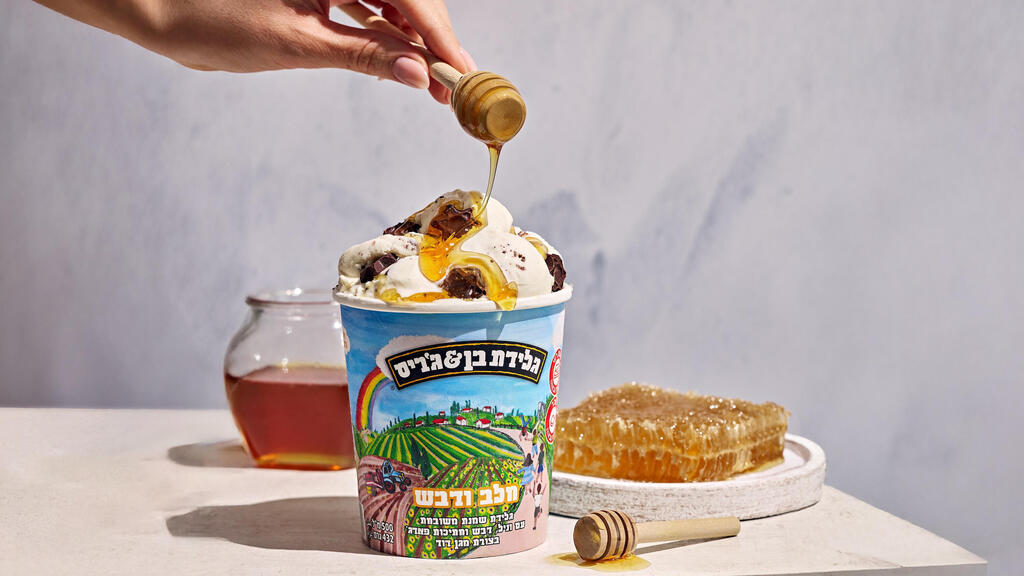
Now, as part of a personal full circle moment, Zinger is launching an original flavor, “Milk and Honey,” as a salute to the Gaza border communities. The source of the main ingredients in the ice cream, the milk and cream, is the dairy farms in those communities, which were hit hard on Oct. 7.
“It is important to remember them when talking about importing milk and dairy products from abroad,” Zinger stresses.

The honey, incidentally, comes from Yad Mordechai. The fudge in the shape of a Star of David is made by the Shekulo Tov non-profit organization, which employs people with disabilities in Beersheba. Because of limitations in the fudge production capacity, the new flavor will be released in a limited edition. Even the illustration on the container is by the late illustrator Rivi Gerloy-Doron, a resident of Moshav Eshbol who was killed in a car accident more than a year ago during a visit to Miami.
“Three to five percent of sales,” Zinger explains, “will go to the Ayalim Association, which encourages young people and students to establish settlement communities in the south and north.”
It is no coincidence that he found it important to write repeatedly on the packaging: “From the south with love” and “From the Ben & Jerry’s plant in Israel to you.”
So will the new Milk and Honey flavor become a hit?
“It has exactly the flavors Israelis love. People are looking to indulge in a premium product and also look for a purpose behind it. In Israel after October 7, if the purpose is strengthening the country, that works all the more.”
The battle over the name
With hindsight, the battle Zinger waged also paid off economically. Aside from the first year, when sales fell by about 20%, mainly because consumers and marketers were confused and thought the boycott announcement on sales in the territories was his, and not the parent company’s abroad, sales have since been rising. According to him, they are now better than in 2021.
Zinger’s media blitz at the height of the affair, his interviews and explanations that he was the good guy in the story, did the job. He began receiving waves of public support that continue to this day. Israeli high-tech companies organized happy hours for employees with the company’s ice cream. Young people bought kilograms of ice cream for parties. Hundreds of cyclists came to a show of support near the plant in Be’er Tuvia. Ninety Knesset members, except for the Arab parties and Meretz, signed an angry letter to Unilever. It became a kind of national struggle.
“Endless bodies in Israel joined the fight. I’m not even talking about the Jewish communities in the U.S., whom I need to salute, who sent thousands of letters to senators. In 33 U.S. states, there are anti-BDS laws, and lawsuits were filed. I also filed a lawsuit in federal court in New Jersey, arguing that the company violated American law by boycotting Israel,” Singer says.
Did you ever think of giving up?
“Not for a moment. I took it personally. It cannot be that for so many years I did the best possible for the brand, and I have nearly 200 workers, not to mention the surrounding network, such as farmers who supply milk and more, and so many people would be harmed. Those were two years of a hard struggle.”
When was it hardest?
“At the beginning. Before they officially issued the board’s letter, there were a week or two when I tried to stop it. I did not believe it would happen. They were all my friends.”
Did you consider changing the name in Israel?
“My biggest fear was that people would say these ice creams are not Ben & Jerry’s. The most important thing to me was that people know these are the same products. If I had stopped calling the products Ben & Jerry’s, it would have been BDS’ greatest victory. What I wanted to achieve was that people would know I sell the products in Israel and I can sell here whatever I want. It was also important commercially, because for 35 years I built the brand in Israel regardless of the United States.”
You managed to persuade Unilever to sell you ownership of the brand in Israel and the territories — and you gained. Unilever came out weakened, and Ben & Jerry’s lost control of the brand.
“Over the past three years, I have been completely disconnected from them legally and lawfully. I have no obligation except to preserve the brand’s values and the quality of the raw materials. Those are requirements that are also in my interest. I follow the new ice creams Ben & Jerry’s produces and I am also open to formulas. To successes. I have lived this market for many years and know what catches the consumer. The market changes. If 30 years ago we offered peanut butter and people didn’t know what it was, today it is a mainstream flavor.”
And what is happening with the Palestinian ice cream — watermelon sorbet in red and green, the colors of Palestinian identification — that Ben Cohen presented about a year ago?
“There is no such ice cream. There is a video and in it you see a person standing in a kitchen mixing ice cream. Then people tell me Ben & Jerry’s is making a Palestinian flavor. There is no such thing. Every six months, Ben has another battle. I have completely disconnected and moved on with my life. I don’t want to look back.”
You actually have rights to sell in the Palestinian Authority as well. Do you sell there?
“Not at the moment. Waiting for Trump.”
Expensive ice cream
Zinger is also dealing with other problems, such as manpower.
“One of the difficulties is finding workers,” he admits. “When you’re looking for a driver who can earn fantastic pay, between 15,000 shekels and 20,000 shekels, he interviews you. We started receiving foreign workers, but because we do not bring them directly, employing them is very expensive. It costs 90 shekels an hour, and it is not easy to bring them into the work.”
And let’s talk a little about the consumer’s pocket. Why has ice cream become so expensive? Prices for a Ben & Jerry’s container, according to Pricez, range in chains from 15.90 to 29.90 shekels, a gap of 88%. That is illogical and even annoying.
“I cannot control someone who pushes the price to 29.90 shekels. I’m not allowed to. People came to me and said someone is selling a Ben & Jerry’s container at the Dead Sea for 40 shekels. What can I do? The high price bothers me because the consumer blames the brand, not the retailer. During the war, we were the only ones who did not raise prices. In winter 2025, we raised prices by an average of 3% to 4%, and we are cheap compared with Europe and the U.S. There are also crazy promotions in Israel. Osher Ad sold packages on Shavuot for 11 to 14 shekels.”
The decline in the dollar should actually allow you to lower prices.
“The decline in the dollar helps us absorb increases in labor costs, electricity expenses and more.”
Zinger, who began with ice cream shops — the first in September 1989 in Dizengoff Square — reached 16 branches in those days. The intifadas caused him to change course. Today, Ben & Jerry’s has only two ice cream shops in Israel, in Be’er Tuvia and Gan Yavne, while worldwide, including the U.S., it has many shops under the “Scoop Shop” brand.
In Israel, according to estimates, there are more than 500 ice cream shops and more than 20 chains, including local ones. Just this week, a new chain, Gelalusi, opened under the Cafe Cafe Group, which intends to reach 30 branches. Do you plan to expand into the ice cream shop world?
“Not at the moment. Ice cream shops are an excellent business, but you have to be deep inside them. It is enough for the seller not to be nice to you and the brand is harmed. I decided we have a range of activities that demand deep attention: production, management, distribution and, until the Ben & Jerry’s affair, also exports, which stopped. I will not open a chain. People pressured me to open ice cream shops as franchises — that format does not suit my character.”
You are also not in the diet ice cream field. Why?
“We tried reducing the fat content but dropped it because the results were not successful. On the other hand, we have been working for a long time on vegan oat-based ice creams, and I hope we will be able to release them soon. Not this summer, because production is very complicated, since we insist on 100% natural ingredients.”
What ice cream do Israelis love, and how do we compare with the world?
“The most beloved ice cream flavor among Israelis and throughout the world, for many years, is vanilla,” Zinger says. “It is a basic flavor, but Ben & Jerry’s is known mainly for its special flavors. And here, there are differences between Israel and the world.”
“The top-selling flavor in Israel is Cookies and Cream,’ which is not especially successful globally. Another attractive flavor in Israel is Chubby Hubby, a flavor considered problematic to produce, and it will return to shelves by the end of the summer because of pressure from fans. In recent years, you can see that Israeli consumers want an original twist in every new flavor. People want innovation, which is part of our product’s DNA, and they develop an emotional connection to different flavors. Every time we remove a flavor from the shelf, we get hit over the head.”