


Malfunctions and disruptions on Israel Railways have become routine. Passengers report weekly delays, low frequency, poor reception in train cars, dissatisfaction with station cleanliness and heavy crowding during peak hours. The railway is also far from meeting its target of 90 million annual passengers by 2024, and its workforce has grown by 1,000 in five years, even though ridership has not risen significantly.
The Finance Ministry is proposing to privatize railway operations, a move strongly opposed by the Transport Ministry and the Histadrut. Passenger advocacy groups stress that the state should first improve service before focusing on cutting costs.
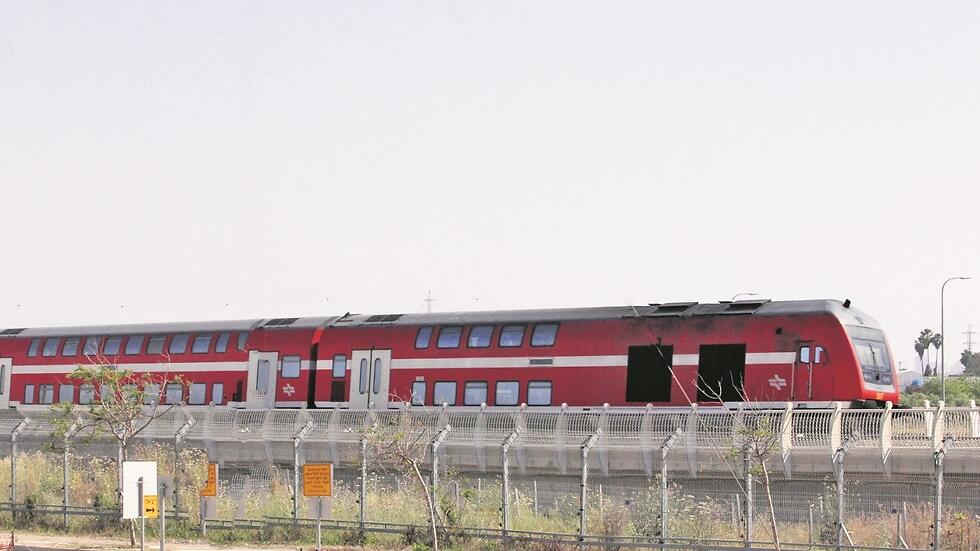
A draft of the 2026 Economic Arrangements Bill includes a reform for Israel Railways that would gradually transfer day-to-day operations from the state-owned company to private contractors selected through competitive tenders. The model closely mirrors that of the light rail and assumes that shifting operations to private hands will improve service, streamline work and reduce state spending.
Despite a rise in the daily ridership average in recent months, the draft bill states that Israel Railways, in its current structure, is unable to keep pace with the economy’s development and growth. In recent years, repeated complaints have been raised about delays, malfunctions and poor service, alongside large deficits and a growing subsidy budget.
The Treasury now seeks to restructure the company’s model by shifting the operation and maintenance of rail lines to private entities. Under the plan, the state would retain ownership of the infrastructure and remain responsible for tracks, stations and fixed equipment, while private contractors chosen in competitive tenders would handle operations. Each operator would run a line or segment and be required to meet standards for service, availability and safety. Israel Railways would become a supervisory and planning body responsible for coordinating timetables, fares and operational oversight.
The Finance Ministry says the transition would be phased in through the end of 2029. New lines, especially those in the periphery and short routes in the Tel Aviv area, would open to competition first, followed by selected existing lines. The ministry emphasizes that the model is based on European systems in which market competition improved service and lowered costs.
Finance Ministry: The reform will save hundreds of millions of shekels annually
Preparations for the 2026 reform are budgeted at roughly 120 million shekels, but the Treasury estimates long-term public sector savings will reach hundreds of millions of shekels a year, largely through reduced labor and operating costs. “The railway will become a lean, focused body that supervises the market rather than managing it itself,” the document states.
Public transportation groups argue that the priority should be service improvement rather than state cost-cutting. Max Morogovsky, CEO of the “Transportation Our Way” advocacy group, said, “It is crucial that the tenders are written correctly. If we look at bus tenders in Israel, this won’t work. For years, we talked about how service quality was not weighted highly enough. The tender for Egged in the Netherlands places far more emphasis on service quality than tenders here, which focused mainly on mileage. If the state takes this step, it must guarantee top service standards for passengers.”
According to Morogovsky, England is often cited as a failed example of such a model, but Sweden, France and Spain operate systems in which the government handles regulation and construction while private operators compete for franchises. “We must ensure there isn’t a situation where a winning operator violates tender conditions because it is cheaper to absorb fines,” he said.
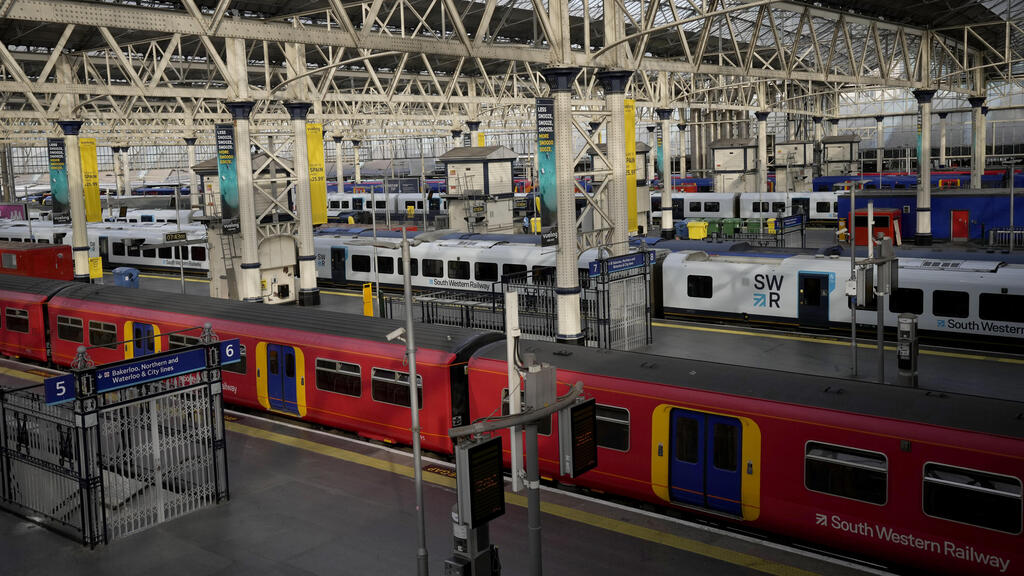
Trains in Britain
(Photo: AP)
He added that Israel Railways currently operates at the limit of the network’s capacity, meaning any malfunction triggers delays and congestion across other lines. This bottleneck is expected to ease once new lines under construction open, including the Eastern Railway, Route 431 line and, in the longer term, the fourth Ayalon track. Still, he said the railway struggles to manage disruptions without severely hurting service. “When a line stops or there is a signaling failure, the railway cannot function. The work protocols are not good enough, and there are frequent disruptions. Passengers deserve detailed real-time updates and faster resolution. Even when buses are deployed, traffic jams prevent them from serving as a real alternative,” he said. “If the railway had a dedicated unit responsible for coordinating and assisting passengers during disruptions, things would look different. The current officials simply cannot handle it.”
'The public deserves reliable service'
Sivan Shmuelovich, CEO of the 15 Minutes commuter advocacy group, said, “The public deserves reliable service that functions properly, not crisis management like we saw just a few months ago. A train that runs on time with high frequency at peak hours, improved connectivity rather than more parking spaces, and above all restoring the confidence of passengers who, unfortunately, still choose private cars.” She added that “a major step like privatization requires thorough groundwork, because it will directly affect millions of passengers and the quality of service. It may be the right move, but it must be based solely on professional considerations.”
The Finance Ministry, however, points to the hard numbers. An international comparison of rail use shows Israel’s passenger volume is very low relative to its population. The ratio of total passenger-kilometers per resident, which reflects train usage rates, is about 63 percent lower in Israel than the European Union average. Rail line utilization, including freight trains, is also about 48 percent lower than in the EU, indicating much lower frequency and activity levels even when adjusted for track length.
Additional Treasury data show that Israel’s rail density — track length relative to land area — is above the EU average, suggesting the physical infrastructure is likely not the main barrier to increased rail use. Israel stands at about 7 percent, compared with 5 percent in the EU, placing it above Italy, France, Spain, Sweden, Ireland and others. This points to inefficiency: the basic infrastructure exists, but the potential for higher usage is far from being realized.
The ministry also notes the sharp rise in staffing levels, which it views as unjustified. Between 2019 and 2024, state subsidies for Israel Railways grew from 1.7 billion to 3.7 billion shekels, even though annual ridership during those years remained lower than in 2019. The Treasury examined the company’s target of reaching about 90 million passengers in 2024, but that year closed at roughly 66 million.
Dr. Ronen Mandelkern from Tel Aviv University’s School of Political Science, Government and International Relations said the Treasury routinely promotes privatization in the name of economic efficiency and improved public service, but the approach is not always suitable. “We need to remember that the Treasury is pushing for privatization against the position of the Transport Ministry, which already tells you something about the problem. They also prefer not to confront labor unions, and the rail union is known to be strong. A reform this significant should be handled by the bodies that actually work with the railway, not by those coming from above. With buses, you can imagine two or three companies running a line from Jerusalem to Be'er Sheva, but with trains there will be one operator per line, creating a monopoly. You get small private monopolies instead of a public company.”

The train station in Sderot
(Photo: Herzl Yosef)
Mandelkern also warned about the broader risks: “There is a theory that the private sector will do it more efficiently, but we need to learn from international experience. In Britain, they tried this in the 1980s and 1990s with poor results, and today they are gradually nationalizing the railways again. Rail is a classic natural monopoly; you cannot run true competition and it is better managed by a public entity. You also need coordination between lines, and splitting the network among different operators poses a real danger that the system will not function in sync.”
The Transport Ministry said the proposal to transfer Israel Railways’ operations and maintenance to private hands was presented “without professional coordination with the ministry, the National Public Transport Authority or the rail infrastructure administration, and without the basic preparatory work required for such a major structural change.” It said the plan ignores Israel’s unique rail infrastructure and the risks that privatizing such a critical system would pose. “International experience shows that separating infrastructure from operations has created safety failures, excess costs and reduced reliability. Operating a vital national service through a commercial company also entails stability risks, including in cases of labor disputes, operational failures or collapse.” The ministry said it therefore opposes the move.
The Histadrut also voiced strong opposition, arguing that privatization would harm thousands of workers, degrade public service and undermine Israel’s ability to maintain stable, secure national infrastructure. Eyal Yadin, chair of the Transport Workers Union, said earlier this week, “Experience in Israel and abroad shows that privatizing national infrastructure does not solve deep-rooted problems but leads to public harm. Israel Railways and the airports are strategic infrastructure assets meant to serve all citizens, not become profit centers for private companies. Our responsibility is to sound the alarm so we do not end up paying the price in safety, service availability and the job security of thousands of workers. This is a moment when the state must choose to strengthen public service, not weaken it.”