


Spanish-Jewish businessman Edward Mizrahi, who built a global career in finance and investments after years at Goldman Sachs, says Israel’s southern Negev region is poised to become the country’s next major economic engine.
“If a lot of people are going somewhere, or everyone’s investing in a certain field, I’m not interested,” Mizrahi, 55, said in an interview. “I’m looking for places where I actually have a chance to succeed because the competition is smaller. My bet is on the Negev. In 10 years I believe it will be much stronger.”
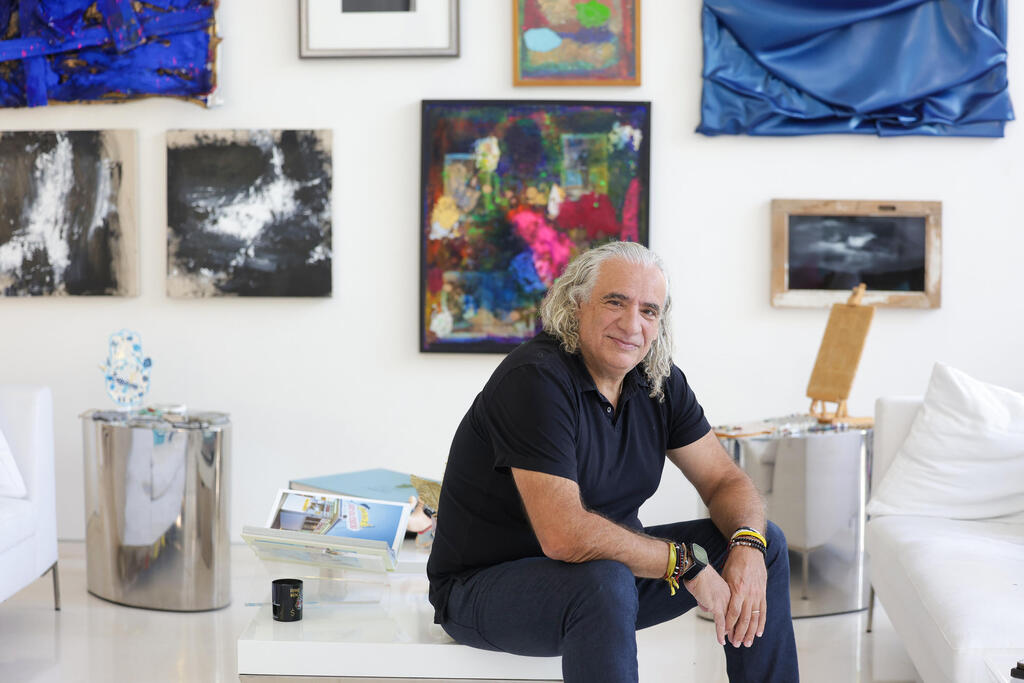
Mizrahi, born in Spain and educated at Princeton University in the United States, spent much of his career in London, South America and India. After leaving corporate life at Goldman Sachs, he focused on private investments in finance and industry. Despite his international success, he kept a low profile, staying out of the media and social networks even while active in London’s Jewish community and philanthropic work.
He moved to Israel in 2021 during the COVID-19 pandemic, calling it “a good time to change things.”
“I’d wanted to come earlier, and it felt like the right moment,” he said. “I adjusted how I run my businesses in London, and now I live part of the time here. Over time I felt I wanted to do something in Israel too. I couldn’t imagine living in Israel for the rest of my life and not have some business activity.”
From his home in Herzliya, a coastal city north of Tel Aviv, Mizrahi began exploring opportunities across the country. “I toured the Negev as a tourist,” he said. “Beersheba is a big city, there are smaller towns, community settlements, army bases, a diverse population and a strong university. I think over the next 10 years economic growth in that part of the country will materially exceed the rest of the country. That’s the bet I’m willing to make.”
To pursue that vision, he founded Adva Growth, an investment company that supports small and medium-sized businesses in Israel’s south and north. The firm focuses on existing companies seeking expansion rather than early-stage startups.
“Banks don’t easily support small businesses,” he said. “I want to give them that push forward. I’m not looking to invest in ideas or startups, but in businesses that already work and want to grow. We’re not a venture capital fund. I’m not looking for new ideas, but for functioning businesses that want momentum.”
Mizrahi plans to invest between 30 million and 50 million shekels ($8 million to $13 million) over the next two years. “We’re starting small because we need to build infrastructure, find the right businesses and establish credibility,” he said. Most of the capital will come from his own funds, though he remains open to partnerships. “If people know what I’m doing and are interested, I’m happy to talk to them,” he said.
Adva Growth generally takes what Mizrahi calls a “strong minority” position in companies, remaining involved in key decisions without seeking control.
“We don’t take control of the company. If we don’t like how you run your business we’re not going to invest,” he said. “But we’re involved in key decisions. A small business is a lonely place. The entrepreneur often doesn’t have people to discuss options with, and we can fill that gap.”
Mizrahi said the fund’s approach focuses on durability over quick profits. “The quality of a good investment is durability, not rapid growth,” he said. “It doesn’t have to happen tomorrow. I don’t care what the spreadsheet or the presentation says. If it’s a good, stable business, that interests me.”
He acknowledged that his bet on the Negev carries some risk. “If in 10 years nothing happened in the Negev, then maybe this wasn’t a particularly good investment,” he said. “But the way we’re underwriting the businesses—putting growth capital into existing, working companies—means the downside is controlled.”
Mizrahi said the project has given him a deeper understanding of Israel’s diversity. “An added value of this project is the chance to meet fascinating people—local business owners in the south who have built something and are ready for the next step,” he said. He described meetings with entrepreneurs he won’t ultimately back but who expanded his perspective, including a Bedouin investor seeking advice. “It was fascinating to see how he thinks about business,” he said.
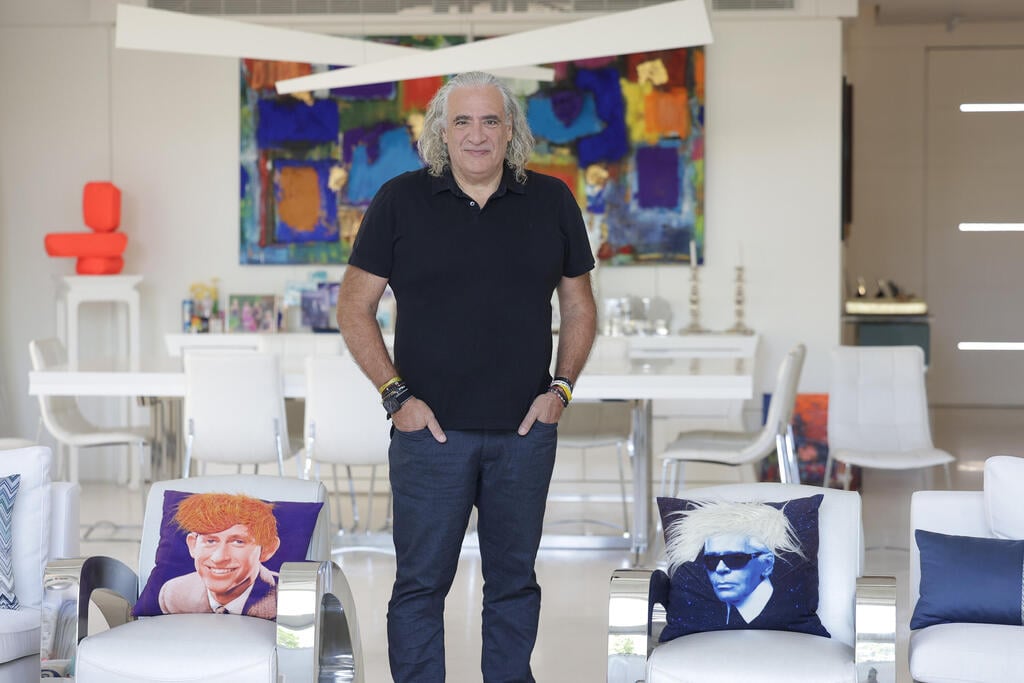
(Photo: Avigail Uzi)
Mizrahi, who has lived in several countries and has close ties to Jewish communities abroad, also reflected on the changing relationship between Israel and the Jewish diaspora.
“The existence of Israel is a very recent phenomenon for diaspora Jews—80 years is still very little compared with 2,000 years of exile,” he said. “Many still don’t know how to process the reality of a Jewish state. For the last 25 years Israel has gone through an economic strengthening and become a kind of miracle in technology and other areas. That association changed the diaspora’s relationship with Israel.”
He said the Hamas-led Oct. 7 attack on Israel and the subsequent surge in global antisemitism shocked Jewish communities worldwide. “All Jewish communities went into shock,” he said. “The other side simplified their message to one slogan—‘Free Palestine.’ It’s clear and simple. Diaspora Jews haven’t managed to form one strong, united voice. When you have one side with perfect clarity and the other side confused, who wins? The one with the single sharp message.”
He criticized diaspora Jews who believe antisemitism exists because of Israel. “Some think all this antisemitism is caused by Israel, and I tell them the only reason you’ll survive is because of Israel,” he said.
Mizrahi said Israel must act decisively to safeguard its future. “We won’t pretend it’s normal to have 150,000 rockets aimed at us or to face nuclear threats,” he said. “I’m not happy about what’s happening in Gaza, but I want to make sure nothing like that can ever happen again.”
He said he expects difficult years ahead for Israel but urged a practical approach. “When you face a very complex problem you don’t try to solve it all at once. Solve the first problem, then the next, step by step,” he said. “Small moves, gradual problem solving and steady progress toward the goal—that’s how to move forward.”
Mizrahi said his investment in the Negev is both a business decision and a personal commitment. “I want to have business exposure to an area I think will do better than people expect,” he said. “And I want to help build something meaningful for the country. If we succeed, great. If we don’t, the attempt itself was worth making.”