


At the pace at which Donald Trump manufactures events and then quickly grows bored of them, it is already somewhat hard to remember that just moments ago the U.S. military struck Venezuela and also threatened to take control of Greenland. Now, if Iran is set aside for a moment, Trump’s shiny new toy — but a very old one for the United States — is Cuba.
The island, about 230 miles from Miami and under communist rule, has been an American target since a crippling embargo was imposed in 1960. Cuba’s government has endured many severe periods over the years, including the economic crisis that followed the collapse of the Soviet Union, and has survived each time. It is now likely in its most difficult position yet, facing an administration deeply motivated to topple the Cuban regime, apparently more than any previous U.S. administration.
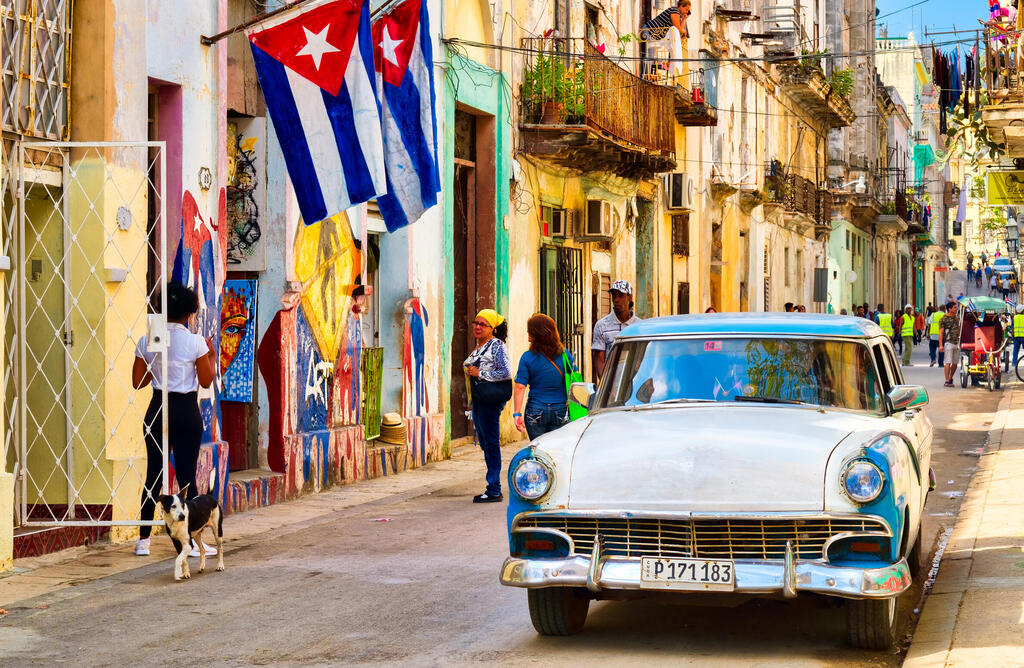
Since returning to the White House, Trump has exploited a constitutional loophole that allows him to do almost whatever he wants if he declares a “national emergency.” He used it on tariffs to bypass Congress and on immigration to employ measures that circumvent the courts. Over the weekend, he signed a new executive order declaring a national emergency over Cuba and threatening to impose tariffs on any country that sells or supplies oil to the island, aiming to cut it off completely. The order also grants the White House broad discretion to punish countries such as Mexico, which has become one of Cuba’s main oil suppliers.
In its official justification, the administration claims the Cuban government poses an “unusual and extraordinary threat” to U.S. national security by allowing intelligence and military presences from Russia and other “hostile” countries. The administration also claims, without publicly presenting evidence, that Cuba provides safe haven to members of Hamas and Hezbollah.
The choice between medicine and electricity
Cuba’s case is not like that of Venezuela or Greenland, where Trump simply decided he wanted to seize massive resources that do not belong to him and make a great deal of money from them. Cuba is an island of about 42,500 square miles with roughly 11 million residents. Its gross domestic product in 2025 was $108 billion, placing it near the bottom globally. It has no exceptional natural resources and depends almost entirely on imports. Studies have found that about 89% of the population lives in conditions of extreme poverty, ranking Cuba among the world’s most distressed countries in terms of daily hardship, despite high levels of free education and health care.
Because of U.S. sanctions and failed economic management, the government is often forced to choose between keeping the lights on and importing food or medicine. The broad U.S. embargo has kept official trade between the countries relatively small: In 2024, total goods exchanged amounted to about $590 million. Cuba’s purchasing power is extremely limited, but the United States is nonetheless one of Cuba’s largest suppliers of food and agricultural products, a trend that has grown in recent years.
From this perspective, toppling the Cuban government and lifting the embargo promise significant economic potential: an agricultural market of about 11 million people who import roughly 80% of their food, an attractive tourism market close to the United States and opportunities for investment in infrastructure, tourism and biotechnology. Nearly all of this potential is currently inaccessible to U.S. companies.
However, the American focus on Cuba also stems from many non-economic reasons. Trump threatens Cuba first and foremost because he is an imperialist. He believes the world should be divided among the strongest players, each dominating its immediate surroundings. Venezuela and Cuba are his Ukraine.
Halting the oil supply
For hawks in Washington, Cuba is a decades-old symbol of communist defiance of the United States right next door. The embargo and attempts to overthrow the Cuban regime have continued since 1960, with a brief pause during the Obama administration, which sought to open Cuba to the world. Trump’s first administration reinstated the embargo and the Biden administration left it in place.
In attacking Venezuela, capturing President Nicolas Maduro and intending to do the same in Cuba, Trump has revived a political idea from a period he longs for: 200 years ago. The Monroe Doctrine holds that Europe should refrain from interfering in the affairs of the Western Hemisphere because it falls under the exclusive control of the United States. The doctrine was first articulated on Dec. 2, 1823, in President James Monroe’s State of the Union address, and few countries understand its implications as clearly and intimately as Cuba.
The United States has few nonmilitary tools left to pressure Cuba. It already imposes near-total sanctions. What has changed is that Cuba has lost the subsidized oil from Venezuela on which it depended for decades. In exchange for that oil, which kept the lights on, Cuba supplied Venezuela with medical workers and security personnel. Thirty-two of those security personnel were killed in the failed defense of Maduro and his wife, leading to two days of national mourning in Cuba.
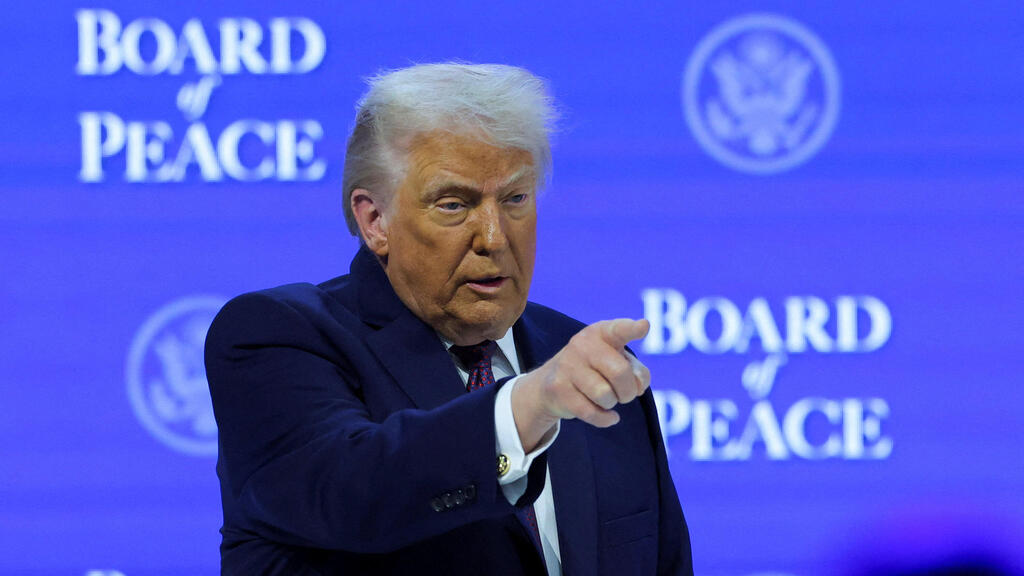
(Photo: REUTERS/Denis Balibouse)
If the drying up of Venezuelan oil also fails to bring down the Cuban regime, the Trump administration is considering pressuring U.S. allies that maintain economic ties with Cuba. Many NATO countries, including Canada and Spain, have trade relations with Cuba and the administration has already shown a willingness to use tariffs as a weapon against other countries. Rep. Carlos Giménez, a Florida Republican, said the goal was to ensure that U.S. allies do not continue providing economic support to the Cuban regime.
Mexico’s president, Claudia Sheinbaum, is already feeling that pressure. On one hand, Mexico is the United States’ largest trading partner. On the other, it has been Cuba’s main oil supplier since the United States took control of Venezuela’s oil. Sheinbaum must now manage her volatile relationship with Trump while also dealing with pressure from her left-wing party, which supports Cuba.
That balancing act became even more difficult last week following reports that Mexico’s state-owned oil company, Pemex, halted an oil shipment bound for Cuba under U.S. pressure. Asked about the report, Sheinbaum said oil shipments are a “sovereign” decision and that future actions would be taken on a “humanitarian” basis.
Sheinbaum has so far refused to respond too forcefully to Trump, preferring diplomatic clichés. That contrasts sharply with developments north of the U.S. border. Canadian Prime Minister Mark Carney’s speech at the World Economic Forum in Davos, in which he urged world leaders to stand up to Trump, went viral and drew an angry but predictable response from Trump.
Accuses Trump of 'economic genocide'
The Trump administration believes the regime in Havana has been severely weakened after Maduro’s fall and the loss of economic assistance from Venezuela. The Wall Street Journal reported that U.S. officials are looking for a figure in Havana similar to Venezuela’s de facto leader, Delcy Rodriguez, who could negotiate a change in regime.
Rodriguez, it should be noted, does not represent a real regime change and the lives of Venezuelan citizens have not improved in any way. She is a continuation of Maduro’s rule, with one difference: She is willing to do what the United States tells her. The Cuban government is far more institutionalized and organized than Maduro’s administration ever was. The country’s leadership is composed mainly of party officials who rose through the system based on loyalty and seniority.
Rodriguez, by contrast, used semi-military groups to establish her own power base separate from Maduro. Nothing like that exists in Cuba, making it difficult to identify figures within the government who could help the United States bring it down. The opposition movement on the island is also not organized.
Raul Rodriguez, a researcher at the Center for Hemispheric and U.S. Studies, told NPR that Trump’s conduct toward Venezuela and Greenland, his threats to retake control of the Panama Canal and his efforts to overthrow the Cuban regime amount to “a kind of imperial nostalgia, but in Cuba’s case the Americans have already tried everything for more than 60 years.”
The Cuban government, led by President Miguel Diaz-Canel, accuses Trump of “economic genocide” and of trying to strangle the country into collapse. “We are talking about ideas and strategies that were designed more than 200 years ago,” said Alejandro Garcia del Toro, a senior Cuban diplomat responsible for Cuba’s bilateral relations with the U.S. government. “So you cannot be surprised by what they are doing.”
Experts believe cutting off oil supplies could trigger a severe humanitarian crisis in Cuba — blackouts, damage to hospitals and shortages of food and basic services — without actually producing regime change. That is not how Trump and longtime congressional hawks see it. Sen. Lindsey Graham, a close White House ally, said he expects the administration to “put some ideas on the table,” adding, “It’s time to end this dictatorship.”
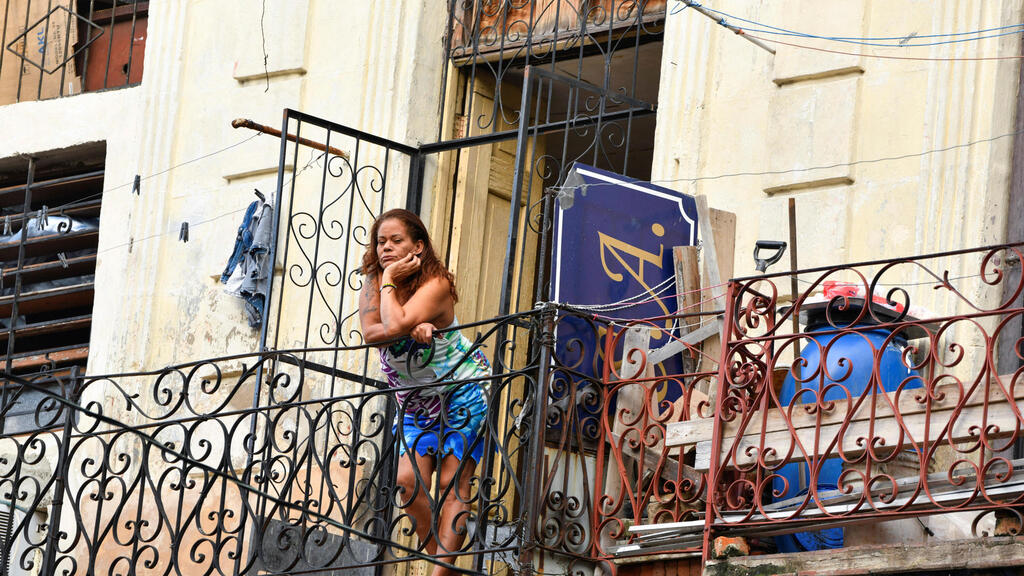
(Photo: REUTERS/Norlys Perez)
Another reason Trump is likely to keep up relentless pressure on Cuba is political. His strong base of support in Florida is made up largely of members of the sizable Cuban exile community in Miami. Its representatives in Congress have praised Trump for his hard line since his first term and make clear their base expects continued pressure until the regime falls.
Rep. Mario Diaz-Balart, a Florida Republican, praised Trump’s hard line on Cuba and said he believes continued pressure could lead to the regime’s collapse before the end of Trump’s term.
Trump himself said over the weekend that the Cuban government appears close to collapse, while downplaying the need for direct U.S. military involvement. He suggested events were moving in that direction on their own.
As in the case of Venezuela, the leading force behind efforts to push for regime change is Secretary of State Marco Rubio, for whom the issue is personal. Rubio’s parents fled Cuba and received asylum in the United States. Although he strongly advocated military action in Venezuela, Rubio has sounded less definitive than Trump about ruling out the use of force in Cuba, signaling that officials in Havana should be deeply concerned about the current moment.