

The Tel Aviv Stock Exchange opened sharply lower Wednesday in its first trading session since election results began coming in. The TA-90 index is currently down 3.5%, the TA-125 has fallen 2.1% and the TA-35 has declined 1.7%. On Monday, just before the election, the stock market posted strong gains of nearly 2%.
The selling pressure is concentrated in financial and real estate stocks. The banking index is down 2.92%, the insurance index has plunged 3.78% and the financial services index has fallen 3.40%. The real estate index is down 3.66%, the Real Estate-35 index has dropped 4.02%, the construction index has lost 3.83% and the infrastructure index is down 2.11%.
Insurance, real estate and banking stocks are leading the declines. Harel is down 4.74%, Migdal has fallen 4.38%, Clal Insurance has lost 4.33%, Menora Mivtachim is down 3.97% and Phoenix has declined 3.87%. In real estate, Melisron is down 4.21% and Azrieli has fallen 4.19%.
Bank shares are down around 3%, with First International Bank falling 3.07%, Discount Bank 3.09%, Bank Hapoalim 3.05%, Mizrahi Tefahot 2.97% and Bank Leumi 2.65%.
Among the biggest decliners across the exchange are Israel Canada, down 6.27%, and Bayit Bakfar, which has fallen 5.99% after surging 62% on Monday. Aura is down 5.76%, Prashkovsky has lost 5.56% and Electra has declined 5.51%.
However, a handful of stocks are bucking the downward trend. Tower Semiconductor is up 3.5%, Ormat has gained 3.48%, Palo Alto Networks is up 3.06%, Aryt Industries has risen 2.97% and Nova has advanced 2.10%.
Could the dollar reach 3.20 shekels?
Meanwhile, the shekel has weakened significantly against both the dollar and the euro. During Tuesday's election, both foreign currencies had actually lost ground against the shekel, with the dollar falling to 3.02 shekels. But the trend reversed completely after the release of election exit polls and accelerated as actual vote counts began coming in.
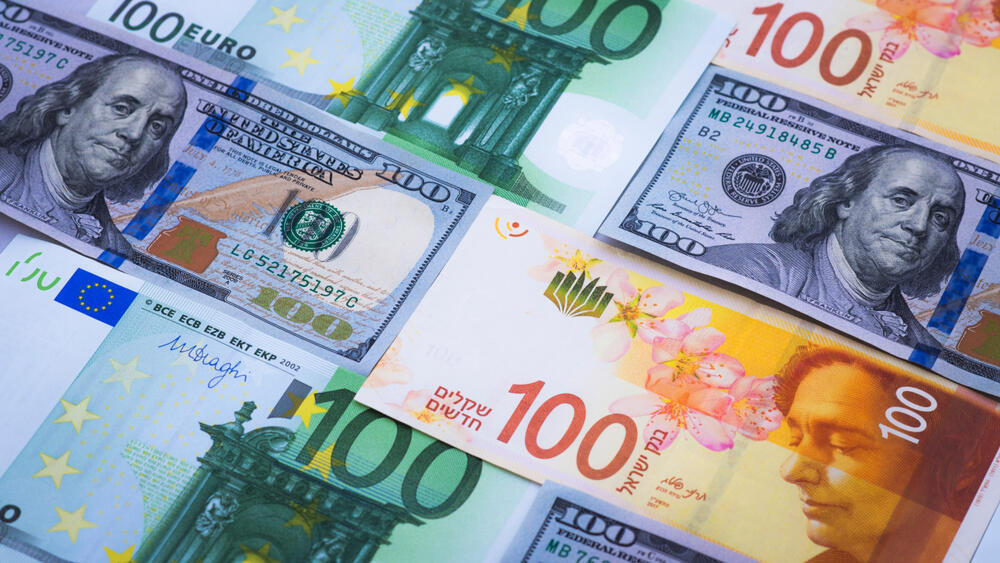
The dollar is now trading at around 3.09 shekels, while the euro, which had fallen as low as 3.37 shekels, is trading at approximately 3.44.
The dollar has risen about 2% from Tuesday's low, surpassing Monday's representative exchange rate of 3.07 shekels, before Election Day. The euro is trading at exactly its official representative rate from Monday.
The dollar's exchange rate is also expected to affect fuel prices, which will be announced Thursday. Until now, forecasts had pointed to a significant increase that would bring the price of a liter of 95-octane gasoline close to 9 shekels. Tuesday's weakening of the dollar could have moderated that increase, but market conditions have changed since the polls closed.
Joseph Fraiman, CEO of financial risk management firm Prico Group, explained the market fluctuations.
"Euphoria in the bloc seeking political change caused the dollar to collapse against the shekel Tuesday evening, even as the dollar continued strengthening globally," he said. "The updated figures, which showed Netanyahu's bloc gaining strength, raised concerns and triggered another depreciation of the shekel, pushing the exchange rate from 3.02 shekels per dollar back toward 3.10."
(Photo: shutterstock)
According to Fraiman, "The dollar's exchange rate could react with sharp fluctuations to updates on the election results. The publication of final results showing a majority for Netanyahu's bloc could send the dollar soaring toward 3.20 shekels in the near term."
However, Fraiman expects "significant foreign currency supply at exchange rates of 3.12 to 3.16 shekels per dollar," adding that the positive trend on Wall Street is contributing to that supply.
What does this mean for businesses?
Eran Buchris, a certified public accountant and strategic business adviser, explained the implications for small and medium-sized businesses.
"When business owners wake up to a morning of volatility and a strengthening dollar against the shekel, they wonder what they should do," he said. "A small business owner who needs to pay a foreign supplier $50,000 this week, for example, should understand that every five-agorot increase in the dollar's exchange rate adds 2,500 shekels to the cost of the transaction, even before fees. For businesses operating on thin profit margins, that could wipe out a significant portion of their profits."
His recommendation is "not to gamble on a decline in the dollar, but to examine whether it makes sense to lock in an exchange rate and reprice transactions that have not yet been finalized."
People preparing to take out a mortgage also have no reason to panic, according to Meir Vider, CEO of Vider Mortgages.
"Anyone planning to sign a mortgage agreement this week should not panic over the dollar's strengthening or postpone signing," he said. "The dollar's exchange rate does not directly affect interest rates on shekel-denominated mortgages, and any potential effect on interest rates in the broader economy would be indirect and not immediate."
"My recommendation is not to gamble on currency fluctuations, but to check how long the approved mortgage rates remain valid and negotiate with the banks before signing."