

The shekel reversed course Wednesday, falling sharply against major currencies after surging a day earlier, as preliminary results from Israel's general election heightened political uncertainty. The U.S. dollar rose 1% against the shekel, trading near 3.09 shekels, while the euro gained at a similar rate, climbing above 3.43 shekels.
In global currency markets, the U.S. Dollar Index edged up 0.1% to 102.4 points. The euro was little changed at around $1.12, while the British pound held steady near $1.34. Trading was similarly stable in Japan, with the dollar changing hands at approximately 157.9 yen.
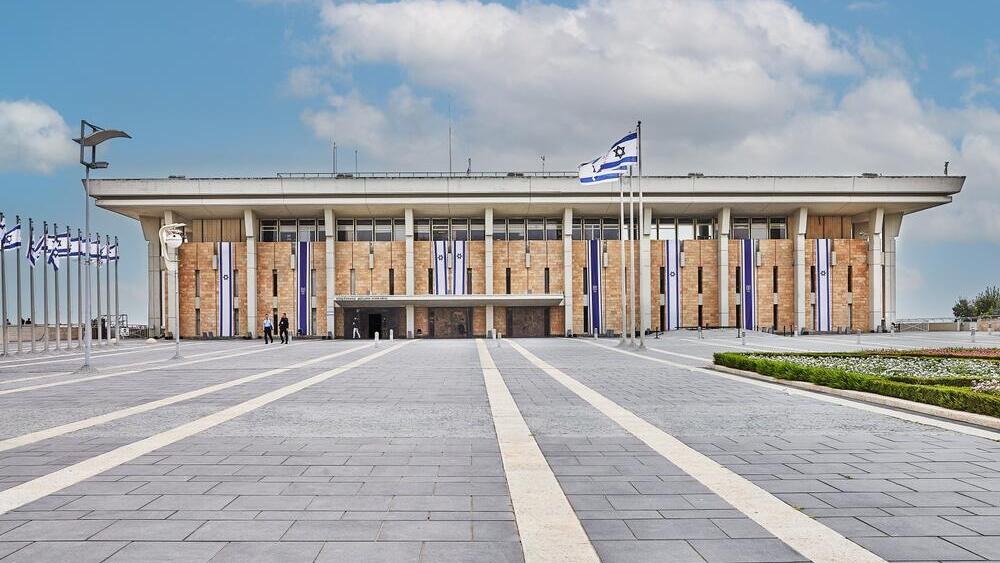
The Knesset
(Photo: Alex Donin / Shutterstock)
Attention in global financial markets is also focused on the Federal Reserve's interest rate decision Wednesday, with investors overwhelmingly expecting the U.S. central bank to leave borrowing costs unchanged. Futures indicate a 90% probability that the Fed will hold rates steady at 4%, while markets assign a probability of more than 80% to a rate increase at its next meeting in December. Traders expect no change in January, followed by another potential increase in March.
Investors will be watching closely for clues about the Fed's next moves, particularly from Chairman Kevin Warsh, although he has already made clear his reluctance to provide forward guidance. The central bank faces a difficult balancing act as inflation remains persistently above its 2% target. Annual consumer price inflation reached 3.7% in September, driven largely by soaring energy prices, while core inflation, which excludes food and energy costs, stood at 2.6%.
At the same time, recent housing data point to worsening conditions, largely because of high mortgage rates. The labor market, meanwhile, has been stabilizing, with layoffs remaining at exceptionally low levels. Further interest rate increases could place additional pressure on both housing and employment, complicating the Fed's efforts to bring inflation under control without causing unnecessary damage to the broader economy.
Krishna Guha, head of economic and central bank strategy at Evercore ISI, warned that the risk of a policy mistake under these conditions was substantial. "Warsh, who is aware of the risks in financial markets despite saying he does not like to coddle investors, should be capable of demonstrating the steady hand needed to calm markets," Guha wrote in a research note published this week. "But there is a significant risk of an execution failure."
Mohamed El-Erian, chief economic adviser at Allianz, said he expects further rate increases but believes they would be a mistake, particularly because of the potential damage to vulnerable sectors such as housing. "The market is right to expect the Fed to make no change tonight. Warsh will have to accompany the decision with fairly hawkish messaging because all the inflation figures have come in above expectations," El-Erian said in an interview with CNBC.
"My problem is that this is the wrong policy move right now. The answer to concerns about inflation and rising government bond yields should be fiscal restraint, not monetary tightening. What we will get instead is monetary tightening," he said. "The technology sector will not be affected as severely. The ones that will suffer are the rest of the economy: housing, auto loans and consumer loans. That is where the damage will be felt."