

Outgoing Israel Diamond Exchange president Nissim Zuaretz has accused Prime Minister Benjamin Netanyahu of failing to address the tariff crisis threatening the country’s diamond industry, saying responsibility for the government’s inability to secure relief from Washington rests with him.
The criticism follows figures published by ynet and Ynet Global showing that Israeli diamond exports fell to a historic low of $2.4 billion in the first half of 2026, amid weaker global demand, growing competition from Dubai and laboratory-grown diamonds.
Gallery
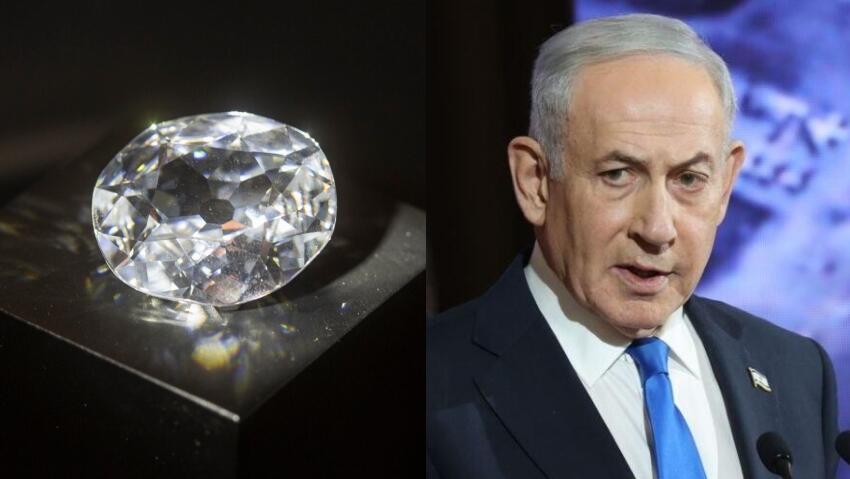
Israel diamond chief accuses Netanyahu of neglect as exporters face 12.5% US tariff
(Photo: Alex Kolomoisky, Tomi Harpaz)
Zuaretz said the industry’s immediate threat was a 12.5% tariff imposed by US President Donald Trump on diamonds and other Israeli goods, while competitors led by Belgium have secured tariff-free access to the American market.
“What is happening here is that, on the economic front, Israel has suffered a defeat against the American administration. There is no other way to describe it,” Zuaretz said.
“On the security front, we are shoulder to shoulder with the Americans, but economically we have suffered a setback. Countries that do not have half the strategic relationship Israel has with the United States have already signed trade agreements reducing their taxes on diamonds and other goods to zero, while we have been left with a 12.5% tax.”
According to Zuaretz, Israel and the United States have been negotiating the issue for about a year and a half without reaching an agreement.
“We are America’s closest ally, and we are being discriminated against because Bibi does not deal with the economic sphere. It does not interest him,” he said.
“The Tax Authority in the Finance Ministry is trying to help, as is the professional team, but the failure is Bibi’s. Otherwise, I do not know how to explain why an agreement still has not been reached.”
Zuaretz said diamond traders had tried to reach Netanyahu through multiple channels.
“We tried to pressure him through ultra-Orthodox diamond traders and in every possible way, but once it reaches Bibi, it stops,” he said.
Before Netanyahu traveled to meet Trump, industry representatives sent the prime minister a letter asking him to raise the tariff issue during their talks.

Israel Diamond Exchange President Nissim Zuaretz
(Photo: Tal Givony)
“This is our last hope,” Zuaretz said. “If nothing changes, many diamond traders will move to Belgium, and I will also open a company there. We have no margin to absorb another 12.5% tax.”
“Some diamond traders in Israel will have to go home and close their businesses. We are Israelis and want to remain here. We have children in the army. I personally have a son in a special unit, a daughter who is an infantry instructor in the Paratroopers Brigade, and another son who will enlist next year.”
Zuaretz described the tariff disparity as especially damaging because Israeli diamond businesses operate on narrow profit margins and depend heavily on exports to the United States.
He said Israel exports approximately $4 billion in diamonds to the American market each year, accounting for about 70% of the country’s diamond exports, and that roughly 6,000 traders and their families depend on the Israel Diamond Exchange.
The industry has also been hurt by currency movements. According to Zuaretz, diamond inventory valued at 3.8 million shekels before the war may now be worth only about 3 million shekels.
He rejected suggestions that the diamond sector no longer makes a meaningful contribution to the Israeli economy.
“The diamond industry built the State of Israel and brought foreign currency into the country,” he said. “It is a Jewish industry and a source of pride, but the government has abandoned us.”
Zuaretz, who recently announced his resignation after two years as exchange president, said the crisis could accelerate the departure of Israeli companies to rival trading centers.
“Israel has been hurt more than anyone,” he said. “Belgium and Dubai offer significant benefits to investors and foreign companies, and companies that once operated in Israel have already moved to Dubai.”
“If the situation does not change, we will be able to say goodbye to the Israel Diamond Exchange. Belgium exports to the United States without tariffs, while we pay 12.5%. My private company also exports to the United States, and if there is no alternative, I will move my operations to Belgium.”
Early elections for the exchange presidency are expected to be held, most likely in November.
Former Israel Diamond Exchange president Shmuel Schnitzer also warned that the tariff had effectively blocked Israeli dealers from their most important market.
“The situation is very hard right now, but I still have hope,” he said. “Part of the situation we have entered stems from American taxation, which effectively means we have no access to the US market.”
“The diamond industry handles very large volumes with low profit margins, and a 12% tax makes trade impossible. When you cannot sell about 70% of your output to your main market, the United States, how can you survive?”
Schnitzer said the European Union had succeeded in reducing the tariff on Belgian diamond exports to the United States to zero and argued that Israel should not be placed at a disadvantage.
“Our relations with the United States are better than Europe’s, and I sincerely hope that we can also achieve this,” he said. “But with Trump, we need the government’s help, and so far we have not succeeded.”
Asked whether Netanyahu could influence Trump, Schnitzer said the central question was whether the tariff issue had been included in the prime minister’s agenda during their meeting.
“If the tax is not canceled, I do not want to think about what will happen to the industry,” he said. “We need the government on this issue, and we have to work on it.”
Diamond Controller Natalie Gutman said Israel was continuing talks with US customs authorities and the administration in an effort to reduce the tariff, while also discussing possible tax relief with the Finance Ministry.
The pressure from the tariff comes on top of the broader structural problems outlined in the earlier report: shrinking global demand, Dubai’s tax advantages, weaker Chinese consumption and the rapid expansion of cheaper laboratory-grown diamonds.
But Zuaretz argued that unlike those global forces, the tariff disadvantage was a problem Israel’s political leadership could directly address.
“The failure is Bibi’s,” he said.