

For patients with advanced cancer, a blocked bowel can become a life-threatening complication. Surgery can provide relief, but some patients are too ill to undergo the procedure. An Israeli startup is developing a less invasive alternative that could offer these patients another option.
Tel Aviv-based Phantom GI has raised $5 million in an initial seed funding round to develop PercStoma, a device designed to create an opening in the bowel through a single needle puncture, potentially replacing a major abdominal operation with a procedure lasting about 20 minutes.
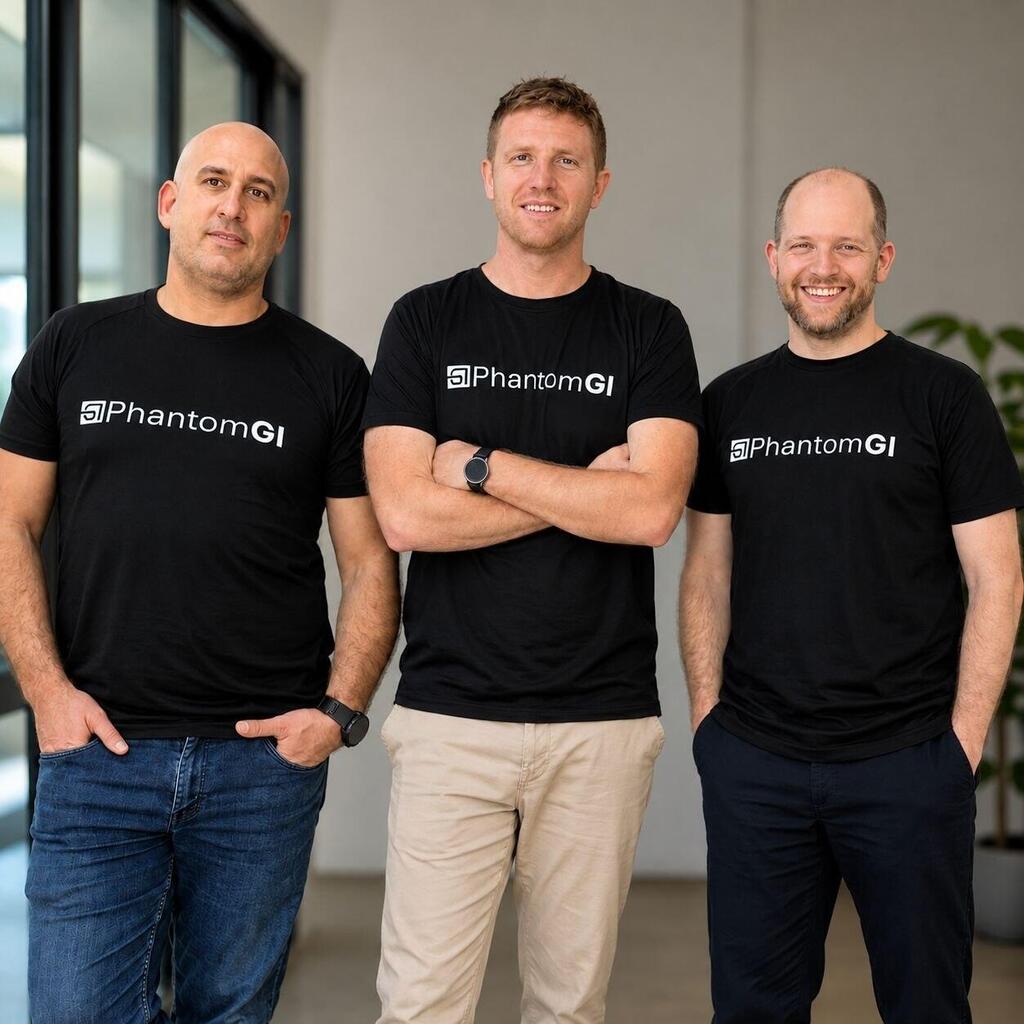
Phantom GI founders
(Photo: Phantom GI)
The funding round was led by Pitango HealthTech, with participation from RAD Biomed and RUNI Ventures. The money will support further development of the device and the first phase of clinical studies in the United States.
The technology targets patients with bowel obstructions, particularly those caused by advanced cancer, who cannot safely undergo conventional surgery. According to the company, as many as 55,000 people in the United States die each year as a direct result of malignant bowel obstruction, while treatment costs can reach $70,000 per surgical procedure.
An ostomy is a procedure that creates an opening, known as a stoma, in the abdomen to allow waste to leave the body and collect in an external bag. It typically requires abdominal surgery under general anesthesia, which can pose substantial risks for patients already weakened by serious illness.
Phantom GI hopes to achieve the same result without a major operation. Its device is designed to reach the bowel through a needle puncture under local anesthesia, using X-ray imaging to guide the procedure. A specially designed stent would then connect the bowel to the skin surface, allowing waste to pass into a standard ostomy bag.
The company is aiming for a procedure time of approximately 20 minutes, although the technology remains under development and has yet to establish its safety and effectiveness through the planned U.S. clinical studies.
A patient's case inspired the technology
The idea grew out of a case encountered in 2023 by Dr. Eran Shlomovitz, Phantom GI's co-founder and chief medical officer, whose background includes general surgery, medical imaging and therapeutic endoscopy.
Shlomovitz was treating a woman with a cancer-related bowel obstruction who had been deemed too ill for surgery. Seeking another way to relieve the blockage, he developed a technique using existing medical instruments to access the bowel under X-ray guidance.
With the patient's consent, he performed the procedure successfully. According to the company, she was subsequently able to eat normally, return to work and resume treatment for her cancer.
That experience became the basis for PercStoma.
“There is a group of patients today for whom the standard surgical option is simply too invasive, and in some cases, not an option at all,” said Ido Sadan, Phantom GI's co-founder and CEO.
The company believes the technology could eventually benefit a much wider group of patients. Dr. Eliahu Bekhor, its co-founder and chief scientific officer, estimates that more than 100,000 Americans with bowel obstructions could potentially benefit each year.
Another goal is to make the procedure easier to reverse. Patients who undergo a conventional ostomy may later need a second major operation to restore normal bowel function. Such procedures carry their own risks, and according to Phantom GI, up to half of eligible patients may be unable to undergo reversal surgery.
PercStoma is being designed to allow doctors to reverse the stoma during a relatively brief office-based procedure, without another operation under general anesthesia. That capability, too, will require clinical validation.
Dr. Jonathan Glazer, a partner at Pitango HealthTech, said the technology could change an approach to ostomy procedures that has remained largely unchanged for decades.
“This shift to a percutaneous approach could reduce treatment complexity and significantly expand who can be treated,” Glazer said.
Founded in 2025, Phantom GI is among a growing number of Israeli medical technology startups seeking to replace complex surgical procedures with less invasive interventions. For the company, the immediate challenge is to demonstrate that a technique inspired by one patient's case can be developed into a safe, reliable treatment for many others.