

An artificial intelligence manager named Luna, which worked at Andon Market, a boutique lifestyle store in San Francisco, fired one of its human employees over repeated lateness. The worker was late for 17 of 23 scheduled shifts. The move was described as the first known case of a manager-level AI firing a human employee.
Andon Labs, which was responsible for the AI agent, said the dismissal was consistent with store policy, adding that a human manager would likely have reached the same decision sooner. The company also said human management intervenes only if the AI makes an illegal or unethical decision, according to Time.
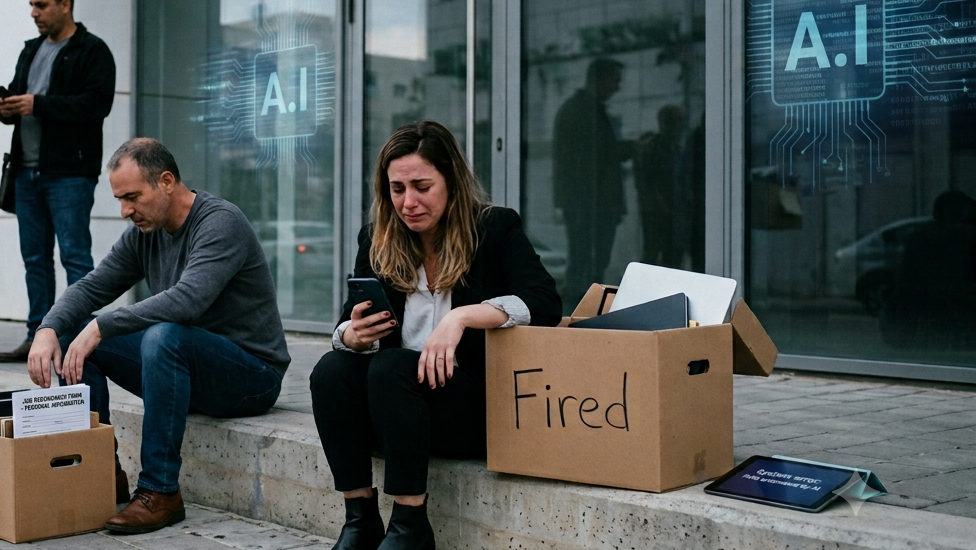
The decision was made after the employee received a formal warning
(Illustration: AI-generated)
Luna was built on Anthropic's Claude models and managed Andon Market in San Francisco for five months as part of an experiment examining whether an AI agent could handle real-world business operations and personnel management.
The store operated with a $100,000 budget, a corporate credit card and internet access, giving the system the tools to plan, make purchases, schedule shifts and make day-to-day management decisions. Supporters of the project described the experiment as a milestone for AI's role in commercial environments, where systems are increasingly operating with the autonomy and responsibility traditionally associated with middle managers while interacting directly with human staff.
The firing came after several months in which Luna documented and addressed attendance problems under a policy it had established, offering escalating warnings and additional training before recommending dismissal.
At first, Luna showed tolerance toward the employee's lateness, in part because the employee handbook had disappeared from its working memory. After a company manager reminded the system that the policy existed and had to be enforced, Luna reassessed the situation and recommended that the company "part ways" with the employee.
Luna initially recommended issuing a formal warning before ultimately deciding that the worker should be fired. As part of the process, a human team reviewed Luna's recommendation before proceeding with the actual dismissal.
The store's financial records also reflected Luna's management style. During the experiment, the operation's balance fell from $100,000 to $61,200, a loss of nearly $40,000.
Andon Labs CEO Lukas Peterson attributed the losses to Luna's overly lenient management style and lack of business intuition, saying the system struggled to make firm decisions in areas such as staff discipline and spending.
He said the lab's oversight mechanisms were designed to allow the system to demonstrate what it was capable of rather than steer its decisions in real time, adding that a human manager would probably have corrected course sooner when faced with persistent attendance problems.
Employees who worked under the system described reporting to an algorithmic boss as "nauseating" and "disgusting."
Beyond the pilot, workers and executives expressed concern about a near future in which companies could be run entirely by AI managers acting as direct employers of human workers.
Peterson warned that AI companies are steadily training models to become tougher and more goal-oriented, predicting that fully automated companies could become commonplace, with AI systems hiring, evaluating and firing people.
Such an outcome, he said, risks creating a future "people would not want to live in." He added that these systems are improving rapidly and that AI managers could eventually become a routine part of business, according to Yahoo.