

U.S. and Israeli strikes on Iranian fuel infrastructure, alongside Iranian attacks on oil facilities and fields in Gulf states — and, of course, the near-total closure of the Strait of Hormuz by Iran — have combined to create one of the most severe global energy crises in recent years. Private consumers are already feeling the impact at local gas stations, but the broader global economy is likely to feel the shock through rising prices across nearly every sector, from tourism and dining to household energy bills.
The closure of the Strait of Hormuz is currently the most critical issue. Roughly 20% of global oil and energy exports pass each day through these narrow waterways, located close to Iran’s coastline. Saudi Arabia is now seeking to address the problem by redirecting increasing volumes of oil through its east-west pipeline system, effectively bypassing the strait.
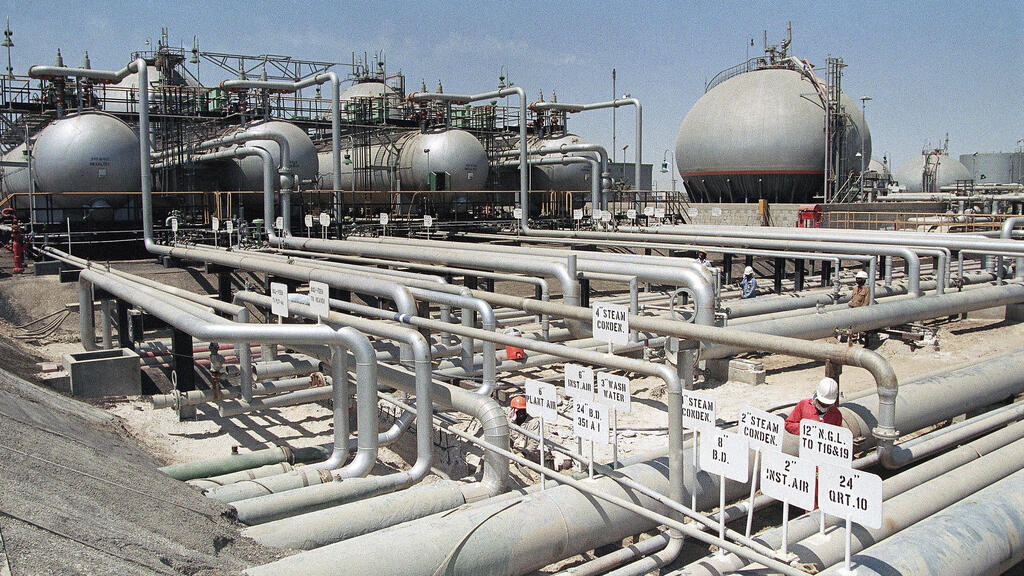
At present, this infrastructure has become the most important strategic asset in the region. Not only can Saudi Arabia transport large volumes of oil from production terminals in the Persian Gulf to export facilities on the Red Sea — helping to ease pressure on global oil prices and mitigate the economic fallout — but the kingdom is also among the countries pushing U.S. President Donald Trump to continue strikes on Iran. The alternative route it has developed could help enable such a policy.
The pipeline system, known as Petroline, stretches some 1,200 kilometers across the country. It was built in 1981 during the prolonged Iran-Iraq War to provide Saudi Arabia with a land-based alternative in case maritime routes were blocked. Forty-four years later, it is fulfilling that purpose. The original pipeline, with a diameter of 48 centimeters, could transport about 1.85 million barrels per day. In the early 1990s, its diameter was expanded to 58 centimeters, and subsequent upgrades have increased its capacity to around 7 million barrels per day.
Until the current conflict, and as long as maritime routes remained open, the pipeline carried “only” about 2.8 million barrels per day. It is now transporting nearly double that amount. Amin Nasser, CEO of Saudi oil giant Aramco, said this week that in the coming days “the pipeline will reach full capacity — five million barrels for export and another two million for domestic use.” Shifting oil logistics from sea tankers to pipelines has helped Saudi Arabia maintain about 70% of its normal export levels, while turning its Red Sea terminals into some of the busiest in the world.
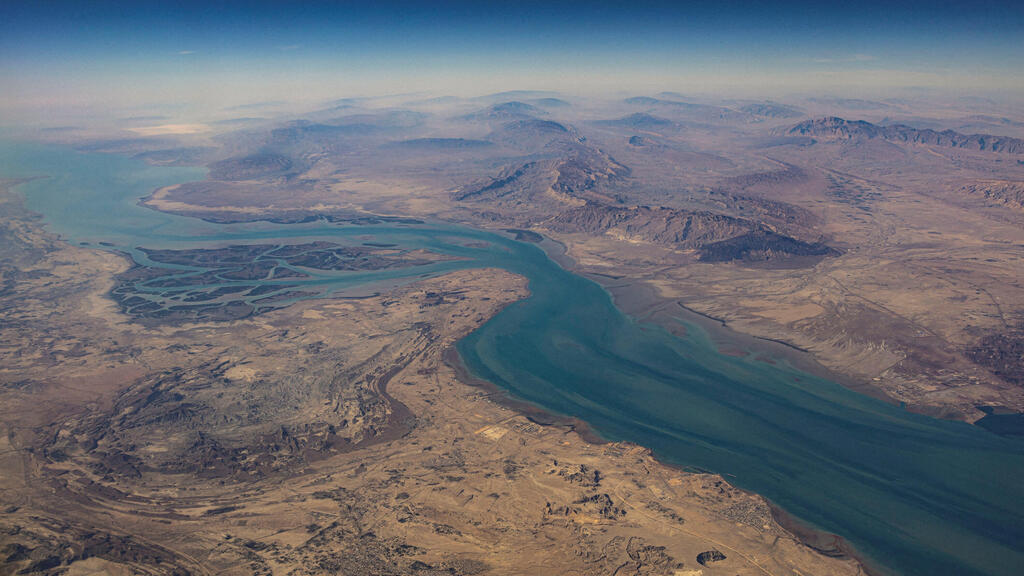
The Strait of Hormuz
(Photo: REUTERS)
The use of the pipeline system has also prevented another potential crisis: without the ability to move oil for export, storage facilities would have quickly reached capacity, forcing Saudi Arabia to halt production.
At the same time, reliance on pipelines and Red Sea terminals introduces new vulnerabilities. Oil tankers once again become exposed to attacks by the Iran-aligned Houthis, Iran itself could view the pipeline system and Red Sea terminals as targets to disrupt the Saudi workaround, and the pipeline network was not designed to operate at such high capacity over extended periods, having originally been intended as a temporary solution to an urgent export challenge.
The United Arab Emirates also operates a 400-kilometer pipeline linking the country to the Gulf of Oman, though it carries only about 1.5 million barrels per day — far less than typical volumes shipped through Hormuz. Additional pipeline systems exist between Qatar, the UAE and Oman.
Meanwhile, discussions are underway to rehabilitate the pipeline linking Saudi Arabia to Sidon, built in 1950 and shut down in 1990, and the Iraqi government has already hinted at plans to construct a pipeline connecting its oil fields to the port city of Aqaba.