

Last spring, a lavish dinner was held at an equally lavish mansion in Buenos Aires. The guests had gathered to celebrate with its new owner, Peter Thiel, the co-founder of PayPal and Palantir, who had purchased the property for $12 million. Thiel, whose net worth is estimated by Forbes at nearly $40 billion, is a close ally of U.S. Vice President JD Vance. In fact, he was one of the main figures who pushed Donald Trump to choose Vance as his running mate, and that is just the tip of Thiel's influence on far-right politics in the United States and around the world. So when he buys a sprawling mansion in Buenos Aires and invites the local elite to dinner, the elite show up.
Another close friend of Thiel's, Argentine President Javier Milei, was not there, but senior government officials and prominent economists were among those seated around the table. One of the main topics of conversation was the "Antichrist," the great enemy of Jesus and the embodiment of absolute evil. In Thiel's worldview, which he promotes in tightly secured, invitation-only lectures, the modern Antichrist is not a traditional monstrous figure but a global political force. To Thiel, anyone who tries to slow the development of technology and artificial intelligence through regulation is an enemy of civilization and effectively serves as an agent of the Antichrist, the ultimate evil.
Gallery
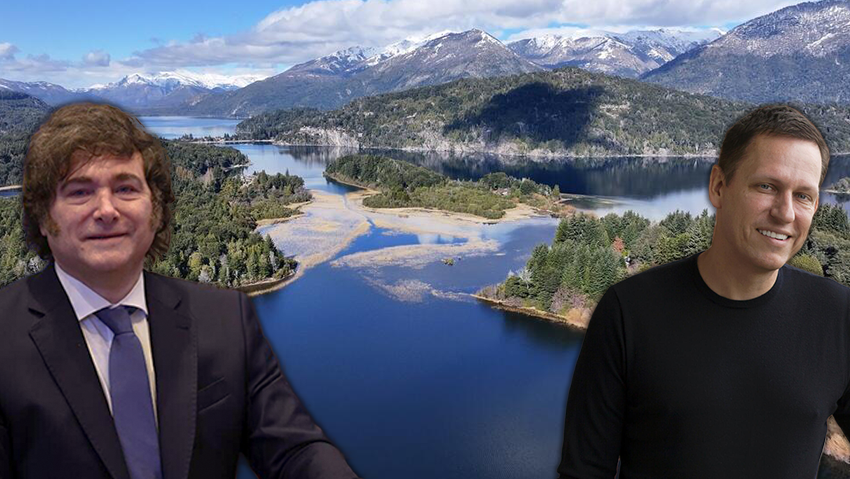
Javier Milei and Peter Thiel
(Photos: ByDroneVideos/Shutterstock, Kim Kulish/Corbis/Getty Images, Alex Kolomoisky)
According to The New York Times, some of those present were unsure how to interpret Thiel's apocalyptic reflections about a global enemy poised to establish a totalitarian world government, but everyone listened seriously.
Thiel's deep resentment of any attempt to regulate his activities has led him down a rabbit hole of conspiracy theories for years, while also prompting him to accumulate backup countries where he could hide when the end of the world arrives. Born in Germany and raised in the United States, he obtained New Zealand citizenship in 2011 after spending just 12 days in the country and purchasing a large lakeside estate. In 2022, he applied for a Maltese passport. Now his attention has turned to Argentina.
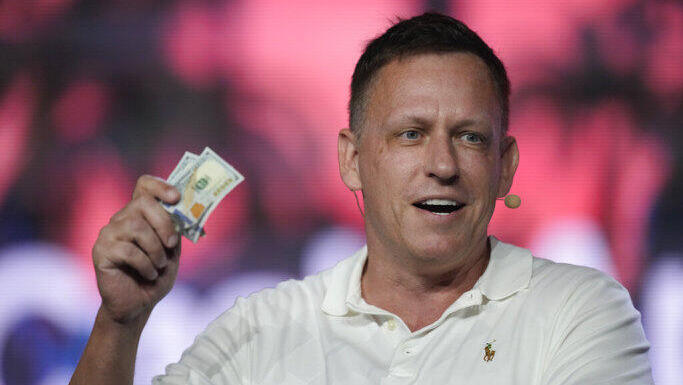
Peter Thiel
(Photo: Rebecca Blackwell/AP)
Argentina has sheltered some of history's most notorious figures
Thiel is an extreme libertarian when it comes to taxation, though somewhat less so when it comes to other forms of government intervention in citizens' lives. He began taking an interest in Argentina after a proposal emerged to impose a one-time 5% tax on the accumulated wealth of California billionaires. The proposal is due to go before voters in November's midterm elections. But like quite a few other billionaires, particularly technology moguls, the 58-year-old Thiel also genuinely believes the apocalypse is approaching and is preparing for it. He is neither the first to choose Argentina as a place to hide nor, almost certainly, the last.
Argentina, of course, has a long history as a refuge for fugitives from around the world, including some of the worst people in human history. Beautiful Buenos Aires and the vast expanses of Patagonia provided shelter, among others, to Butch Cassidy and the Sundance Kid, who fled American law enforcement in the early 20th century. Among those who found refuge there with considerably less Hollywood appeal were Adolf Eichmann, Josef Mengele and several thousand of their equally appalling associates.
Argentina might seem an unusual choice for a modern billionaire seeking stability. After all, the country has experienced nearly a century of military coups and devastating economic collapses, including triple-digit inflation. But these billionaires, deeply conservative men, have found an ideological ally in Javier Milei, both economically and socially. Milei is actively working to attract wealthy foreigners to invest in the country's natural resources, including oil, lithium and rare-earth minerals. His government has also recently unveiled a citizenship-by-investment program, and violent protests erupted in Buenos Aires in August when the president tried to ease restrictions on foreign ownership of land.
Armand Arton, whose investment and immigration firm is part of a consortium advising the Argentine government, told The Sunday Times: "These are doomsday investors expecting war in Europe or the worst situation in the US or Canada and are searching for a place they can relocate to."
Through these measures, the Argentine government hopes to attract 5,000 very wealthy families over the next five years. "People see Argentina as a safe haven," Arton added. "A country far from any war where they can maintain a standard of living similar to what they already have at home."
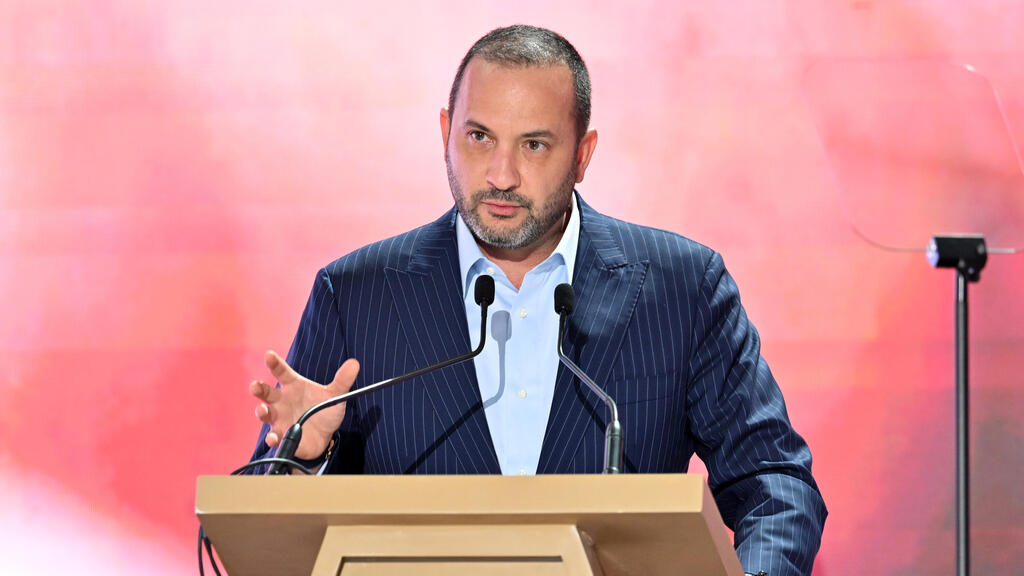
Armand Arton
(Photo: Cedric Ribeiro/Getty Images for The Global Citizen Forum)
Companies and individuals linked to the ruling families of Qatar and the United Arab Emirates have also quietly purchased large estates around Bariloche, Argentina's premier ski resort. On February 23, just days before the outbreak of the U.S.-Israeli war against Iran, a large royal delegation of senior Emirati officials arrived in Bariloche. Local newspapers initially reported that UAE President Mohammed bin Zayed Al Nahyan was among them. The timing fueled speculation that members of the delegation knew war was approaching and had fled the Middle East for Argentina's wide-open spaces.
And it is not just Argentina. In neighboring Uruguay, an American startup called Praxis has announced a $1 billion project called +Colonia, near the historic town of Colonia del Sacramento. Backed by investors including Sam Altman, the venture aims to attract about 2,700 members to a new community centered on technology and what the organization calls the restoration of Western civilization. "Bitcoin gave our generation its own currency," the organization's website declares. "We are using AI to create our own country."
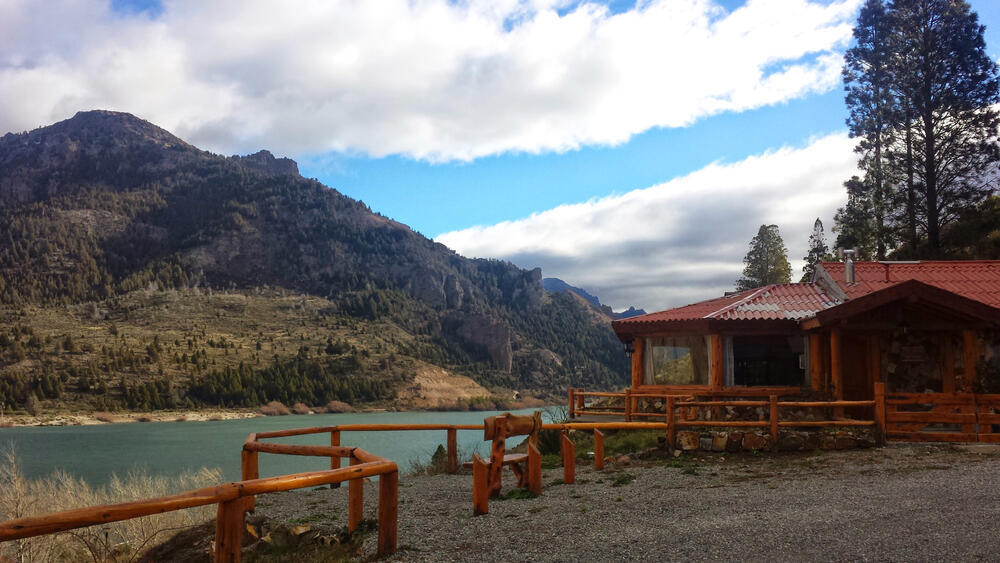
Bariloche, a remote and favored destination
(Photo: Gilmar Magi/Shutterstock)
Peter Thiel is undoubtedly the most famous of the wealthy individuals flocking to Argentina, although he never gives interviews and manages to maintain almost complete privacy. He arrived in Buenos Aires with his husband, American investor Matt Danzeisen, and their two daughters, who were enrolled in a private school in the capital.
According to Bloomberg, Thiel's primary interest in Argentina is to "secure a bunker against a possible nuclear catastrophe," although the incentives the Argentine government is trying to offer him certainly do not hurt. A spokesman for Milei denied reports that the government was considering offering Thiel permanent residency or even citizenship. However, the government is working to create a "golden passport" program that would grant citizenship to people making substantial investments.
"All billionaires of the world who want to flee countries increasingly regulated, with higher taxes and governments that persecute their citizens, are welcome in the Argentine republic, the new land of freedom," Manuel Adorni, Milei's chief of staff, said last month.
So far, Thiel's only known direct investment in the country has been primarily in private real estate. In addition to his Buenos Aires home, he has purchased a plot of land in neighboring Uruguay. He also holds a $76 million investment in an Argentine oil company operating in Patagonia and is reportedly considering buying additional land in the region.
A ranch with an airstrip and modular homes
Not everyone is pleased with Thiel's move to Buenos Aires. Last month, dozens of Argentines demonstrated outside his mansion. At the same time, Argentina's Congress has been debating a series of far-reaching regulatory changes proposed by Milei. Coincidentally or not, the proposals emerged shortly after Thiel moved to the country and held closed-door meetings with Milei at the Casa Rosada, Argentina's pink presidential palace.
One proposed law, known as "Super RIGI," is designed to establish an investment framework offering foreign companies minimal tax rates and a 30-year guarantee against regulatory changes. The legislation explicitly identifies artificial intelligence data centers as one of the types of investment it seeks to attract. An emergency decree signed by Milei, lifting the restriction preventing foreigners from owning more than 15% of the country's agricultural land, was struck down by the Supreme Court last weekend.
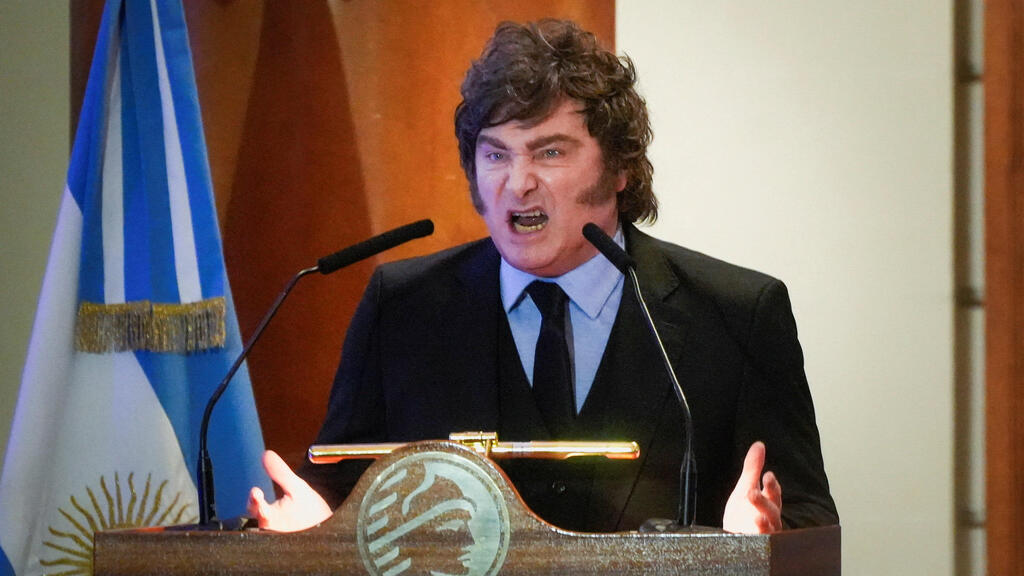
Javier Milei
(Photo: Mariana Nedelcu/Reuters)
Raquel Olmos, a former Argentine labor minister who now serves as an opposition lawmaker, believes the arrival of wealthy foreigners is part of a broader trend: the transfer of power into the hands of technology billionaires.
"People with money tend to live in gated communities in Buenos Aires," she told The Sunday Times. "Now they are taking this to a new degree. In the minds of these technoligarchs, 'the rest of the world can disappear, but I’ll be in a capsule with my friends and people who think like me and have the same amount of money.'"
She is not wrong, and the billionaires themselves make no attempt to deny it. For example, Argentine-Spanish technology entrepreneur Martin Varsavsky, a close associate of Thiel, and five other wealthy friends, including KIND snack company founder Daniel Lubetzky, purchased a remote ranch about 800 kilometers north of Lake Escondido, where they plan to retreat if civilization collapses in Europe and America.
The property already has infrastructure designed to support a completely self-sufficient existence, including prefabricated modular homes, geodesic domes, an airstrip for light aircraft, chicken coops and stables, solar energy systems and even local servers running artificial intelligence models for personal use, without relying on the global internet.
"We’re already in World War Three," Varsavsky said recently, adding that Argentina's distance from the world's nuclear powers gives it an extraordinary survival advantage if the Northern Hemisphere is wiped out.
"The moment China takes Taiwan or Russia takes Lithuania, I'm in Buenos Aires," he added. "It's good to have a Plan B for civilization."