

A “painful awakening.” That is how one Israeli capital market figure described the sharp declines on the Tel Aviv Stock Exchange over the past three trading days, after details emerged of the agreement between the United States and Iran.
“There was a wonderful fantasy that after the war, a new Middle East would emerge here: the Iranian regime would be defeated or at least weakened, Saudi Arabia and Qatar would sign the Abraham Accords, and investors from around the world and the Gulf would flock to Israel,” he said. “Unfortunately, that did not happen. The market, which since the end of the war had priced in ‘the day after’ at high levels, woke up from the dream and is now correcting.”
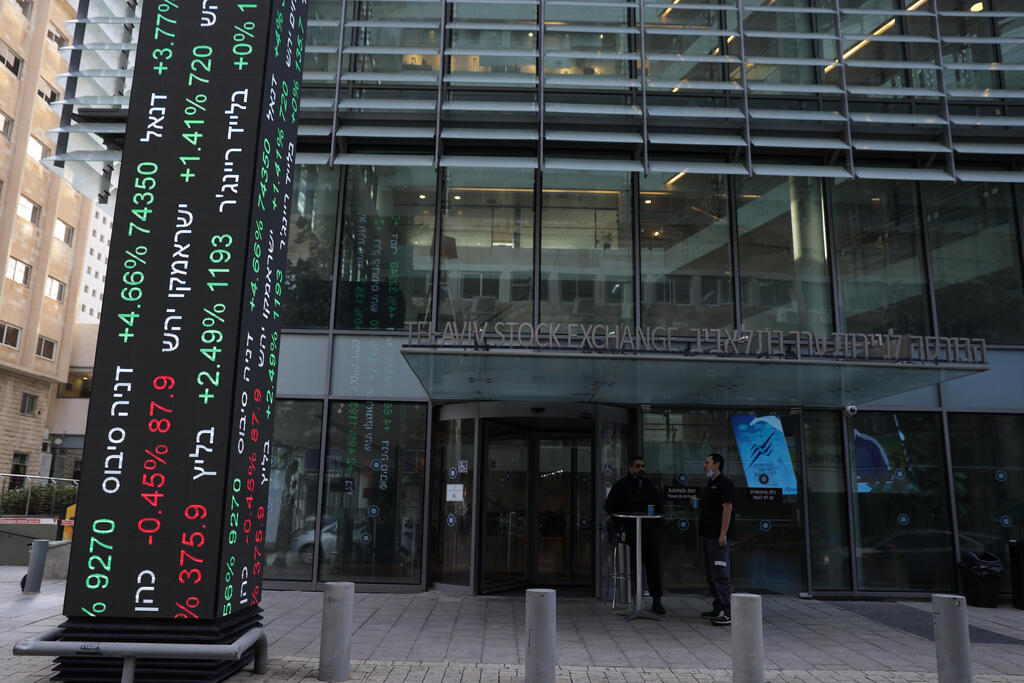
Global markets viewed the U.S.-Iran agreement largely as a stabilizing development: stocks in the United States and Europe rose, while oil prices fell. But in Israel, investors interpreted the deal very differently, less as a calming signal and more as a strategic disappointment that could leave the Iranian threat in place and revive Israel’s risk premium.
That gap was visible in the numbers. In Tel Aviv, the TA-125 index fell 1.72% on Wednesday and has lost 9.5% since its peak. The TA-35 index, which tracks Israel’s largest listed companies, dropped 1.54%, while the broader TA-90 fell 2.03%. The defense index slipped 0.3%, completing a 7.2% decline since the start of the week and a 25% drop over the past three months. The general banking index has fallen 7.7% since the beginning of the month. The steepest declines were recorded in infrastructure and energy, which fell 6.04%, cleantech, down 5.31%, and the TA Energy Israel index, which lost 4.53%.
Chip companies showed relative resilience and helped moderate the broader declines. Tower Semiconductor, Nova and Camtek benefited from continued global momentum around artificial intelligence, which has supported semiconductor stocks worldwide. The energy selloff, by contrast, was especially sharp among companies linked to power demand from server farms and data centers: Meshek Energy fell 12.6%, Doral Energy dropped 11.84%, Ormat Technologies lost 7.87%, Mega Or declined 6% and Nofar Energy fell 4.65%.
Those declines reflected not only disappointment over the Iran agreement, but also a regulatory shift in Israel’s electricity sector. The Electricity Authority announced a new framework for connecting server farms to the power grid, under which developers would be required to pay millions of shekels a year to keep their place in the queue for connection. Until now, applications have been free. The authority would also receive the power to disconnect server farms for up to six hours with prior notice. Under the plan, only about a quarter of the applications currently pending with the authority are expected to be approved.
‘The banks had reached exaggerated valuations’
Idan Azoulay, chief investment officer at Sigma Clarity, said the market was reassessing Israel’s strategic position. “Everyone understands that the agreement between Iran and the U.S. is bad for Israel, and there is a sense that risk premiums are rising again after shrinking significantly since the beginning of 2024,” he said. “We believed our strategic situation would improve dramatically and that the Iranian threat would be removed. Now, when it turns out the situation is really not there, the market is repricing the agreement and its implications.”
Still, Azoulay cautioned against calling the move a crash. “I would not say we are seeing a collapse. This is a significant challenge, but Trump is also facing criticism at home and may change something in the next 60 days,” he said. He added that Israeli stocks had already become expensive before the agreement details were discussed. “Even before the details of the agreement were debated, the Israeli market had risen too strongly and pricing was expensive,” he said. “At their peak, the banks reached price-to-book ratios of 1.7, which was an exaggerated price. Now the prices are reasonable. There was a combination of deterioration in the security situation and high prices, so there is a price adjustment.”
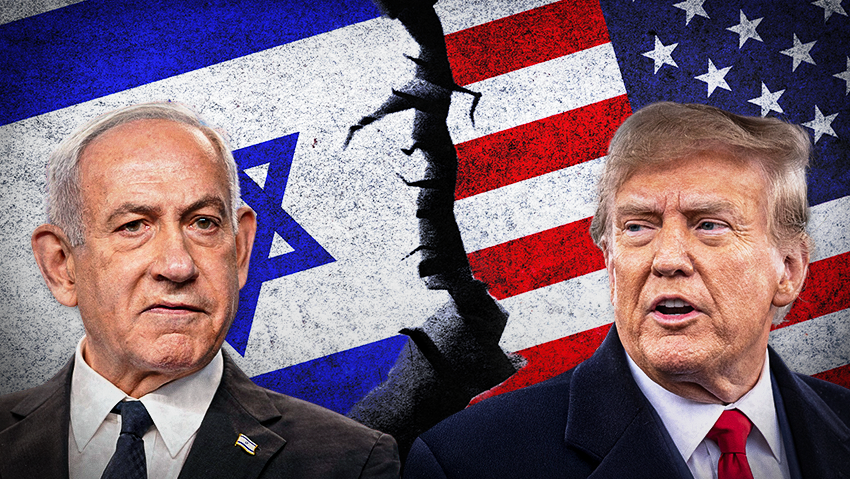
(Photo: Lev Radin/Shutterstock, REUTERS/Nathan Howard, KAWANT HAJU/AFP, Shutterstock)
Oded Mekler, head of private clients at IBI Investment House, said the local rally had been fueled by expectations that Israel’s position would improve after the war. “Since the pager operation, there have been gains on the stock exchange as part of expectations that our situation would improve,” Mekler said. “There were sectors such as defense where we could no longer understand the pricing, and insurance companies soared because of capital market gains, but in the end the pricing did not make sense.”
Yinon Nir, head of the trading room at Bank of Jerusalem, said the declines stood out precisely because they were moving against global markets. “The declines are especially notable because they are taking place in complete contrast to the positive trend on Wall Street and in Europe,” he said. “In Israel, the agreement is seen as a strategic loss that could increase the security threat and weigh on the economic burden in the long term, and this is joined by local political uncertainty. The sectors most significantly hit are finance, insurance, real estate and energy.”
Yaniv Pagot, executive vice president and head of trading at the Tel Aviv Stock Exchange, said geopolitics had overwhelmed otherwise supportive economic signals. “Geopolitics has taken over the screens,” he said. “Two days ago, the consumer price index was published and came in below forecasts, increasing the probability of an interest rate cut, and there is nothing a stock exchange likes more. U.S. markets are also in a positive trend, but the market completely ignored that.” Still, Pagot said sharp declines can create opportunities. “In periods when indices fall 10%-15%, opportunities are created,” he said. “There is hot money leaving, but there are also investors who were waiting for an opportunity.”
Mekler added that despite the selloff, he does not believe Israel’s economic situation is fundamentally bad. “I do not think our situation is bad,” he said. “Israel has high growth compared with the West, inflation is low, and in high-tech, despite some layoffs, there is also fundraising and an economy at full employment.”