

A former OpenAI engineer accused of secretly planting a recording device inside the company's San Francisco headquarters maintained frequent contact with a member of the Saudi royal family and appears to have received considerable support from the Saudi government, according to a court filing reported by CNBC on Monday.
Federal prosecutors disclosed the alleged connections as they sought to keep Abdulrahman Alfozan, 35, detained without bail. The Saudi national was arrested on October 9 and charged with using or attempting to use an electronic device to intercept private conversations inside an executive conference room at OpenAI.
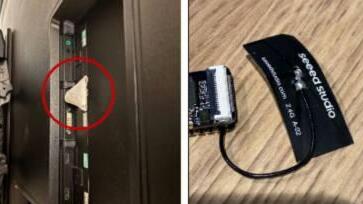
The recording device found in the conference room
(Photo: US v. Abdulrahman Alfozan, 3:26-mj-71329)
According to the filing, Alfozan exchanged WhatsApp messages with an unidentified Saudi royal throughout 2025 and 2026, with their most recent communication taking place on October 5, four days before his arrest. The royal reportedly encouraged him to join a Saudi artificial intelligence initiative and repeatedly asked when he intended to leave OpenAI.
In one May 2026 exchange, the royal wrote, "Saudi needs you more then [sic] the U.S.!" Alfozan replied, "100," according to prosecutors. When pressed about leaving the company, he reportedly indicated that he intended to remain until his stock compensation vested.
The filing does not allege that the royal instructed Alfozan to install the recording device or steal confidential information. Prosecutors have not identified the royal or established any direct connection between the Saudi government and the alleged surveillance operation.
Prosecutors nevertheless argued that Alfozan's international connections made him a flight risk, citing what they described as substantial assistance from a foreign government with no extradition treaty with the United States. Following his arrest, Saudi authorities and a Saudi military member reportedly arranged separate travel plans for his wife, Lujain Alassaf, and their infant son.
The two departed San Francisco for Doha on October 10 using business-class tickets paid for by the military member, according to the filing. Alfozan had previously booked a one-way flight to Saudi Arabia for October 12. His attorney, William Pernik, argued that the trip had been planned for family and immigration reasons and that his client's nationality should not be treated as evidence of an intention to flee.
Pernik requested release under home detention, GPS monitoring and a bond backed by additional signatories. He also said the Saudi consulate had assured U.S. authorities that it would not issue travel documents to Alfozan while he was on release.
The investigation began after OpenAI security personnel discovered a concealed recording device on September 30, connected to a USB port behind a television in a restricted executive conference room. The device, wrapped in toilet paper, had allegedly been installed two days earlier. The room was regularly used for meetings involving confidential research, product development, commercial strategies and government relationships.
Investigators said security footage placed Alfozan near the room and that an AI account associated with his wife had been used to research recording equipment, encrypted storage and remote listening capabilities. A second similar device was subsequently discovered in his bag. OpenAI fired Alfozan following his arrest.
Alfozan has not been charged with espionage or acting as a foreign agent. He faces a maximum sentence of five years in prison if convicted of the interception charge. The FBI continues to investigate the case, which has drawn national security attention amid intensifying global competition over advanced artificial intelligence technology.