

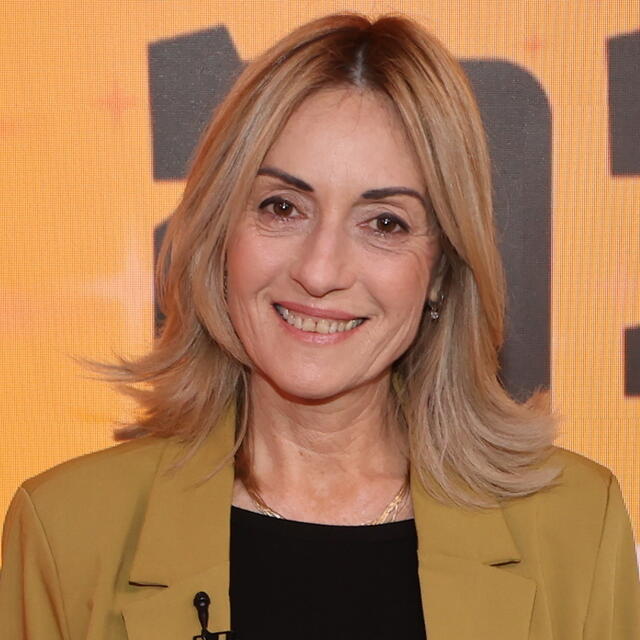
Moments before walking the runway at the Canada–Israel Fashion Week in Tel Aviv, makeup artist and businesswoman Chen Elkabetz points to her neck.
“See this? One scar here on my throat, and another running down my chest. For me, these scars are life’s tattoos,” she says with a calm smile before stepping onto the catwalk in a shimmering dress by designer Omer Michael.

With her confident, radiant presence at the Roladin-sponsored show, no one would guess that just three and a half years ago Elkabetz was fighting for her life.
“I feel more confident and at peace with myself now,” she says. “I love celebrating my femininity. That comes partly with being 41—and also from what I’ve gone through. There’s an inner maturity in me now, and inner maturity radiates beauty.”
Until that day in March 2022, Elkabetz never slowed down. One of Israel’s most sought-after makeup artists, she worked with top models, businesswomen and politicians, and was about to open her own boutique on Tel Aviv’s Kikar HaMedina. At the time, she was in a long-term relationship (since ended) and raising two young children from a previous marriage, then ages 10 and 7. She had been suffering from a persistent cough and fatigue for a while, but assumed the problem would soon be diagnosed and treated. She had no idea a ticking time bomb was growing inside her.
That day, she suddenly couldn’t breathe and collapsed. She was rushed to intensive care at Tel Aviv’s Sourasky Medical Center, where doctors discovered a large benign tumor on her thymus gland, located behind the breastbone. Her life turned into a nightmare. She was sedated, intubated and connected to a plasma exchange machine that replaced her blood. A month later, surgeons removed the tumor.

(Photo: Alon Shafranski)
“The doctor explained that because of the tumor’s size, he’d have to make a full incision down my chest,” she recalls. “Once I understood that it would save my life, the scar didn’t matter. After surgery, I was connected to tubes and a ventilator. I was fully conscious with a tube coming out of my throat, unable to speak for three months or walk for two and a half. One of the hardest moments was fasting for a week because of a swallowing issue—food could have entered my lungs. That was a breaking point.”
When did recovery begin?
“After about two months in bed, one morning I forced myself to get up and brush my teeth. That morning was the start of my strength coming back.”
How did it change your life?
“It completely changed it. When people ask if I had a midlife crisis at 40, I tell them no—because I was reborn right before 40, after almost dying. I lay in bed for months in diapers. I could see and hear, and I was grateful for that, but I couldn’t breathe on my own, couldn’t speak, couldn’t taste, couldn’t swallow.
When I left the hospital, I felt like a plant beginning to bloom again. I got a second chance at life, and everything that once seemed small suddenly meant so much. Now when I wake up and make my morning coffee, I remember how I longed to do something that simple—to take a spoon, scoop coffee, pour milk, stir and drink quietly. Every morning since, I look in the mirror and smile. I see my kids growing beside me, and I drink my coffee slowly, with gratitude.”
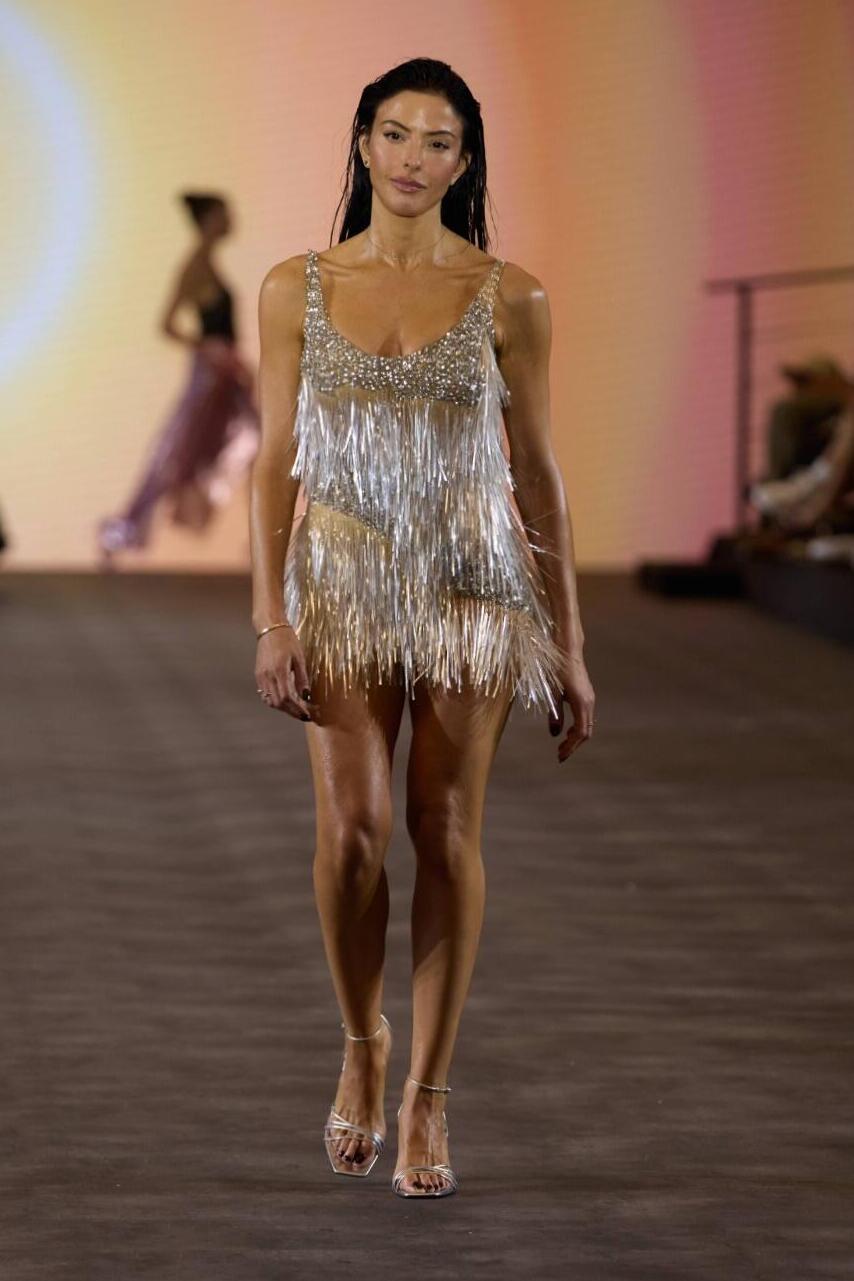
(Photo: Omri Rosengrat)
Why did you choose to reveal your scar on the runway instead of covering it?
“I left the hospital with a scar down my chest—what I used to think was the most beautiful part of my body. I got married in a deep neckline like Sophia Loren; I loved my shoulders and neck. Suddenly, there was a scar from top to bottom, plus a second one on my throat from the breathing tube.
When I first started going out, I wore high-neck tops and long necklaces to hide it. Two weeks later, I looked in the mirror and said to myself, Chen, what does it matter? Whoever looks at you sees you—not your scar. Kiss it; it’s why you’re alive. There’s a Chen from before hospitalization and a Chen after—and the one after is far more interesting. On that runway, I walked with pride. I felt like a bride, and for once I experienced what my models feel.”
Still, you work in a beauty world that idolizes flawlessness.
“True. At first, I was afraid of how I’d look. But I realized appearance and confidence come from within. During my three months in the hospital, what preserved my identity was self-care. People often dismiss beauty as superficial, but for millions of women, putting on a face mask or makeup is an act of life.
So every day in the hospital, after washing my hands, I kept my routine: shower, get dressed in clothes my sisters and friends brought me, put on a little makeup. It helped me stay myself.”
Inspired by Shari Arison
Born and raised in Jaffa’s G neighborhood, Elkabetz is the middle of three sisters. She says her drive to overcome obstacles and chase success comes from her mother.
“My mom always pushed us to be the best, to aim for excellence and never to let anything block our ambitions,” she recalls. After majoring in communications in high school, Elkabetz served in the IDF as an aide to Maj. Gen. Giora Eiland, then head of the Planning Directorate. “My dream was to study business administration—to be a kind of Shari Arison,” she says with a smile.
But as John Lennon put it, “Life is what happens while you’re busy making other plans.”
“Exactly. I discovered the magic of makeup at 15, when I worked as a beauty sales rep one summer. I was fascinated. I bought some products and started doing my friends’ makeup. After the army, I began to develop it seriously—training with leading artists, traveling abroad for master classes, studying fashion magazines. My goal was to understand how I wanted to be made up, so I could shape my own identity as a makeup artist.
“I was just a 21-year-old who decided to be the best—and I became one. So maybe I didn’t become Shari Arison, but my talent and passion won out. I became a businesswoman who turns creativity into enterprise. I sell people my dream—and give them a little piece of me.”
Alongside her work glamming up celebrities like Moran Atias, Yael Bar Zohar, Sandy Bar, Eden Ben Zaken, Agam Buhbut, Noa Tishby, Rita, Riff Neeman and even Mariah Carey during her visit to Israel, Elkabetz began developing her own luxury makeup brand, High-End.

Elkabetz and Moran Atias
(Photo: Courtesy)
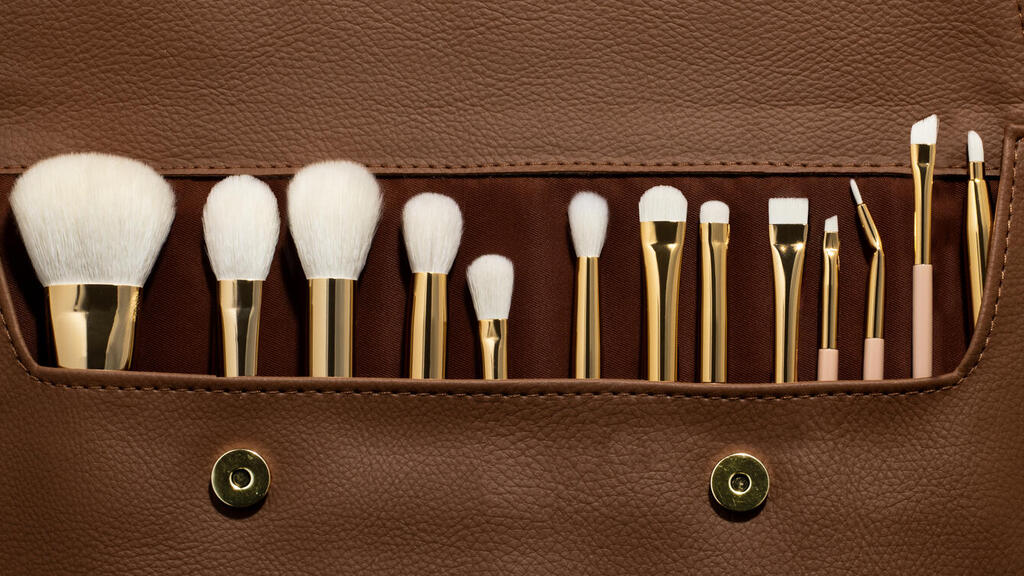
The brand started with handmade natural hair brushes crafted to the standards of top international labels. “The DNA of the brushes,” she explains, “is what I call the science of movement—each one designed with precision and a personal touch, like a master artist’s brush. I built this brand as a mission: to give women the tools to illuminate themselves.”
'It’s important my kids grow up in a home that smells like cooking'
She launched her first brush in 2017, then added two more in 2019 for concealer and contouring. A year ago—after being discharged from the hospital—she introduced Project Ten Brushes, a new collection of eye and lip brushes, plus a custom carrying case. She also developed a line of blushes and lipsticks.
“I kept working nonstop,” she says. “I did campaigns, developed my brand, and even opened a store in Jaffa’s flea market. The pandemic disrupted things a bit, but online sales were great. After COVID, I decided to open a boutique on Kikar HaMedina. A month before opening, I collapsed and was hospitalized. My family begged me to slow down, but even on a ventilator, I knew I wouldn’t give up on my dream.
"One day, my sister Sapir told me a shipment of brushes I’d designed before I got sick had just arrived from FedEx. I don’t believe in coincidences—so even in intensive care, I decided I would sell them. Everyone said I was crazy, but it gave me purpose. That project helped heal my mind. I kept developing it for a year, and then the war started—but I didn’t give up. That’s part of my message: to believe in yourself, to know everything is possible, and to never quit.”
Did you ever try to take your brand global?
“Of course. I got offers from global chains like Macy’s and Sephora, but then COVID hit. Last year, I met a wealthy friend abroad and showed him my brushes and another concept I’d developed. He told me I had gold in my hands. He’s a real estate tycoon, but he saw that I know how to create a product and wanted to help me expand in Europe.
"We flew to Germany, met with lawyers, built my brand story and negotiated for months. But when the war broke out, it fell through. I was told—very politely—that having an Israeli brand name could be a problem. I refused to give it up. My Israeli identity is part of who I am, and I am the story. When talks were frozen, I came home and decided to focus only on Israel. There’s a time for everything, and as a businesswoman, you also need to know when to stop. Now my brand is sold on Terminal X and BE chains, and sales—both there and on my site—are excellent. I haven’t abandoned the dream of going global, but my base will always be here.”
Your products aren’t cheap. Do people still buy premium brushes and lipsticks during wartime?
“It’s been tough, no doubt. But I don’t overreach. I create premium products that have no equal, and people appreciate quality. These aren’t just brushes—my blush collection makes your skin feel like a dream.”
Elkabetz also collaborates with her sister, a professional cosmetician, and recently opened a shared makeup suite at her clinic. “To our surprise—and joy—we work beautifully together,” she says. “The place is thriving. I’ve learned what’s worth my energy and money. One of my biggest lessons since leaving the hospital is to always stay where I feel good—and to keep dreaming, but at a slower pace.”
That same self-loyalty guides her personal life. She divorced the father of her two children in 2018 after a relationship that began when she was 17 and has since had two other meaningful relationships. “I’m not in a relationship now, but I’m not alone either—I meet new people, and I have myself,” she says. “My ex-husband and I are on great terms; we share harmony and celebrate holidays and Shabbat together. I parted from my last partner because we both understood it was time. I love love, and I believe it will come again.
"Overall, I’m in a good place—working a lot, my brand is doing well and I’ve gotten new offers to sell in international department stores. I’m considering them carefully. I think this year I’ll finally realize the global dream—but I’m doing everything thoughtfully. It’s important to me to cook for my kids, to keep a home filled with the smell of cooking. My business and passions matter, but my peace of mind comes first. I’m weaving my dreams gently—because above all, inner peace is what truly makes life beautiful.”