

It seems something aligned in the stars for “Margo’s Got Money Troubles,” which premiered yesterday on Apple TV: just 22 months after the release of the book it is based on, it has already made it to the screen. In the time it takes a producer to choose between almond or oat milk, Rufi Thorpe’s novel — about a single mother who turns to OnlyFans to support herself while fighting for custody of her son — has already landed at the heart of a long-running debate over the platform, which supports many women but remains, in one way or another, part of the sex industry.
The debate dates back to the phenomenon of students engaging in sex work to pay tuition, often framing it as female empowerment — now with full control over content and income that allows financial independence. On the less glamorous side, it is hard to ignore that economic pressure pushes women to use their sexuality as a means of survival.
Margo Millet (Elle Fanning) is a young student who aspires to become a writer, but makes a familiar mistake: she becomes pregnant by her very married literature professor, Mark (Michael Angarano). In a telling display of cowardice, Mark offers to pay for an abortion and cuts off contact. Margo, in a moment of naivety or stubbornness — or both — decides to keep the baby. She quickly discovers that life as a young, broke single parent is a fragile and unforgiving equation. She drops out of school, loses her waitressing job and is abandoned by her two roommates, who cannot handle the baby’s crying, leaving only her close friend, Susie.
In the background is Margo’s complicated family story. Her mother, Shy (Michelle Pfeiffer), is a single mother herself who knows all too well what it means to raise a child alone. A working-class homemaker and former Hooters waitress, she is reluctant to help raise the baby and careful not to form an emotional attachment. She is also torn between Margo’s unconventional situation and her conservative fiancé, churchgoer Kenny (Greg Kinnear). The third figure is Jinx (Nick Offerman), a former wrestler and recovering opioid addict, who shows up at Margo’s door just as her fridge empties and becomes the baby’s devoted caretaker. These tensions later resurface as Margo struggles to prove she is a fit mother.
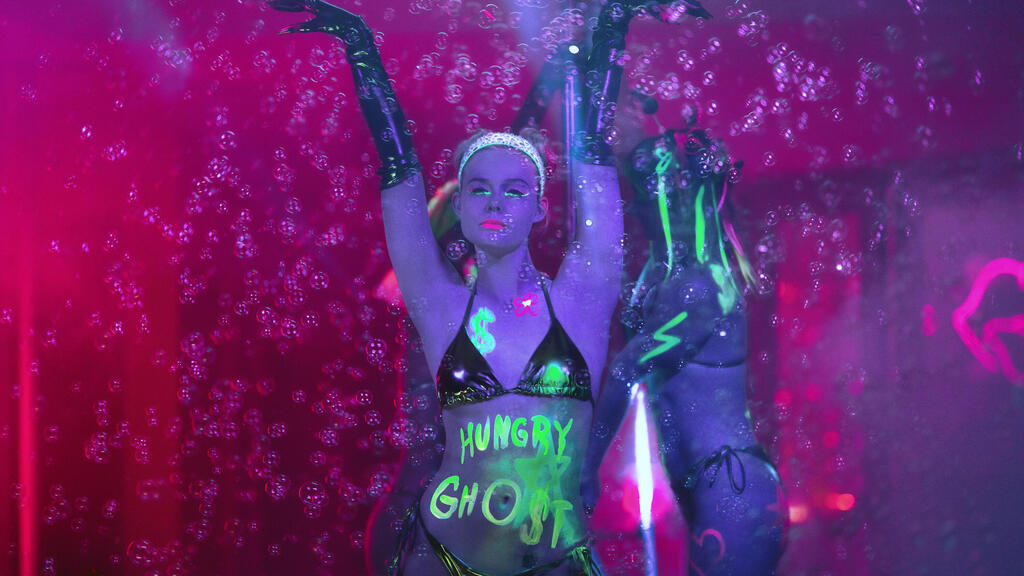
“Margo’s Got Money Troubles” is not without flaws. In depicting Margo and the persona she creates on OnlyFans — a green alien named Hungry Ghost — the series strives to remain in a gray, nonjudgmental space. It cleverly draws parallels between professional wrestling and OnlyFans: Margo is essentially crafting a character rather than “selling” herself, raising the more relevant question not of morality but of who holds power within the system. Yet when the choice is between OnlyFans and hunger or losing custody of your child, the notion of “choice” loses its empowering edge and takes on a more bitter tone. Ultimately, the show’s reluctance to take a stance makes OnlyFans appear almost like an eccentric drama club or just another platform enabling Margo to become the writer she always wanted to be — albeit with a sexualized twist — while sidestepping the reality that it is part of the sex industry, even if on its more creative fringes.
This is compounded by the show’s very slow start: the plot only begins to take shape in the third episode, and until then, viewers are wading through extended exposition — not necessarily bad, but potentially tiring for those who prefer clarity early on.

From ‘Margo’s Got Money Troubles’
(Photo: Courtesy of Apple TV+)
Fortunately, the series benefits from a superb central cast. Pfeiffer once again demonstrates her range, delivering a performance markedly different from her recent role in “The Madison” (in contrast, Nicole Kidman, as the wrestling lawyer Lace, fails to fully flesh out her character). Notably, this marks Pfeiffer’s first collaboration with series creator David E. Kelley — her husband of 32 years.
Even if it treads carefully around OnlyFans, “Margo’s Got Money Troubles” succeeds in offering a realistic and witty portrayal of the challenges of new motherhood, financial hardship and the mistakes of youth. Much of the credit goes to Fanning — who also narrated the audiobook — whose versatile and compelling performance conveys the character’s inner world with ease, no small feat in a literary adaptation. The writing, too, strikes a precise balance between emotional depth and lightness, blending original comedic drama with an intimate, thoughtful portrait of female survival in the digital age — ideal for viewers looking to spend a few hours engaged without sacrificing their brainpower.