

After roughly 15 years of unchallenged dominance by Marvel Studios and DC Comics over American commercial cinema and its television offshoots, and against the backdrop of their films’ spectacular recent decline at the box office, it is now possible to declare that the superhero genre’s bluff has been exposed.
Superhero characters and their backstories have thrived for years in comics, and on screen too, but not because of a winning formula rooted in the genre’s narrative and visual conventions. What is becoming clear, belatedly, is that the success of superheroes came from the superheroes themselves. But only the biggest ones: the beloved, universally recognizable figures with deep roots in popular culture. Batman, Superman, Spider-Man, Captain America, Thor, Wonder Woman, Iron Man, the Hulk, Black Panther and a few other chosen ones.
Now that their glory has been squeezed dry on the big and small screens, studio chiefs have been forced to refresh their character rosters. The audience, however, is not interested. They came for the VIPs.
From the start, it was naive, and perhaps arrogant, of Marvel president Kevin Feige and the rotating leadership at DC Comics, currently James Gunn and Peter Safran, to think the superhero genre was bigger than the celebrity lineup that had led it for nearly a century and become a fixture of popular culture. They hoped to cultivate a new generation of characters, from Madame Web to the Suicide Squad, but aside from the Guardians of the Galaxy in Gunn’s successful adaptation, those experiments have mostly disappointed.
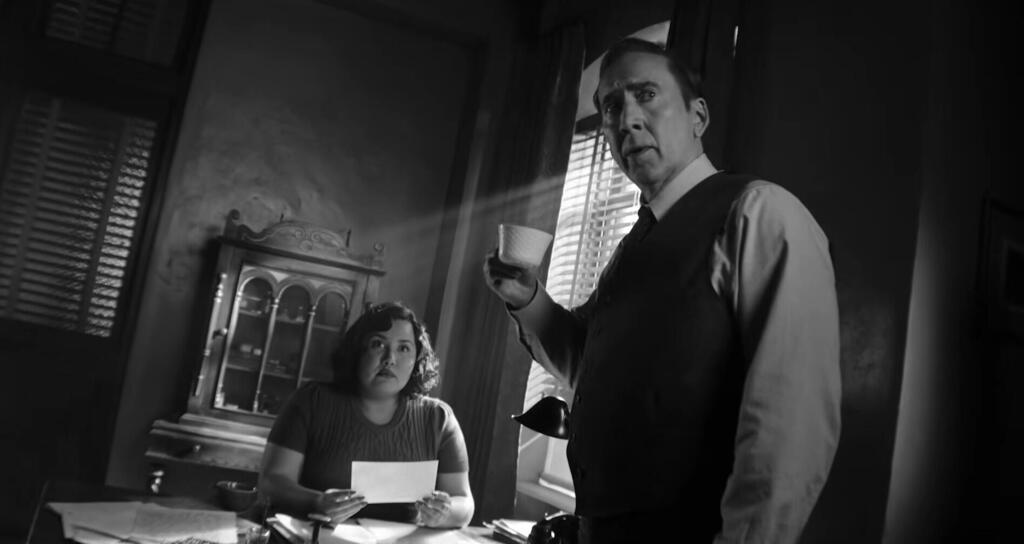
But wait: With so many cultural products devoted to elite superheroes such as Batman and Spider-Man on page and screen, how is it possible that they still have not been exhausted? Comic book editors have dealt with that challenge from generation to generation by rebooting the same characters with updated versions guided by different creators, producing varied adaptations of their stories. But it always feels forced and arbitrary, almost unfair to the character’s imagined universe. Then came the creative solution: creating different, parallel universes.
Hollywood recognized the need to reboot characters in order to keep them at the center of fans’ attention for so long. Batman, for example, was born in comic books in 1939, but today, at 87, he remains preserved and beloved across his film and television versions: the stylized one shaped by Tim Burton in his 1980s trilogy, played by Michael Keaton; Christopher Nolan’s weighty version, “The Dark Knight,” with Christian Bale; Zack Snyder’s missed opportunity with Ben Affleck; and Matt Reeves’ brooding take with Robert Pattinson.
Spider-Man has gone through similar incarnations over the years, allowing Peter Parker to remain Peter Pan, fresh and forever young. At the same time, the Sony-owned character was handed to the clever creative duo Chris Miller and Phil Lord, who adopted the parallel-universe strategy. They did so in the animated hits they produced, “Into the Spider-Verse,” and now in the new series “Spider-Noir,” released on Amazon Prime.
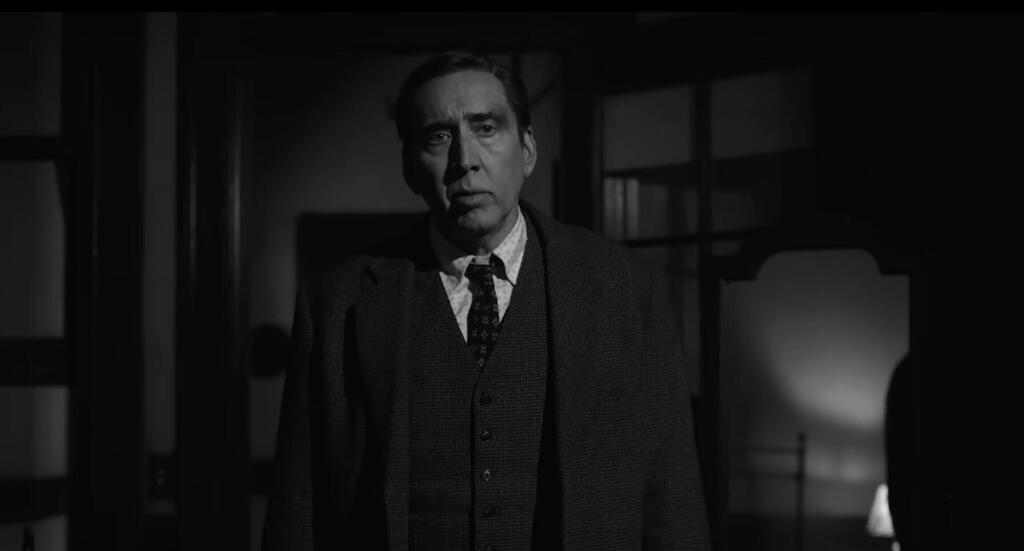
(Photo: Amazon Prime)
In the case of “Spider-Noir,” producers Miller and Lord, together with series creator and American screenwriter Oren Uziel, whose Israeli roots remain in the background, do not update the character of Spider-Man. Instead, they introduce us to a completely different version of him in another universe and another time.
The plot takes place in 1930s New York, during the Great Depression in the United States, and its main character is an aging man named Ben Reilly, played by none other than Nicolas Cage. A confession he makes at the start of the opening episode makes clear that he is the local superhero of the period: Spider-Man. He speaks of the loss he suffered and the existential crisis that has accompanied him since, which led him to leave behind his former life as the official urban savior of the Big Apple and hide the spider suit away.
This is a bitter, cynical man who, instead of making his presence felt as a superhero on the Manhattan skyline, prefers to stay hunched over, close to the ground or beneath the surface, as a private detective for hire. Not a particularly successful one.
Uziel and co-writer Steve Lightfoot took on the task of adapting the character created by comic book writers David Hine and Fabrice Sapolsky in 2009. But his traits are borrowed almost entirely not from today’s popular superhero genre, but from film noir, the style that dominated Hollywood in the mid-20th century: the frustrated, tormented private detective whose glory days are behind him and who is simply trying to survive financially and mentally; corruption everywhere, from the city’s criminals to its leaders, who are often intertwined; the loyal, kindhearted secretary who devotes herself to a boss who does not always pay her properly; and, of course, the femme fatale, the mysterious, seductive woman who asks for help as an innocent client while hiding the scheme in which she is involved.
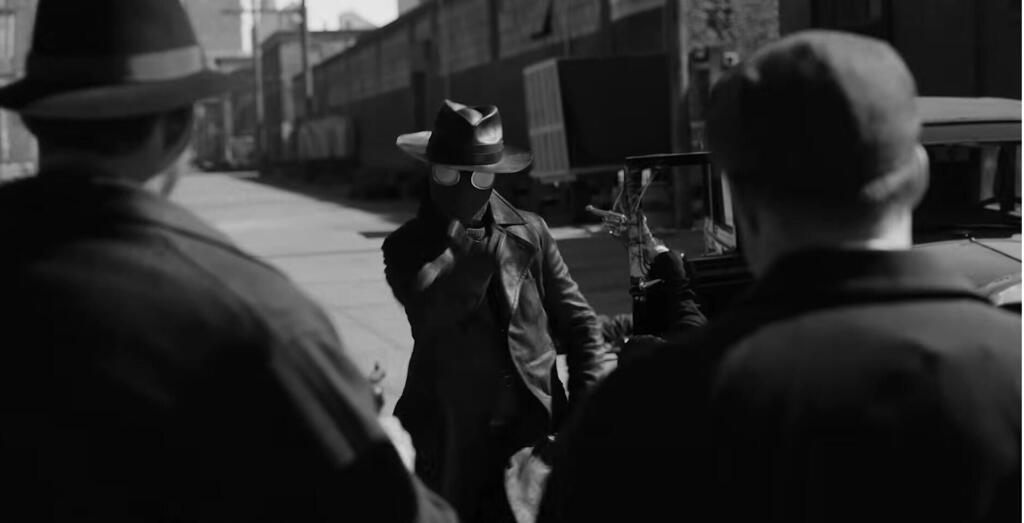
(Photo: Amazon Prime)
All these elements are woven into “Spider-Noir.” But what about superpowers, action and all that? Good question. Without Reilly’s confession at the start of the first episode, and the occasional splatter of webbing shooting from the hero’s arms, it would be hard to identify him as a superhero.
The challenge Uziel and Lightfoot took on in fusing the two genres is interesting and, at the very least, ambitious. To draw us into the world in which the story unfolds, one that echoes historical reality as well as film noir conventions, the creators present events in black and white, as if lifted directly from Billy Wilder’s “Sunset Boulevard,” Carol Reed’s “The Third Man” or John Huston’s “The Maltese Falcon.” There is also an option to watch the series in color.
In this case, however, the hero is not only a private detective pulled into a complicated rabbit hole, but a retired superhero in disguise who denies his past and his role as the city’s guardian of law and order.
The developments that force him back into his spider lair stem from fleeting appearances by unknown men, discharged soldiers with superpowers. Somehow, it is clear that they are part of a larger plot tying together the arch-criminal villain Silvermane, played by Brendan Gleeson; his cunning aide Winston, played by Lukas Haas; bar singer Kat Hardy, played by Li Jun Li; and her security guard-lover Flint Marko, played by Jack Huston.
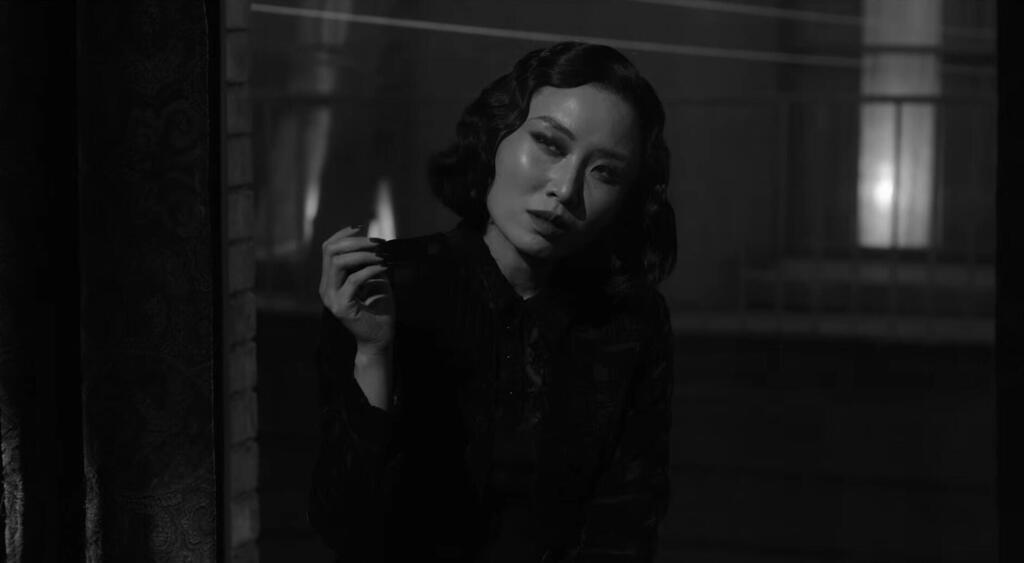
(Photo: Amazon Prime)
“Spider-Noir” seeks to reintroduce us to Spider-Man, much as “The Dark Knight” did with Batman. Like Batman, he is older, bitter and tormented by personal loss. Unlike Bruce Wayne, he tends to lighten the mood and maintains his sarcasm even in moments of crisis. He also has friends in times of need, including his loyal secretary Jeanette, played by Karen Rodriguez, and investigative journalist Robbie Robertson, played by Lamorne Morris.
“Spider-Noir” is a kind of genre hybrid, one that has worked before and may work here too, at least for fans of detective thrillers. Much depends on how fond you are of Nicolas Cage. He nearly broke through as Superman in Tim Burton’s failed 1996 attempt to reboot the character, and starred as Johnny Blaze in the “Ghost Rider” films about a decade later. He seems far more comfortable in a role that echoes Humphrey Bogart, except that his Humphrey Bogart still has to jump, leap from skyscrapers and throw punches.
Cage has been here before as an aging action star, and he does not mind making himself ridiculous. If you do not mind either, you may enjoy it.
First published: 09:50, 05.28.26