

About five years ago, the announcement that actresses Sophia Bush, Hilarie Burton and Bethany Joy Lenz intended to host a podcast about “One Tree Hill,” the series in which they starred, put an entire generation raised on early-millennium teen dramas on high nostalgic alert. Within days, the promo for the podcast, “Drama Queens,” which featured a theme song composed and performed by Lenz, climbed to the top of the Spotify and Apple charts. It was clear that although the series premiered more than two decades ago and ended more than a decade ago, interest in it had not faded — whether because of the show itself or because of the three women who stood at its center for years. Now, with all of its seasons arriving on Netflix, the conversation about what happened behind the scenes is only intensifying.
The idea for the podcast, initiated by Bush, resembled other recap podcasts: The three watched the episodes after admitting they had never seen them in full — and that the ones they had seen were viewed about a decade earlier — offered their perspective on what went on behind the scenes and hosted colleagues and crew members who could broaden the picture. This was not the first time the women had reunited in connection with “One Tree Hill” since it went off the air in 2012, but the previous occasion carried no small amount of emotional baggage. In 2017, together with 15 other women, the three signed a statement accusing the show’s showrunner, Mark Schwahn, of sexual harassment and creating a toxic work environment. The podcast became another opportunity for them to discuss the events of the past, heal their trauma and reclaim their power, as Bush said at the start of the broadcast.
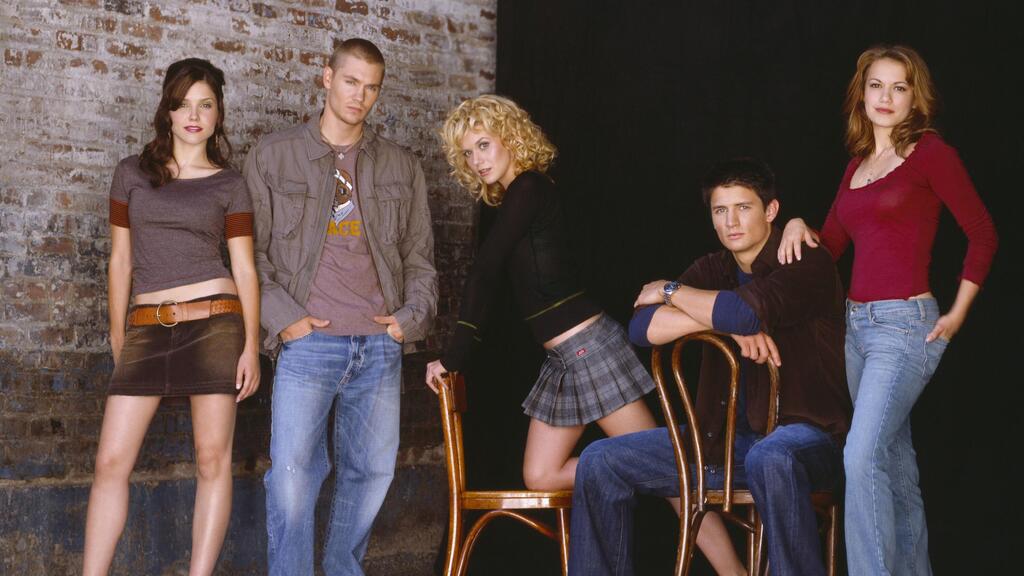
On the face of it, “One Tree Hill” was not different from other telenovela-style teen dramas that emerged in the early 2000s — “The O.C.,” “Gilmore Girls,” “Dawson’s Creek” and “Veronica Mars.” Like them, “One Tree Hill” offered a warm home to attractive teenagers in high school, maneuvering through complicated relationships and, most of the time, having the kinds of soul-searching conversations usually reserved for adults. But in that ocean of shows, “One Tree Hill” consistently invested in storylines that were simple on the one hand and in rounded, flawed character development on the other, creating a viewing experience that felt unusually close to reality.
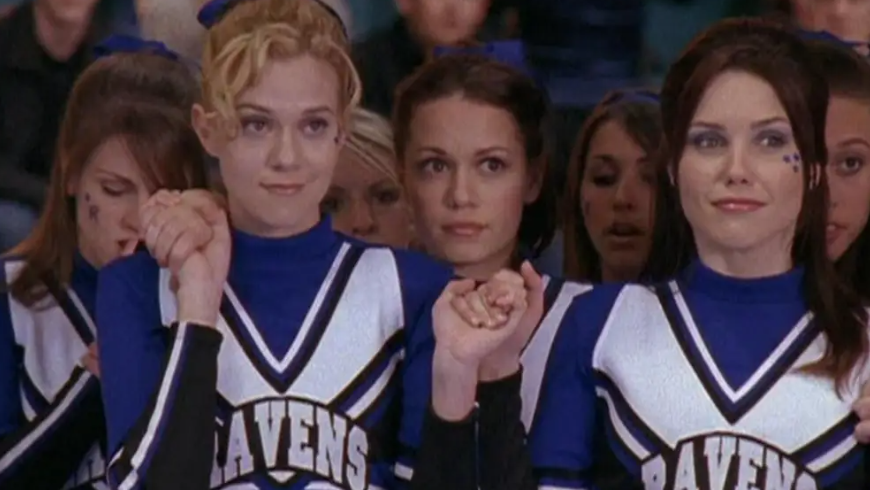
From 'One Tree Hill'
(Photo: Screenshot)
The television gods rewarded it with longevity: Its nine seasons built a loyal fan base that remains interested in it to this day, thanks in part to its presence on the streaming service Hulu and to the wave of nostalgia that arrived with the COVID pandemic. Beyond global chaos, the pandemic also brought a surge of past series revived through reunions, reboots and podcasts. “Drama Queens” brought them back to the fictional town of Tree Hill, to the complex relationship between half brothers Lucas Scott (Chad Michael Murray) and Nathan Scott (James Lafferty) — both with each other and with the characters around them.
The road for “One Tree Hill” was not easy even while it was still on the air. After three seasons on the American network The WB, it moved to a new network, The CW, which housed many of the popular teen series of the time and repeatedly mishandled its time slots in a way that made it difficult for fans to follow. More than that, after the four high school seasons ended, the creators decided to adapt the script to the actors’ ages, skip the college years and jump the series straight from high school to adult life — another element some viewers had trouble adjusting to.
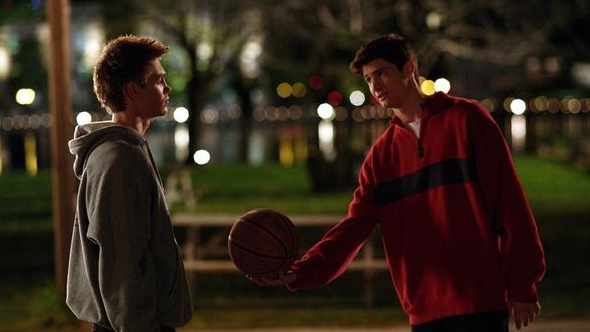
From 'One Tree Hill'
(Photo: Screenshot)
Another blow came at the end of the sixth season, when two of the show’s leading stars, Chad Michael Murray and Hilarie Burton, announced their departures. Although their love story had been one of the central storylines, the production continued without them until the ninth and final season, which aired in 2012. But while rumors held that the two left because of a financial dispute, the real reason emerged only years later: Schwahn was accused by several women on the production of touching them without consent, speaking in a sexually explicit and crude manner, emotionally abusing actors and crew members and creating a toxic work environment.
The cases first came to light when writer Audrey Wauchope (“Crazy Ex-Girlfriend”) posted on her Twitter account in 2017 about the harassment she experienced on the first set she ever worked on — that of “One Tree Hill.” In her tweets, Wauchope did not explicitly name Schwahn, but anyone familiar with the people involved knew who she meant. According to her, the creator regularly spoke to women on set in a sexually explicit and crude manner, touched her and another writer in intimate ways and showed nude photos of the actress he was dating at the time to anyone unlucky enough to cross his path. That tweet, it turns out, led Sophia Bush and Hilarie Burton to initiate a statement signed by 18 women from the show’s cast and production, explicitly accusing Schwahn of creating a work environment rife with sexual harassment.
“Many of us were, to varying degrees, manipulated psychologically and emotionally. More than one of us is still in treatment for post-traumatic stress,” the statement said. “Many of us were put in uncomfortable positions and had to swiftly learn to fight back, sometimes physically, because it was made clear to us that the supervisors in the room were not the protectors they were supposed to be,” they wrote, adding that Schwahn’s behavior was an “open secret” on set.
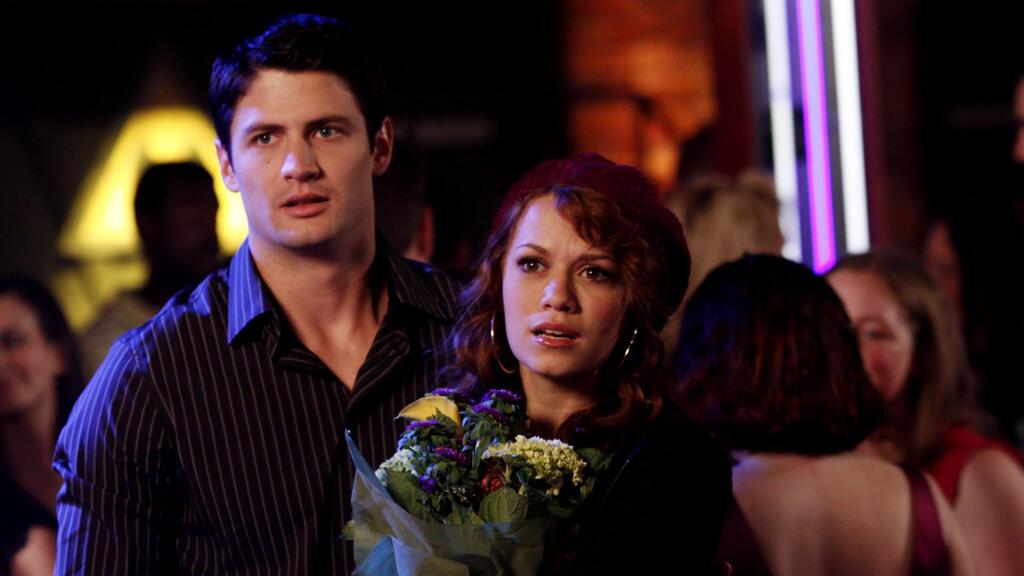
From 'One Tree Hill'
(Photo: TM & © 2009 Warner Bros. Entertainment Inc. All Rights reserved)
“The through line in all of this was, and still is, our unwavering support of and faith in one another. We confided in each other. We set up safe spaces to talk about his behavior and how to handle it. To warn new women who joined our ranks,” the statement said. “‘Many of us were told, during filming, that coming forward to talk about this culture would result in our show being canceled and hundreds of lovely, qualified, hard-working, and talented people losing their jobs. This is not an appropriate amount of pressure to put on young girls. Many of us since have stayed silent publicly but had very open channels of communication in our friend group and in our industry, because we want Tree Hill to remain the place 'where everything’s better and everything’s safe' for our fans; some of whom have said that the show quite literally saved their lives. But the reality is, no space is safe when it has an underlying and infectious cancer.”
Schwahn, who was working that year on the E! series “The Royals,” did not respond to the allegations. The network, however, said it was “monitoring the information carefully” and was committed to providing a safe working environment for everyone. It later removed Schwahn after a group of 25 cast and crew members from the series published a joint letter in which they said Schwahn had “chosen to abuse the power and influence he had in a manner that manifested in repeated sexual harassment of multiple women on the cast and crew.”
'Every girl on the show was written as a hooker with a heart of gold'
The MeToo movement erupted in 2017, but a few months before Alyssa Milano posted the hashtag that swept the West, Sophia Bush left the series “Chicago P.D.,” whose set had become toxic in a way similar to that of “One Tree Hill.” Bush said during an appearance on model Ashley Graham’s podcast “Pretty Big Deal” that she had fought that battle before the industry had begun openly discussing such behavior. She added that she found it striking that when she spoke about what happened to her, she was treated as the one causing trouble rather than the person who had put her through it.
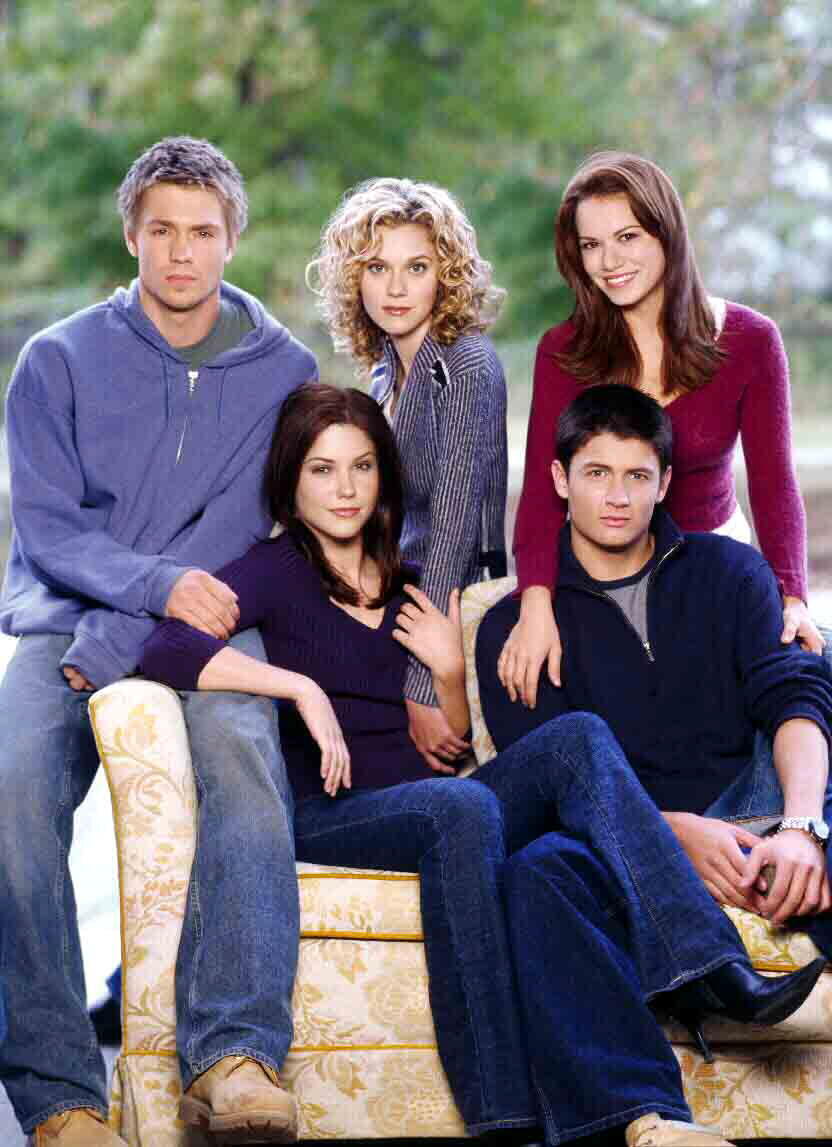
Cast of 'One Tree Hill'
(Photo: Courtesy of yes weekend)
Like many actors who play high school students in teen series, Bush was in her early 20s when she was cast — not a child, but she and the other actresses and actors were still the youngest people on set. She told Graham how she often had to fight Schwahn and the other writers, most of them men, when they repeatedly wrote scenes for her in which she was wearing underwear. Bush said she did not recognize the power dynamics at the time and simply refused to do the scenes, telling them to stop writing such material for her. She said that while she did not yet fully understand how inappropriate it was, she did understand that the show should not be teaching 16-year-old girls to seek validation in that way.
Schwahn’s response, she said, was appalling. “He just said to me, ‘You’re the one with the huge rack everybody wants to see.’” A shocked Bush came to the next day of filming in a turtleneck and told Schwahn that this would be her wardrobe from then on if the revealing scenes did not stop. The sexist approach can also be seen clearly in the show’s promotional photos, in which Bush is dressed in a tiny black dress and Burton in a bra and underwear, while the men are dressed in full suits. “Every girl on the show was written as a hooker with a heart of gold,” Burton told Cosmopolitan. “I was a square all through high school, so when I had to go back and do high school for the second time for One Tree Hill and my character was, like, walking out of the shower with her boyfriend, I thought, ‘What? What are you talking about?!’” The actress, who like Bush was cast on the show at a young age, added that “there was a lot of, like, senseless underwear action, and when everyone on set is a real adult, they forget that the viewer at home thinks this is a 15-, 16-, 17-year-old, and so that creates a new normal for those 'real' 15-, 16-, 17-year-olds.”
Another storyline she would rather forget is that of “Psycho Derek,” the stalker who attacked her character, Peyton, several times. In her 2020 memoir, “The Rural Diaries,” Burton writes that she was 24 when producers told her ratings and male viewership had risen significantly after her character was punched in the face by a man, and that male viewers liked seeing her brutalized. She said it infuriated her that her bosses celebrated that response. In the book, she describes candidly her years on the series, the details of how she met actor Jeffrey Dean Morgan (“The Walking Dead”), now her husband, and the difficult years they spent undergoing fertility treatments as they tried to conceive their second daughter. Writing about her time on the set of the teen drama, Burton described a villain in her own fairy tale who turned actresses against one another, pushed them into unnecessary sex scenes that left her feeling weak and ashamed, instructed young actresses to emphasize their breasts, touched her body, forced himself on her and kissed her without consent.
'We were the boys’ accessories'
The harassment by Schwahn was not the only manipulation directed at the actresses on set, and on various occasions they have recalled attempts to turn them against one another in a divide-and-conquer fashion. Burton said during an appearance on the “Chicks in the Office” podcast that many people tried to create conflict between them, often suggesting that if Hilarie refused to do something, Sophia would agree to it. Bush said in an interview on the same podcast that it was difficult to navigate as a young person while constantly being compared with someone else, adding that while there were adults on set whom they trusted at the time, they now understand those people were controlling and manipulative. She said they did not want the women to be close because they feared they would unite and demand more money. But the women of the cast were able to stand up to their former boss because they created a united front and a close bond, one that continues to exist years later. Burton told Entertainment Tonight that the cast members all love one another and that their problems were with the show’s creator, something she said was no secret. Referring to fans’ hopes for a reboot, she added that any return would have to come from a positive place.
The close friendship between Sophia Bush and Hilarie Burton, and between the characters they played — Peyton and Brooke — was, according to Burton, “the real love story of the show.” “The love stories with all the boys were fun and important, but Sophia and I had to fight for our friendship,” she told Ashley Graham. The two, who were born seven days apart, both arrived on the series at age 20 and experienced their big professional breakthrough together.
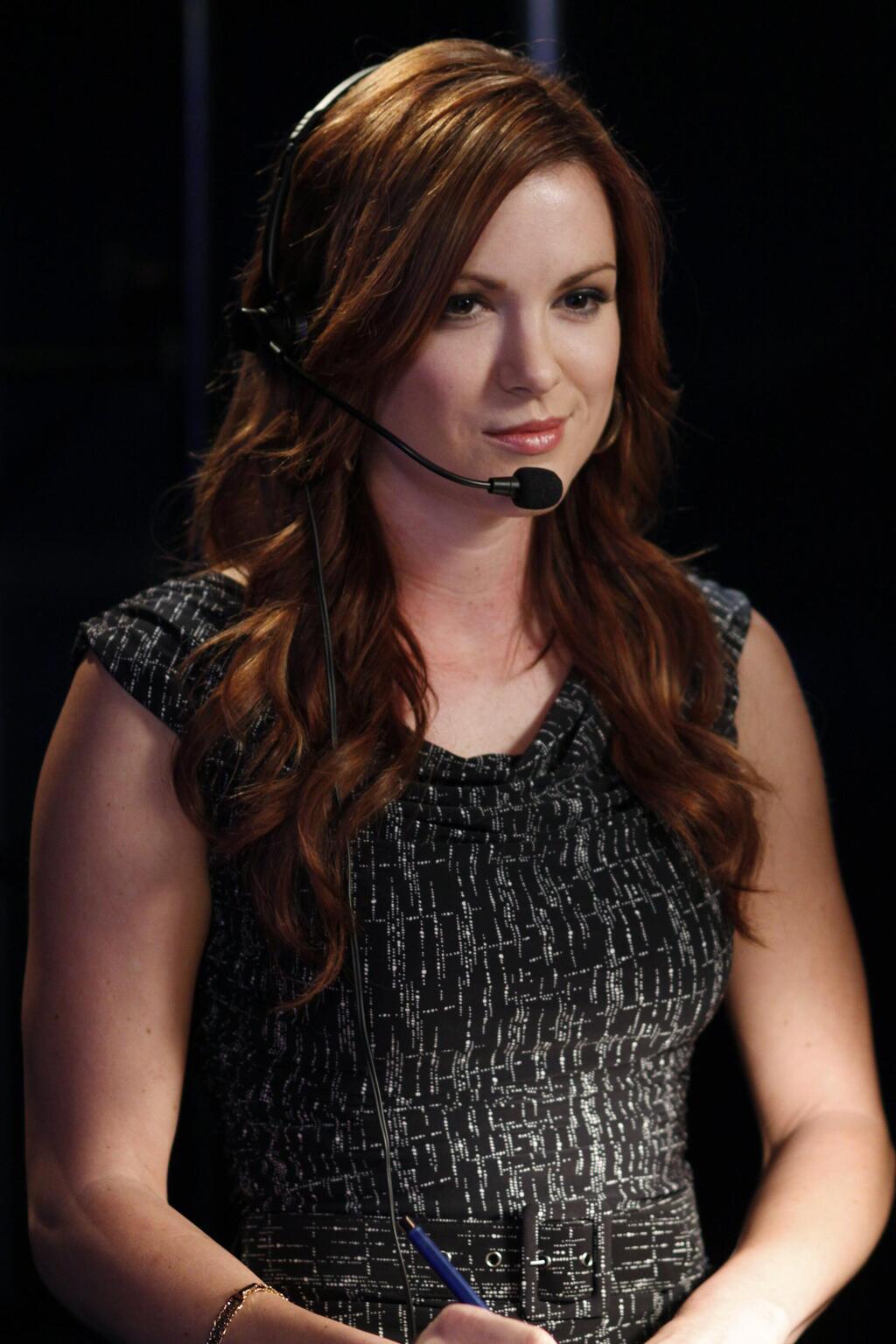
Danneel Ackles, from 'One Tree Hill'
(Photo: ™ & © Warner Bros. Entertainment Inc.)
Under the cover of his impulse to undress his stars, Schwahn created an episode in the fourth season in which Burton, Bush and Danneel Ackles, who played Rachel, posed for a cover shoot for Maxim magazine. When they revisited the episode on “Drama Queens,” they recounted what happened behind the scenes. The episode aired in 2006, and a month later the three received a cover in the real magazine — against their wishes and after immense pressure from the production, in another attempt to bring male viewers to the show. Bush said Brooke became increasingly sexualized over time and that she tried to push back, telling Schwahn that if the others wanted to pose, they could, but that she did not want to take part. She said the response she received was unmistakable: If she refused to do the shoot, the production would never release her for press interviews, film shoots or events, effectively keeping her there "forever".
Schwahn summoned Burton to his office and continued the humiliations. “All the other actresses were on magazine covers, but nobody wants you,” he told her. “‘Now that someone finally wants you, you’re going to turn your nose up at it?’ The message was: If you don’t start generating some buzz and attracting viewers, the studio will cancel the show and all your friends will lose their jobs,” she said. Lenz, who played Haley on the series, shared that as part of the divide-and-conquer tactics, she was told the other actresses were posing for Maxim and that she had been “replaced” by Ackles. “They said they didn’t come to me because I was too fat,” she said. “I was no longer a hot girl on the show.” A stunned Burton and Bush said they had been told that Lenz had refused to pose with them for the magazine. “They made you the scapegoat so they could tell the three of us that we couldn’t say no,” Bush said. “We weren’t angry with you, but it upset us.”
That incident came after an episode in which Rachel calls Haley “a fat girl with a little head.” Lenz recalled on the podcast that the line felt completely random when she read the script, and that she remembered thinking it must have reflected what Mark thought of her. From then on, she said, every time she looked in the mirror, she began wondering whether she was fat and whether her head was small. She said that from that point forward, she felt she had been placed in the category of a middle-aged mother, while the more sexual material was reserved for the others because she was seen as boring and fat.
“It didn’t escape our notice that the female characters on the series didn’t have parents,” Bush added, “unlike the boys, who were characters with a full parental presence. We were treated like an early-2000s version of puppies or purses — we were the boys’ accessories.” According to Lenz, growing up together on set and the real-life friendship they created were what saved them: “We needed real, authentic female friendship, and it came at the right place and the right time.” Their bond is also what turned the podcast into a success story: Across the 187 episodes recorded, they are candid and funny, reveal anecdotes and secrets from the series and revisit the filming experience, both the good and the bad. Over time, the format became a kind of therapeutic territory for them.
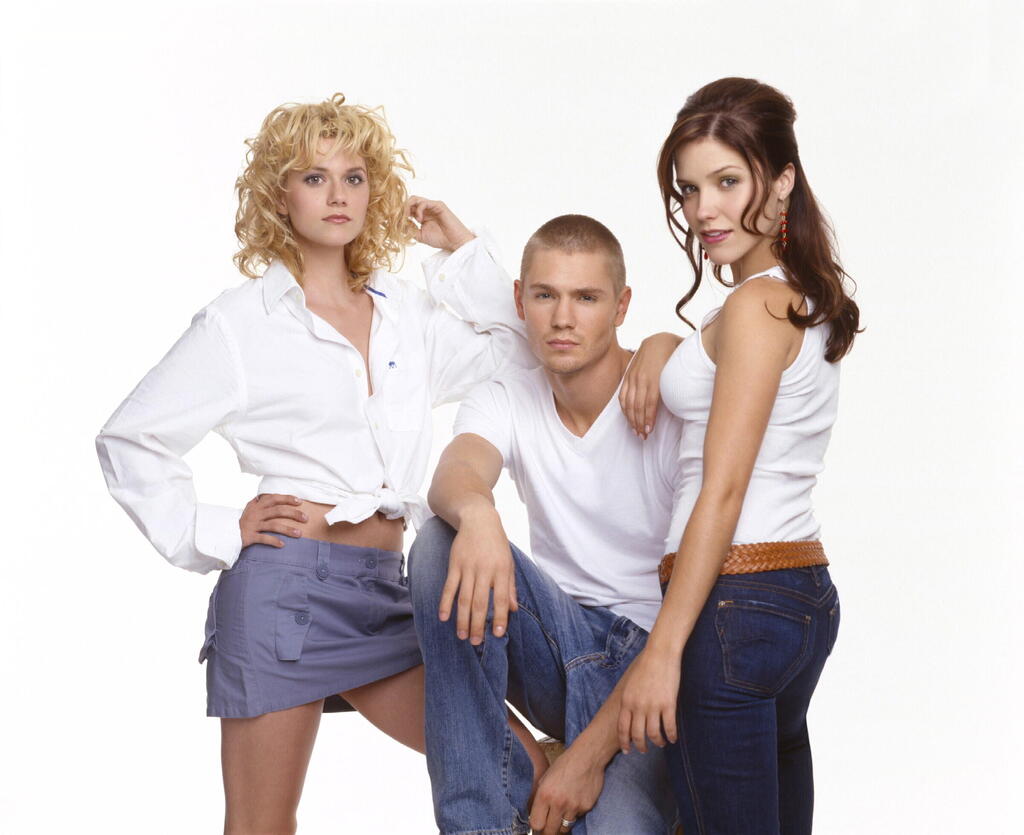
Cast of 'One Tree Hill'
(Photo: Courtesy of yes weekend)
The friendship among the women has also stood the test of the real-life tragedies that have struck, and continue to strike, some of them. When Bevin Prince, who played a character of the same name on the series, lost her husband last July in a lightning accident at sea, Burton drove overnight more than 1,100 kilometers from the farm where she lives just to be with her. Prince said during an appearance on the podcast “1on1 with Jon Evans” that when Burton heard what had happened, she immediately got in her car. Burton arrived at Prince’s front door, asked how she could help and sat with her, wanting to assist in any way she could. Prince said she would be forever grateful.
Bush said in an interview with CBS News that there is a feeling their first show will never lose its magic for fans, as it continues to endure and draw new viewers who love and connect with it. She said she has wonderful memories of the series, alongside experiences that were far from ideal. Speaking as adult women, producers, directors and creative professionals, Bush said they recognized that there was something extraordinary in the show and wanted to find it — to keep what was valuable and discard the rest. She said the message they received during filming was that they were replaceable, and that meeting fans 18 years later and realizing they could not truly be replaced was gratifying.