

In director Olivia Wilde’s new comedy, The Invite, what begins as a simple dinner invitation quickly turns into an unexpected exploration of marriage, desire and the choices we make in relationships.
The film follows Joe (Seth Rogen) and Angela (Wilde), a married couple whose once-vibrant connection has faded into routine and frustration. Hoping to shake things up, Angela invites their upstairs neighbors, Hawk (Edward Norton) and Pina (Penélope Cruz), a seemingly free-spirited couple whose passionate relationship has become impossible to ignore. Their constant lovemaking noises drive Joe to the brink, nearly prompting him to knock on their door and ask them to keep quiet.
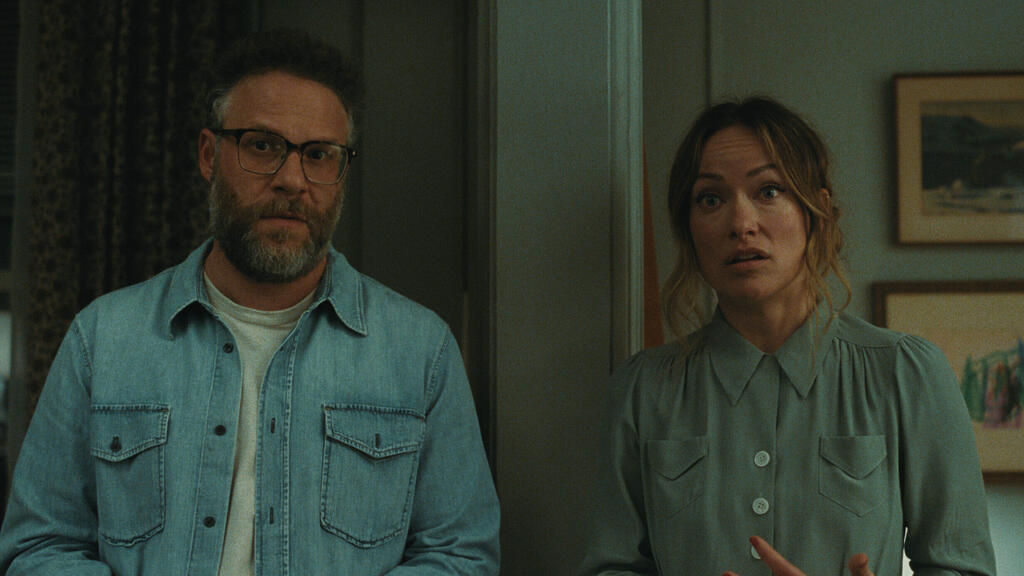
What unfolds is a spirited, sexy and intelligent adult comedy about intimacy, honesty and the courage to confront what may be missing in our lives.
Setting a film almost entirely in a single apartment is no easy feat. It requires a script compelling enough and direction assured enough to keep audiences fully invested without relying on changing locations or spectacle. Yet Wilde accomplishes just that, transforming one apartment into a space where humor, tension and emotional revelations unfold naturally.
With a terrific ensemble cast, a witty script by Will McCormack and Rashida Jones and Wilde’s assured direction, The Invite has earned praise from both critics and audiences. After the criticism surrounding her previous film, Don’t Worry Darling, Wilde returns with a thoughtful exploration of complicated human relationships, blending humor, empathy and a sharp eye for the absurdities of modern life.
Wilde’s personal life has often attracted public attention. She married Italian filmmaker and musician Tao Ruspoli in 2003, when she was 19, in a private ceremony in Virginia; the couple divorced in 2011. Later that year, she began a relationship with actor Jason Sudeikis, with whom she shares two children, a 12-year-old son and a 10-year-old girl. The couple's marriage ended in 2020 and soon after, she started dating musician Harry Styles, whom she met while directing Don’t Worry Darling.
During a recent interview with ynet, Wilde recalled the first time she watched the original Spanish film and immediately fell in love with it.
"I was rolling around laughing, thinking this is such a simple premise that is just so fertile for adaptation. I completely understood why people were adapting it into different languages," she said. "Then I read Rashida and Will's script, and I knew we had something really exciting. It finally offered the framework for the kind of production process I had dreamed of."
The Invite begins with Oscar Wilde's famous quote ‘One should always be in love. That is the reason one should never marry.’ How did making this film influence the way you think about love and marriage?
"When we workshopped the film with our consultant, Esther Perel, we embraced the idea that a relationship could contain several relationships—that you can reinvent yourselves as individuals and as a couple. Marinating in that concept made me far less cynical about long-term relationships and marriage. I hoped the Oscar Wilde quote would frame the film, but by the end, people might think about it differently. Watching audiences respond so emotionally has made me even less cynical. I love that so many people want to share the film with their partner."
Seth Rogen gives such a nuanced performance. At what point did you know he was the right person to play Joe?
"It was during the filming of my episode of The Studio that I realized Seth had to play Joe. It was a lightbulb moment, and suddenly the movie became clear to me. Joe needed the wide range of complexity that Seth has as an actor. You needed to love him while recognizing his frailty, empathize with him while also feeling frustrated by him. I also realized I wanted the film to begin with Joe and his midlife crisis. I think it's his best work. He's in this extraordinary phase I keep calling his 'Albert Brooks era.'"
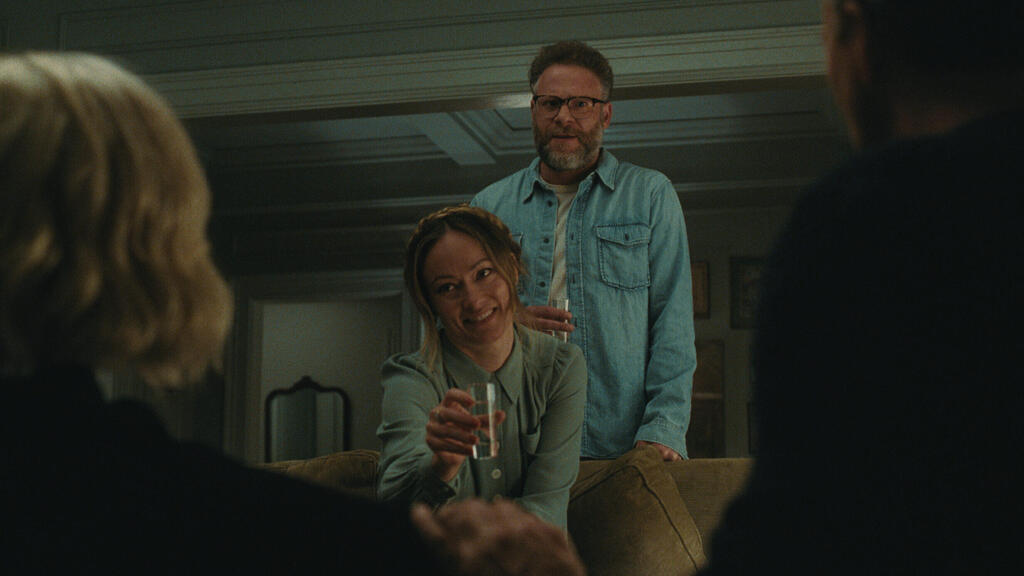
From 'The Invite'
(Photo: Courtesy of Lev Cinemas)
What was it like working with Penélope Cruz?
"I've always thought Penélope was an extraordinary comedian as well as a dramatic actress. She was immediately drawn to the things that made Pina less 'perfect'—her intensity, awkwardness, silliness and rage. Most people don't realize Penélope is nothing like that character, which is exactly why the performance is so extraordinary. She wanted to wear a blonde wig because she needed to depart from herself physically in order to transform. The second she put it on, she became a completely different person. Letting her improvise was a joy. The dancing, much of the Spanish dialogue, the fight at the end and the perimenopause monologue all came from her. I can't overstate how much she contributed. Penélope's DNA is all over this film, and I can't imagine anyone else in that role."
This is your third feature as a director. Looking back at Booksmart and Don't Worry Darling, what did The Invite teach you about yourself as a filmmaker?
"This was the first film that really felt like a living, breathing piece of material. By shooting in order, we could feel when something was working or when we needed to adjust the momentum. It was almost like editing the film while directing it. We stayed open to those instincts while being very well prepared. I had a clear stylistic vision, which gave the cast the freedom to be spontaneous. It was the first time I really understood that combination: preparation meets complete liberation."
There seems to be a recurring theme in the three films you’ve directed, of characters reaching a point where they question the lives they’ve accepted as normal. Is that something you consciously explore, or is it something you recognize only afterward?
"I only really recognized it after I'd already decided to make the film. The focus on relationships is purposeful, because that's what interests me most. I'm inspired by Mike Nichols and the way he investigated how human beings relate to each other. As a director, I want to create films that let actors really lean into relationships and their complexities. I think about Wong Kar-wai saying you don't really know what your movie is until your actors tell you—they're the ones peeling their hearts into the characters. Looking forward, I can see that's the through line in my work. It's also about people reaching a moment of wondering whether the life they're living is the one they want to continue. So maybe that'll end up being my specialty."
The apartment almost becomes a character in the film. How did you design the space and choreograph the movement within it?
"That sense of labyrinth, of proximity and closeness, but private enough to allow for secret moments. I felt we needed spaces to hide, spaces with a little privacy. The idea of the couples splitting into different rooms came later, because we loved the idea of each couple becoming a different version of themselves apart from the other. We used every square inch of the set and knew exactly how to film it depending on where the actors organically found themselves. We embraced mirrors, glass and barriers that represented emotional boundaries. The apartment is absolutely a character in the film. I'm incredibly lucky to have worked with Jade Healy and Arianne Phillips, whose idea of matching Angela's shirt to the wall color became one of my favorite visual details."
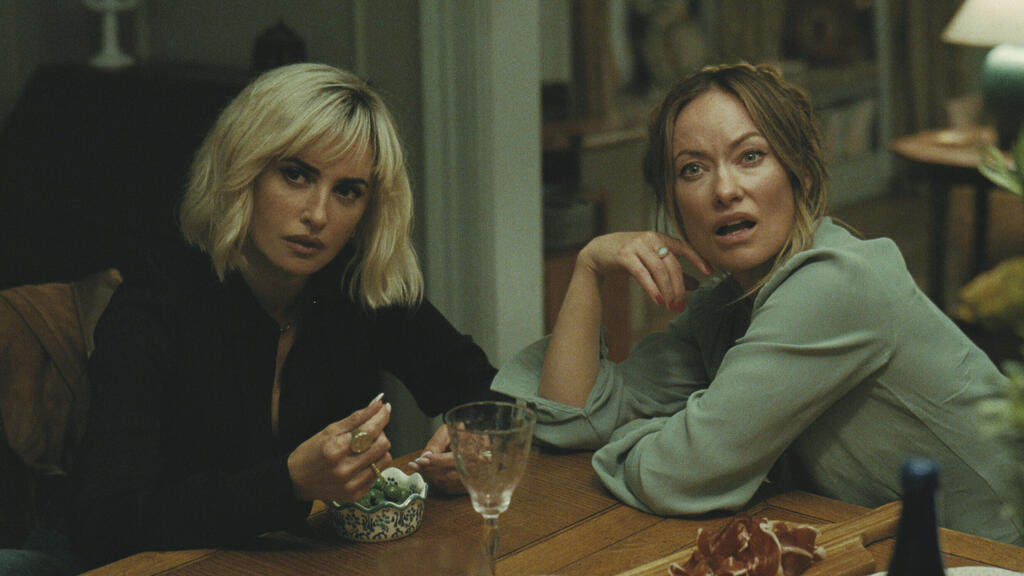
From 'The Invite'
(Photo: Courtesy of Lev Cinemas)
The original Spanish film and The Invite are based on a play. When adapting a story that originated on stage for the screen, how did you find the balance between honoring its theatrical roots while creating a cinematic experience?
"Any time you're basing a film on a play, you have to ask yourself why it should be adapted into a film at all. For us, the answer was the visceral, emotional connection to the characters that only the camera can provide. The camera language evolved with the audience's emotional experience of the characters, inspired by Who's Afraid of Virginia Woolf? As the film goes on, we get closer to everyone with the lensing. It was about embracing enough improvisation to make it feel entirely organic without losing the thread of the script. Everything was carefully intentional, aiming for a kind of Robert Altman naturalism in the dialogue, where everyone overlaps, improvises and finds a rhythm without it ever feeling meandering."
One of the film's central themes is personal responsibility. Why was it important for you to explore the idea that we are responsible for our own happiness?
"I'm fascinated by the way we sacrifice our own agency. We forget that we can choose the life we're living, and that our relationships are the result of choices we've made. This movie urges people to ask themselves: What choices have I made? Am I satisfied with them? If not, I can't blame my partner—I have to take responsibility for my own choices and my own happiness. Underneath the comedy, I hope there's a quiet question: Have you considered your responsibility toward your own happiness? You get one life—is this how you choose to live it?"
You chose to shoot The Invite on 35mm. How did that affect the atmosphere and the filmmaking process?
"I'm a big proponent of shooting on film, and this is the first time I've been able to direct a movie on film. It changes everything—it raises the stakes because it's riskier and requires a very skillful kind of artistry. I actually paid for the film stock myself because I wasn't going to make this film without 35mm. I think it raised everyone's level of professionalism. There's a misconception that film doesn't allow for surprise, but I think it brings people to a higher standard and makes them very thoughtful and efficient in their creative instincts. There's also something about the sound of film going through the camera that puts a spell on the set. It lets the actors depart from reality and brings out the best work."
What inspired you to dedicate the film to Diane Keaton?
"No one would have felt this movie more than she would have. I had the pleasure of working with her years ago, and she was incredibly inspiring as a mentor and so encouraging of my directing. As an actress, she defined the most interesting kind of woman I'd ever seen onscreen. Annie Hall was a lightbulb moment for me, and I don't think this character—or this movie—would exist without her influence. She once told me to put my heart on my sleeve. This movie is the most vulnerable, personal thing I've done. I was editing it when I heard the news of her passing, and I knew in that moment it was for her."
Angela is searching for something more in her life and marriage. Did you connect with that? And ultimately, is The Invite a film about sex, or about having the courage to tell the truth to the person who knows you best?
"I think this film is about relationships more than sex, though sex plays a significant role as a form of nonverbal communication and trust. The courage to communicate with your partner about how you're evolving was very much a driving force of this film. We wanted to explore what happens when two people mistake intimacy for merging their lives, when they're actually growing further apart. I'm fascinated by people who are technically in a relationship but have become strangers because they've stopped acknowledging their individuality. While Angela is very different from me, I connected with her desire to keep evolving and exploring, and her belief that she's worthy of that."