

Yoav Brill’s moving debut album sounds, at first, like it came from somewhere far away. It is a collection of melodic pop songs wrapped in danceable electronic production, all sung in English, with echoes of British acts such as Pet Shop Boys and Hot Chip. But Israel’s war runs through it from beginning to end, starting with the opening track, “Be’eri,” named after the kibbutz where Brill was born and raised.
“So many feelings that cannot be spelled, and there is no one left to blame,” he writes in the song. “The sadness stays as it was. It will hit you in the head without warning.”
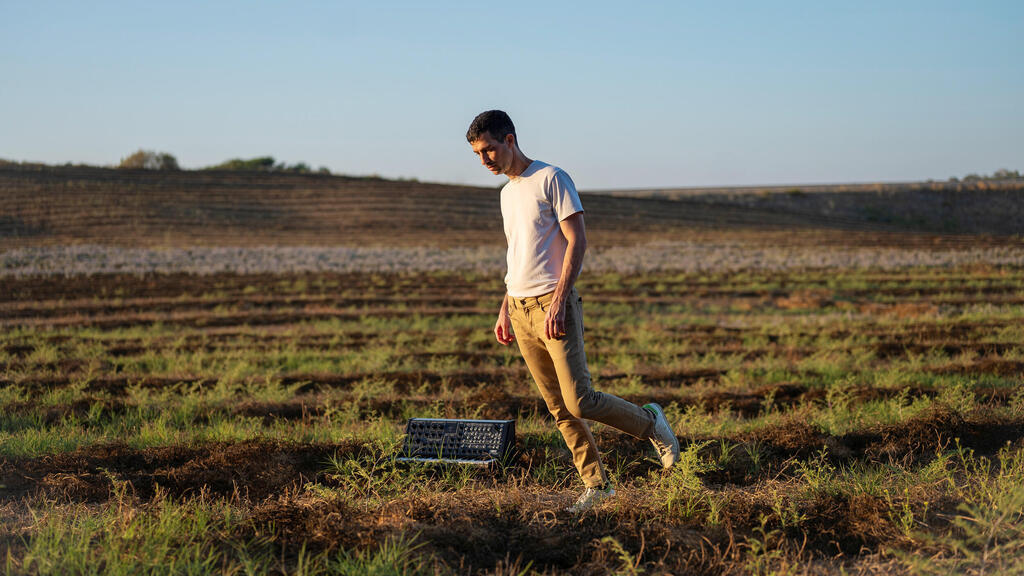
Brill, 44, is a multidisciplinary artist. He is an animator who has directed several short animated films and makes a living through design, video editing and animation for films, including “The Woman in White” and “Esther,” both of which won awards at the last Docaviv festival. He directed the 2021 documentary “Made Abroad,” about foreign volunteers in kibbutzim; played keyboards in The Secret Sea, led by Amit Erez; and has worked as a DJ and remixer for indie artists including Noa Babayof and J.Views.
On his debut album, “Reasons to be Fearful,” Brill wrote and produced all the songs, but entrusted most of the singing to others, including Rotem Bar Or, Noa Babayof and Roy Rieck. He sings only one track himself.
The album cover shows an abandoned organ against the backdrop of his kibbutz. “The neighborhood in the photograph was burned in the war, a year after the cover was already ready,” Brill says.
In some ways, that is also the story of the album. Most of it was written before October 7, but because of what happened, it is now heard through the colors of the war.
“There is something both nice and annoying about it,” Brill says. “You write a text about an experience at a concert or about your friends, but because you come from Be’eri and the year is 2026, it is automatically read as the suffering, distress or loneliness of the war.”
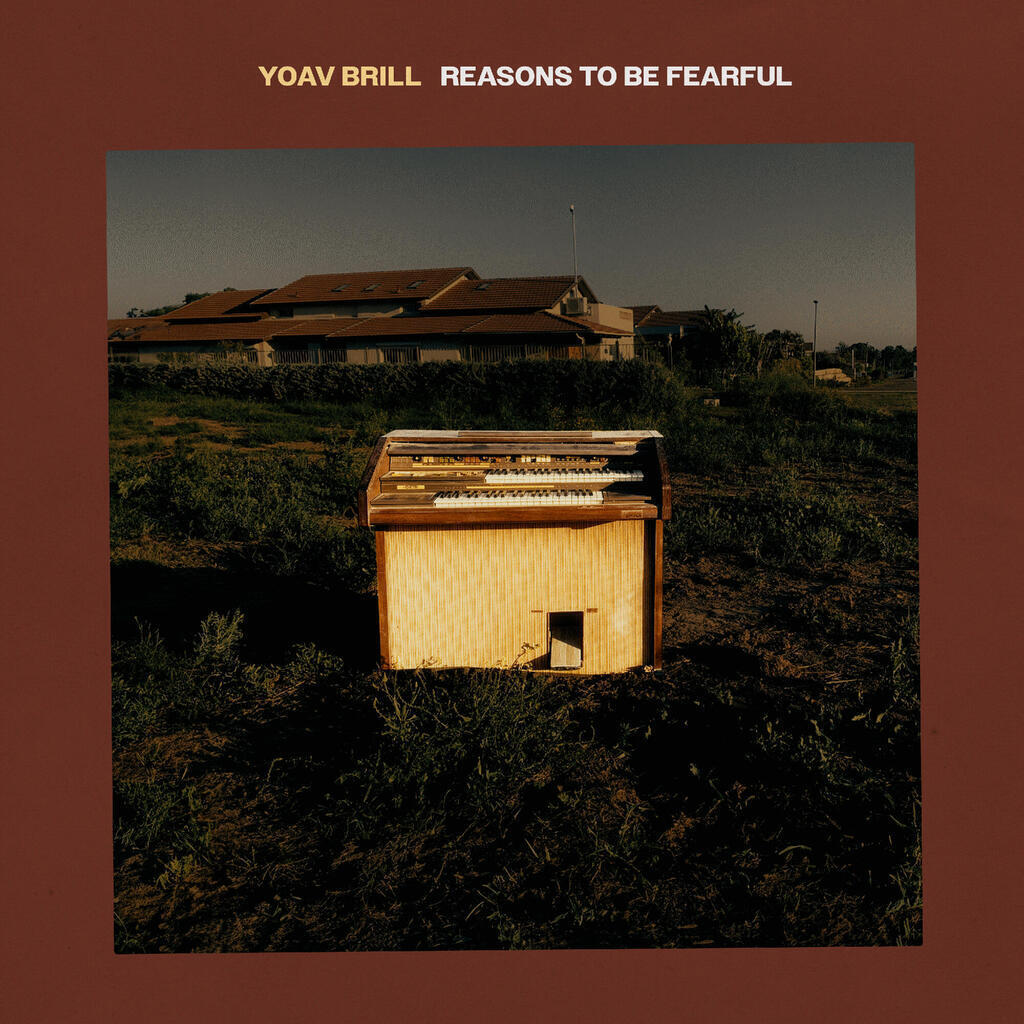
The album cover
Still, placing Be’eri on the cover and opening the album with a song named after the kibbutz was clearly a statement.
“That’s true,” he says. “I felt that in order to even begin the album, I first had to put the most fundamental thing at the front, to give the greatest respect I could to the place I come from. And only after we had spoken about it could we speak about other things.
“This whole album is in a movement, not always a comfortable one, between ‘I’ and ‘we.’ But that is also connected to the well-known kibbutznik scratch, wondering whether you are even allowed to speak about ‘I.’”
And it is impossible to speak about Be’eri without first speaking about October 7. In the Hamas attack on the kibbutz, 99 of its members and residents were murdered, including Brill’s cousin, Yonatan Rapoport. Thirty people from Be’eri were kidnapped to Gaza.
Brill’s parents were trapped in their safe room for 16 hours before they were rescued. “You could say the mouth of hell stopped right in their yard,” he says. “When we came to the kibbutz to collect things after the fighting ended, there was still a jeep with a machine gun on the lawn where we used to eat lunch. One wall of the house was completely gone from the battles between the IDF and the terrorists who had barricaded themselves in our home, after my parents had been evacuated.”
For many months, members of the kibbutz held protest shifts at Hostages Square outside the Tel Aviv Museum of Art, continuing until all the hostages were returned. Brill wrote one of the album’s most moving songs, “In Circles,” about that experience.
“We are doing our best not to fall, while we are spinning out of control,” Sapir Rosenblatt sings on the track, in Brill’s English-language lyrics, about him and “my friends who share the same disaster.”
“People who had left Be’eri opened a booth in the square, and it stood there as long as there were hostages in Gaza,” Brill says. “We would take shifts there, switching every two hours so there would always be someone present. I would meet people I hadn’t seen in 20 years, or people I had never met because they had left years earlier.
“We all shared the same very, very specific experience, one that can only be discussed among us: people who did not live in the kibbutz at the time of the disaster, but whose lives were also disrupted and who also feel that their home was taken from them. The kibbutz members who were evacuated together could process everything within a community, surrounded by people who shared what they had gone through. For us, former Be’eri residents who did not have that support system, there was that booth.”
As someone who grew up in Be’eri, did he feel the threat from Gaza?
“The Qassams only reached Be’eri in the 2000s, when I was already in Tel Aviv and Jerusalem,” he says. “And in the consciousness of a child, as in the consciousness of many Israelis, you repress it. Somewhere there are the Palestinians and there is us, and even if geographically it is extremely close to you, you can put on headphones, listen to Pet Shop Boys and think that culturally you are living in London.”
But repression only works up to a point. Eventually, Israel’s security reality enters daily life. That is one reason why lyrics Brill wrote 20 years ago, when he was a soldier on the northern border during the Second Intifada, sound as if they were written last year.
When he writes in “The Stations” that, in conversations with his mother, they “tell jokes instead of lies,” it is unclear who is hiding information from whom: the soldier son back then, or the mother trapped in her home on that day.
“Terror was always present in this country,” Brill says. “To talk about October 7 as the beginning of the terror is almost amnesiac. We have lived for 78 years in terror, with peaks here and there. Personally, I was even more anxious in the year before the massacre, which was socially horrifying under the shadow of the judicial overhaul.
“There was a feeling then that even if all the peace agreements in the world happened in the coming years, it would not change the fact that Israelis simply hate each other. In the first months of the war, at least, there was some kind of imagined sense of unity. Since then, of course, it has evaporated as quickly as the dust dispersed over Be’eri.”
So why write such a local album in English?
“It expresses the complexity,” Brill says. “I need English as a distancing device in order to talk about the experiences, insights and impressions in a language that is not nationalized.
“It is a cliché to say this, but I really would be happy if this album resonated with anyone who heard it, even if they did not know its background story. In order to connect to a work or identify with it, you are not supposed to be a perfect copy of the person who created it.
“And just as it is fine for someone to write a song about the experience of being lost and shy in a club, and for someone else to interpret it as a song about post-October 7 anxiety, it is also fine for the opposite to happen.”