

During the wars against Iran, between air raid sirens and runs to shelters, Lir Katz worried about her friend, the American actress of Persian origin Arienne Mandi. The two worked together on Tatami, a film by Guy Nattiv and Iranian director Zar Amir Ebrahimi, and have stayed close ever since.
“During filming we became best friends, like sisters,” Katz says. “She’s originally from Los Angeles but she has family in Iran. During both wars she checked in on me and asked what was happening with me and my family during the missile barrages, and I asked about her family, who had to flee Tehran.”
Did you talk politics too?
“We don’t deal with politics, mostly with our day-to-day lives. That’s what brings us closer. Even during filming we felt we had a strong connection and we cherish that. She was supposed to come to my wedding and I really wanted her to be there, but she couldn’t because of the war. She watched the wedding on Zoom.”
Are you still in touch with the Iranian director?
“Only through Instagram. She’s a very special and powerful woman, who was an actress in Iran and had to flee because of her views. It was very nice to see on set the great connection she had with Guy Nattiv.”
In the film, Katz plays an Israeli judo athlete who is supposed to face an Iranian competitor at a championship. Following fears of the encounter and the handshake, representatives of the Iranian regime forbid the athlete from showing up to the match, resulting in a technical loss and disqualification from the competition, a domineering political move that reminds her where the state ends and she begins.
“You never know what will happen in the future,” Katz says cautiously. “The world is unpredictable and maybe things will change and we’ll manage to bridge between countries. Even while filming in Georgia we kept a very low profile so the production wouldn’t be shut down for any reason. I assume not everyone supported this collaboration, but this is a historic and very meaningful move.”
Do you still believe there will be peace here?
“Some days yes and some days not at all. I pray I can continue living here and that life here will be good.”
Katz, 33, grew up in Tel Aviv and was born into theatre. She was even named after King Lear, the Shakespeare character, during a production directed by Yigal Ezrati, a close friend of her mother and head of the Arab-Hebrew Theatre in Jaffa.
Already at 12 she acted in Parashat HaShavua, written by Ari Folman and directed by Rani Blair, and later appeared in the film Flood, also by Nattiv, and in stage productions including Endlessly Mourning by Hanoch Levin and All My Sons at the Beersheba Theatre.
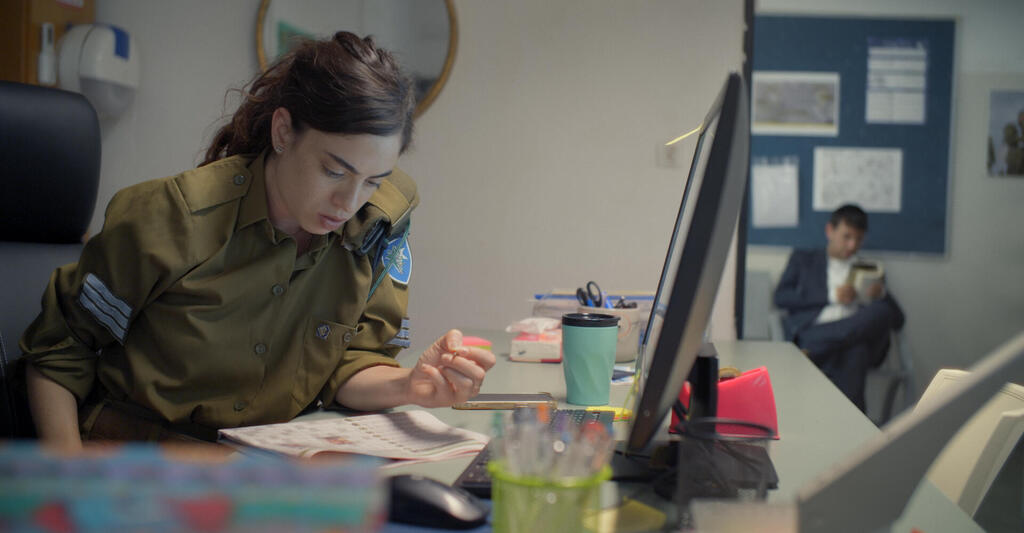
From the movie "Half a Date"
(Photo: Boaz Yehonatan Yaakov)
“Dismissed was an amazing experience and a major breakthrough in my career,” she says. “Suddenly people started recognizing me.”
The series was successful thanks to its fresh cast and its treatment of the absurdities of women’s military basic training. Moments of “zero context” that kept increasing, such as soldiers fined for wearing crop tops or tank tops during uniform checks.
“It’s absurd and very frightening,” Katz says. “They finished their service and are free to do what they want. Most of the world wears crop tops. Even soldiers who grilled on Shabbat and were put on trial are part of the religiousization process we and the army are going through. People ask themselves how to keep living here, and I ask myself too, but not from a place of giving up or walking away.”
“I love living here so much. And the whole world, not just Israel, is going in a very extreme direction. My partner Andres and I will need to have children at some point, so these are questions we ask ourselves. As a citizen I want to do everything I can to fight for values, justice and humanity. Look at what happened in Hungary. It’s very encouraging and gives wind in the sails and hope for a better future. I want to see what happens in the next elections. They will be significant.”
Are you thinking about leaving?
“I have many friends who left. All these years, with all the madness here, the chaos, instability and existential fear, it’s scary. On the other hand, there is no other place I want to live except Israel.”
In Dismissed your character kisses Alona Sa’ar. How did that go down with conservative Israeli audiences?
“I had no problem kissing Alona. I’m very liberal, but there’s no doubt the country is going in a very conservative and harmful direction. On the other hand, the responses I got from the LGBTQ+ community were amazing. There was a lot of support for showing it in prime time.”
You also starred in Shababnikim, about ultra-Orthodox Jews, who are less commonly found on military bases.
“Maybe that will be resolved one day and they will enlist. There is a huge rift in society and our most important job is to bring people closer and heal the wounds. There is fear and confusion here and uncertainty about where we and our culture are heading.”
Where is culture heading?
“If freedom of expression is taken away from us, that will be the end of us. There are many talented and intelligent people here who raise their voices and that must not be harmed. Space must be given in theatre and television for people to express themselves. One of the things Dismissed did was give a group of unknown girls a chance to break through.”
She met her partner Andres Gurevich, born in Argentina, seven years ago.
“He’s an artist, a painter and head of arts at the ‘Muzot’ school. I met him when I was living in New York and he came to visit. We fell in love and I came to Israel both to be with him and to work on my artist visa, thinking I would return to the US,” she says. “He’s my lottery win.”
She moved to New York straight after the army to study dance, and a few months later her father Ofer was diagnosed with cancer.
“I moved in September and in March we found out my father had melanoma,” she says. “It had already spread throughout his body. Six months later he passed away. I remember the phone call when he told me he was sick. I immediately wanted to return to Israel, but he told me, ‘Lir, it won’t change anything. I want you to stay there and fulfill what you want to do. Your dreams matter.’”
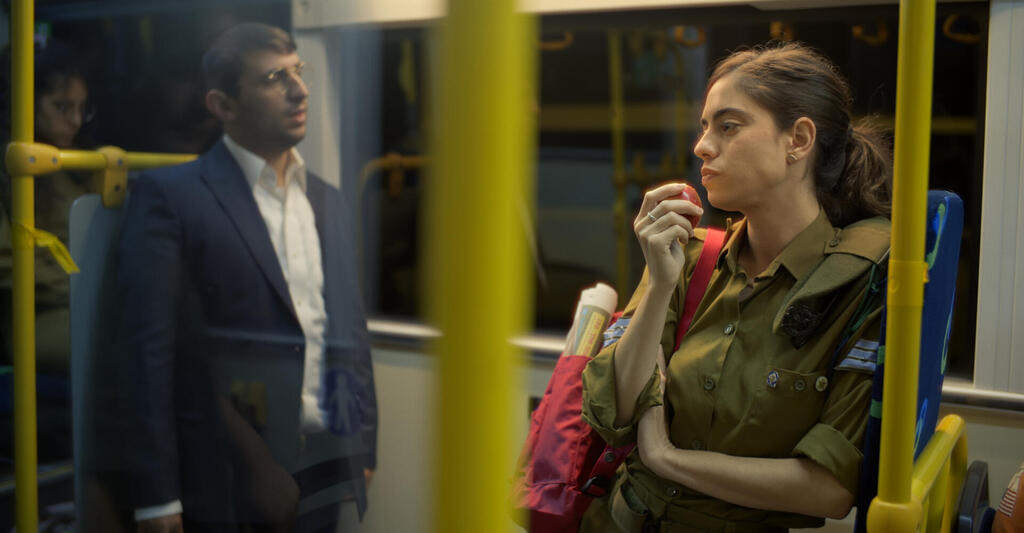
From the movie "Half a Date"
(Photo: Boaz Yehonatan Yaakov)
“I visited Israel twice to be with him and my mother and sisters were by his side. In the last month it was pretty clear the end was near, although I was in denial. I didn’t get to see him in his final moments, but I remember that a week before he died he called me and out of nowhere said he loved me very much. I told him, ‘Dad, I believe you’ll get through this.’”
“When my mother called to tell me, I heard her crying and understood what had happened. I was completely shattered. On the flight to Israel I tried to calm myself, ‘No, I’m just visiting, nothing happened.’ After five weeks I went back to New York for another four years. I miss him very much. He is always with me.”
Did you talk to him about the possibility of dying?
“I did, but I didn’t allow him to express it. I fought him on the phone that the end was not near. I tried to give him hope and told him he had to stay alive for his family. He tried everything but the disease is terrifying. He was very young, 56.”
“I only began processing that my father is no longer with me when I returned to Israel at 26. Day-to-day life in New York was without him anyway, but living in Tel Aviv and seeing all the places we used to go together or sitting at Friday dinners with the family without him was very hard.”
“Since COVID, October 7 and the Iran wars, I’m glad my father is not alive to deal with the consequences, but he didn’t see what I did. The saddest thing is that he doesn’t see my partner. I think they could have been good friends.”
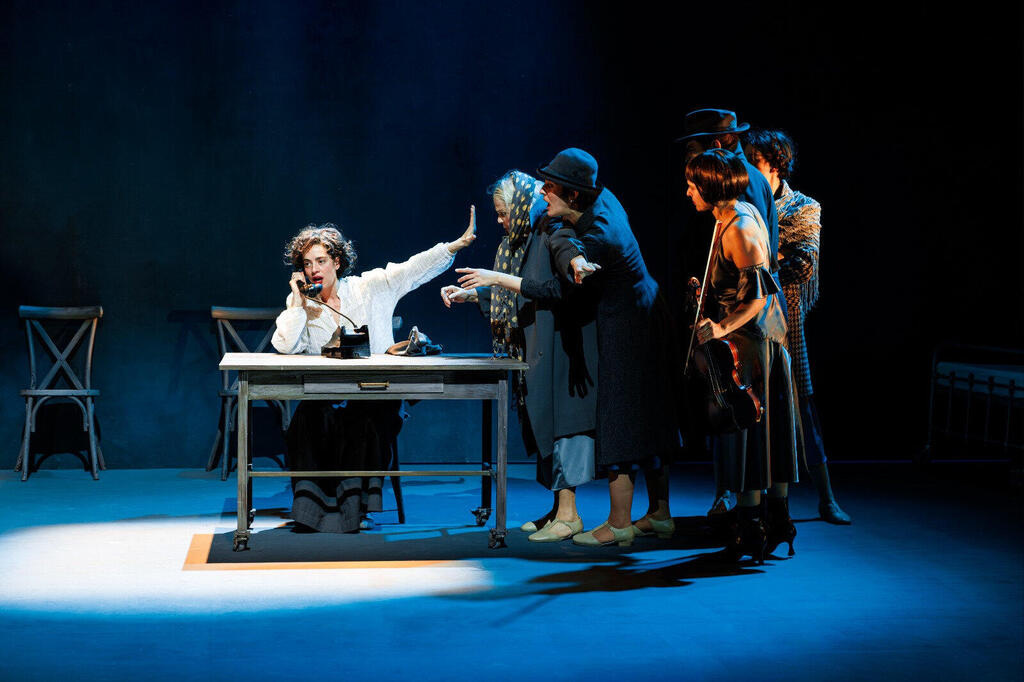
These days she is performing in the lead role in The Post Office Girl at Habima Theatre, adapted and directed by Hanan Snir based on Stefan Zweig’s book.
Katz plays a young woman from a poor background who is invited to stay at a luxury Swiss hotel and adopts a false identity as a wealthy heiress, until everything turns against her.
She auditioned for the role the day before her wedding, after Snir, who had been working on the adaptation for eight years, had almost given up finding the right actress.
“At the end of the first audition, which was two days before my wedding, Hanan asked if I could come the next day for a reading to see if I fit,” she says. “I told him it was the day before my wedding. My partner and I were producing the wedding ourselves so I had a lot to do, but how can I say no? I came and the whole cast congratulated me. A few days later they told me I got the role and it was a wonderful wedding gift.”
It is well known that actors in Israel do not get rich from acting, yet you choose not to use your fame to become an influencer. Why not do everything?
“I’m good like this. I love acting more than anything. I grew up in a home where we had everything and lacked nothing. When I was 16 there was a stock market crash and we lost everything. My father also made some wrong decisions. Suddenly my life changed completely. On a day-to-day level my parents protected me and my sisters and gave us everything we needed and more, but our place of living changed, we lost our home and the bubble burst. All the stability we had collapsed.”
How much were they able to shield you from it?
“We had a good family, good friends and my father got himself together quickly, but it was a destabilizing crisis. It came with all the teenage drama. I was very angry about it. Actually I was angry at everything, at the whole world. But I quickly discovered it was a huge gift, a very big lesson, and I developed immense compassion and endless love for my parents. Even today I think it gave me the ability to see the world more broadly. After a few months of adjustment I said thank you for it. I felt that if it hadn’t happened, I wouldn’t have had the understanding of hardship, and that is an important part of life’s journey.”